Discover the best ways to receive money online, explore hassle-free transfer methods, and find the right option for your needs.
Here’s something that’ll blow your mind: J.P. Morgan’s Kinexys has quietly processed over $1.5 trillion in blockchain transactions over the past four years—yep, trillion with a ‘T’—and they’re now pushing $2 billion daily. While digging into payment innovations for a client piece, I stumbled across these jaw-dropping Kinexys numbers and found a comprehensive whitepaper by Arati Baliga, Subhod I, Pandurang Kamat, and Siddhartha Chatterjee.
Their study, "Performance Evaluation of the Quorum Blockchain Platform," reveals how Quorum’s efficient consensus algorithms and privacy features make it a powerhouse for secure, high-volume transactions. This got me thinking—if massive institutions are embracing blockchain-based payment rails like Quorum, what does that mean for regular folks like us who are still struggling with basic questions like "How can someone send me money?" This disconnect between institutional innovation and everyday payment needs is exactly why understanding your options matters more than ever.
Here's my story: Three weeks ago, a client in Toronto needed to pay me for a DeFi analysis report. Simple enough, except I spent two hours researching the "best" way to receive international payments and still ended up paying $35 in fees. That's when I realized I needed to get serious about understanding every single way someone can send me money in 2025.
So I did what any obsessive finance writer would do—I tested everything. Apps, wire transfers, crypto services, even old-school money orders (don't ask). The result? This comprehensive breakdown of every method is worth knowing about, complete with the real costs, actual speeds, and honest pros and cons.
Adulting 101: Finally Send That Cash to Mom
There's no perfect solution for every situation. Each method has sweet spots and pain points. Some offer lightning-fast transfers but charge fees that'll make you wince. Others are practically free but take forever to process.
The key is understanding what matters most: speed, cost, convenience, or security. Whether you need to receive money from friends and family or handle business transactions, the right choice depends on your specific needs.
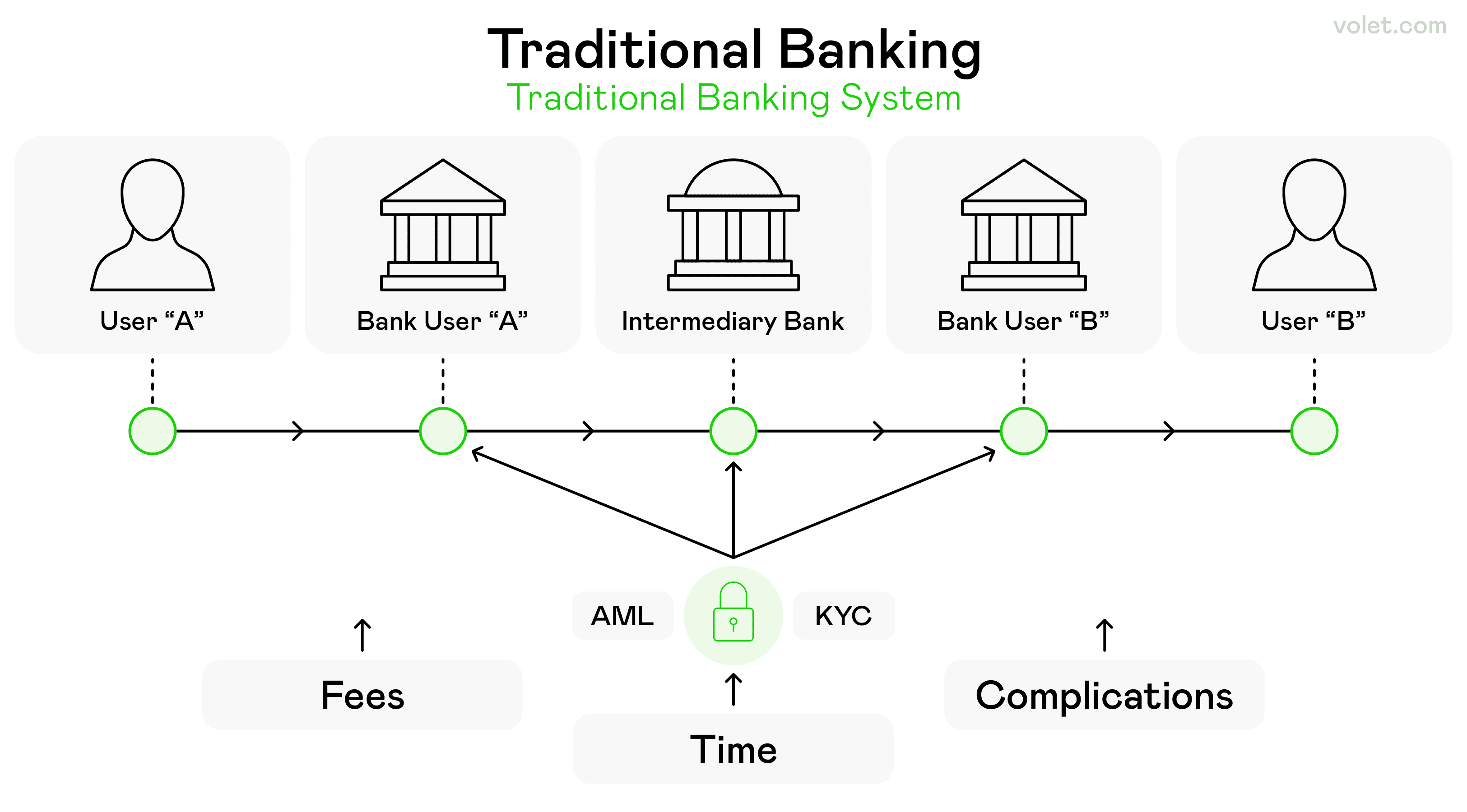
The complexity of traditional banking, involving multiple banks and processes
1. Traditional Banking Methods
Let's start with the backbone of money transfers—traditional banking methods. These remain essential because they offer the highest security and work seamlessly with your existing financial relationships.
Bank Account Transfers
Your bank account is the foundation of most money transfers and for good reason. When someone wants to send money directly to your account they will need your routing numbers and account info. This method allows you to receive money safely and securely through established financial institutions. The process is easy: provide your bank info and funds arrive in 1-3 business days.
Most financial institutions are members of FDIC, so your money's protected up to $250,000. This gives you peace of mind when dealing with larger dollar amounts.
Pros:
Free to receive in most cases
High security through established financial institutions
Works for large amounts
Member FDIC protection
No transaction fees for basic transfers
Cons:
Takes 1-3 business days
Requires sharing of sensitive payment details
Not ideal for urgent payments
Savings Account Transfers
You can also receive money directly into your savings account, which works similarly to checking account transfers but might take slightly longer to process. The advantage? Your money starts earning interest immediately, making this an attractive option for funds you don't need access to right away.
This method works particularly well for family member support payments or regular transfers where immediate access isn't crucial.
Wire Transfers
Here's where things get serious. Wire transfers are the heavyweights of money movement – they’re fast, secure and perfect for large amounts. I learned about wire transfers when a friend bought his first investment property. The seller needed $50,000 transferred in 24 hours and honestly no other method could handle that kind of speed and security for that large of an amount. Wire transfers are electronic payments that go directly from one bank account to another.
For domestic transfers, the sender needs your name, address, bank account, and routing numbers. Bank wire transfers deliver large amounts from one bank to another within hours or minutes.
The delivery time for wire transfers can vary but is generally one business day or less. However, bank wire transfers generally have a median domestic cost of $25 for sending and $15 for receiving.
Pro tip: Double-check all details before requesting a wire transfer. Wire transfers are irreversible, making them secure but risky if sent to the wrong account.
Pros:
Lightning-fast (same day or within hours)
Extremely secure
Perfect for large transactions
Wire transfers are irreversible, making them secure
Handled by established financial institutions
Cons:
Wire transfers may incur higher fees than other transfer methods
Can't be reversed if sent to the wrong account
Requires precise recipient details
Higher transaction fees compared to other methods
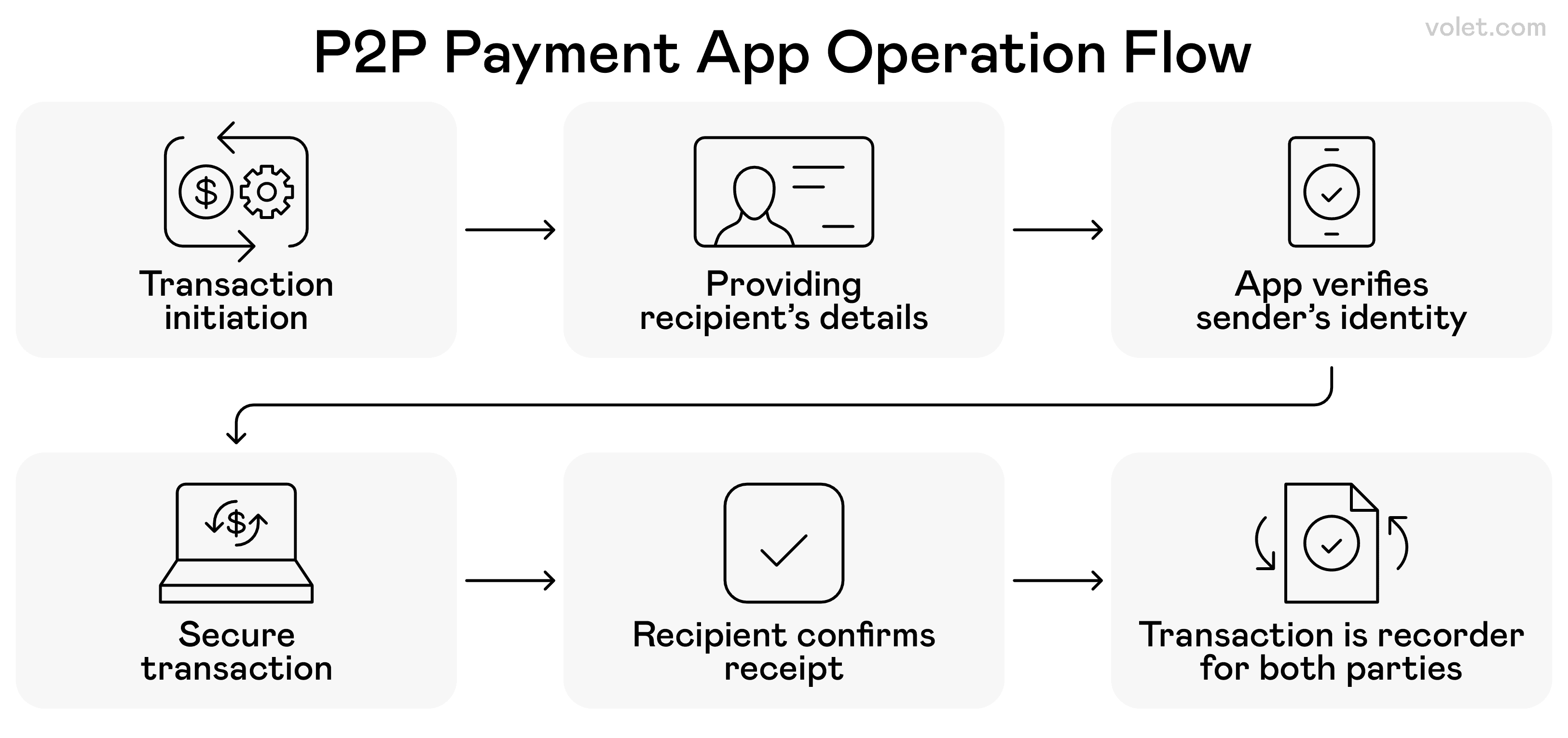
The step-by-step process of how peer-to-peer (P2P) payment apps handle transactions securely between users
2. Peer-to-Peer (P2P) Payment Apps
Now we're talking! This is where the money transfer revolution really took off. P2P payment apps have completely changed how we send and receive money making it easier than ever to transfer between friends and family. These apps are great for quick small to medium transfers with minimal hassle.
PayPal
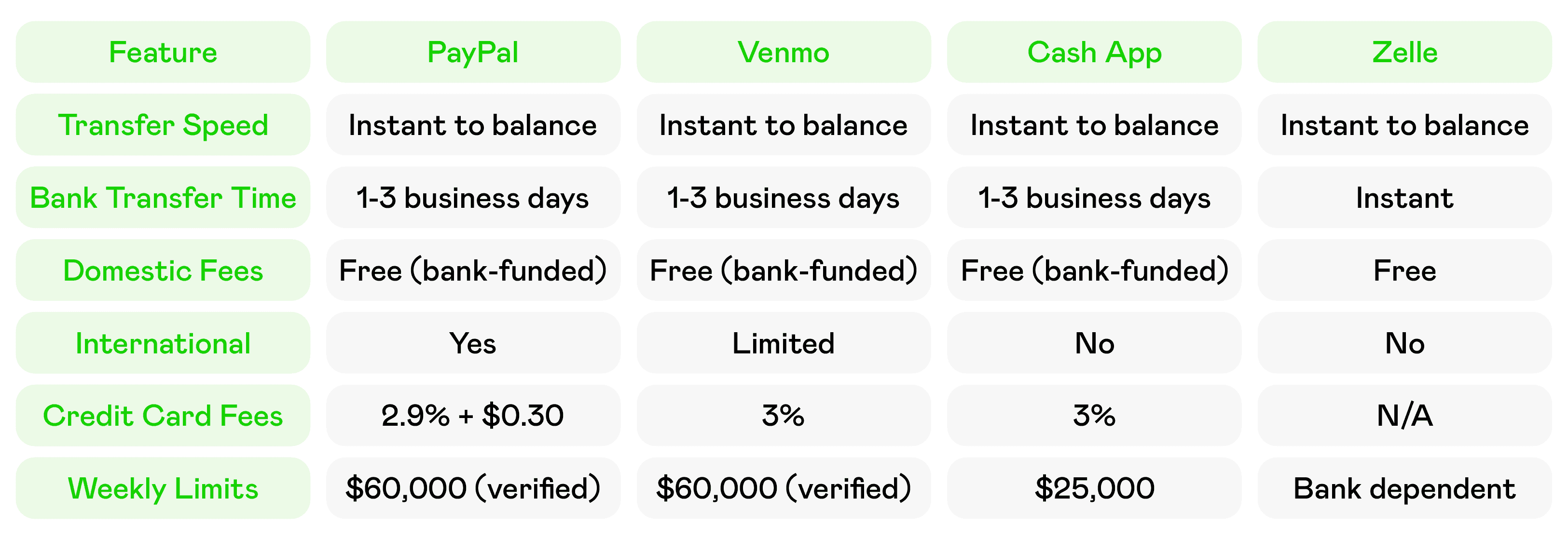
Let me tell you about my PayPal experience. I’ve been using it for years and here’s what I’ve learned: PayPal offers free transfers in the US when you fund with a bank account or PayPal balance. The money goes into your PayPal balance instantly but receiving money through PayPal takes 1-3 business days if you transfer it to your bank account.
PayPal is synonymous with online payments and for good reason. It’s widely accepted, has buyer protection and works internationally making it perfect for personal and business transactions.
Pros:
Instant receipt to PayPal balance
International Capabilities
Buyer/seller protection
Widely accepted by merchants
Free transfers from a linked bank account
Cons:
1-3 business days to transfer to the bank
Transaction fees for credit card funding
Account can be frozen for suspicious activity
Less social than newer apps
Venmo
Venmo's social aspect makes it fun to split bills with friends, and that's exactly where it shines. You can send up to $60,000 per week using Venmo after verifying your identity. The money you receive on Venmo shows up instantly in your Venmo balance, but transferring to your bank takes the usual 1-3 days.
What sets Venmo apart is its social feed feature, which lets you add comments and emojis to payments (though I recommend keeping financial details private). It's become the go-to app for younger users who want to send money to friends easily.
Pros:
Instant receipt to Venmo balance
Social features make it engaging
Easy bill splitting with friends
High weekly limits after verification
Free transfers from a linked bank account
Cons:
1-3 business days to bank transfer
Social features may compromise privacy
Limited international capabilities
Instant cash-out fees apply
Cash App
Cash App became my go-to for quick domestic transfers because of its versatility. Cash App lets you send and receive money for free with cash from your linked bank account or debit card. The platform has evolved beyond simple transfers to include investing, Bitcoin trading, and even a physical card.
The catch? You can cash out to your debit card from the Cash App instantly, but you'll pay a fee of 0.5%-1.75%. Also, if you send money using a credit card on Cash App, you'll be charged a 3% fee.
Pros:
Instant transfers to Cash App balance
Additional features (investing, Bitcoin)
Physical Cash Card available
Simple, clean interface
Free transfers from bank account
Cons:
Instant cash-out fees
Credit card funding charges 3%
Limited customer support
Account security concerns
Zelle
Here's something cool—you might already be using Zelle's service through your bank's website or mobile app without realizing it. Most major banks have integrated Zelle, making transfers between enrolled users instant and free, as noted in Zelle’s FAQ. This integration with existing banking relationships makes Zelle incredibly convenient.
The beauty of Zelle is its simplicity. Enrolled users typically occur through their existing bank relationships, so there's no separate app to download in many cases. When someone sends you money through Zelle, it appears directly in your bank account within minutes.
Pros:
Instant transfers directly to a bank account
No separate app is needed (usually)
Free transfers between enrolled users
Backed by major banks
High security through banking partnerships
Cons:
Both parties must be enrolled
Limited to domestic transfers
No payment protection like PayPal
Transaction limits vary by bank
Volet.com
For those dealing with international transfers, Volet.com represents the next generation of cross-border payment solutions. This platform specializes in making international money transfers more efficient and cost-effective than traditional methods.
Volet.com leverages modern technology to offer competitive exchange rates and lower fees compared to traditional money transfer services. The service focuses on transparency, showing you exactly what you'll pay upfront without hidden charges, as highlighted in their fee structure.
Pros:
Competitive international exchange rates
Transparent fee structure
Modern, user-friendly interface
Faster than traditional international transfers
Lower costs than banks for international transfers
Cons:
A newer platform with a limited track record
May not be available in all countries
Smaller networks than established providers
Limited customer support locations
3. Mobile Wallet Solutions
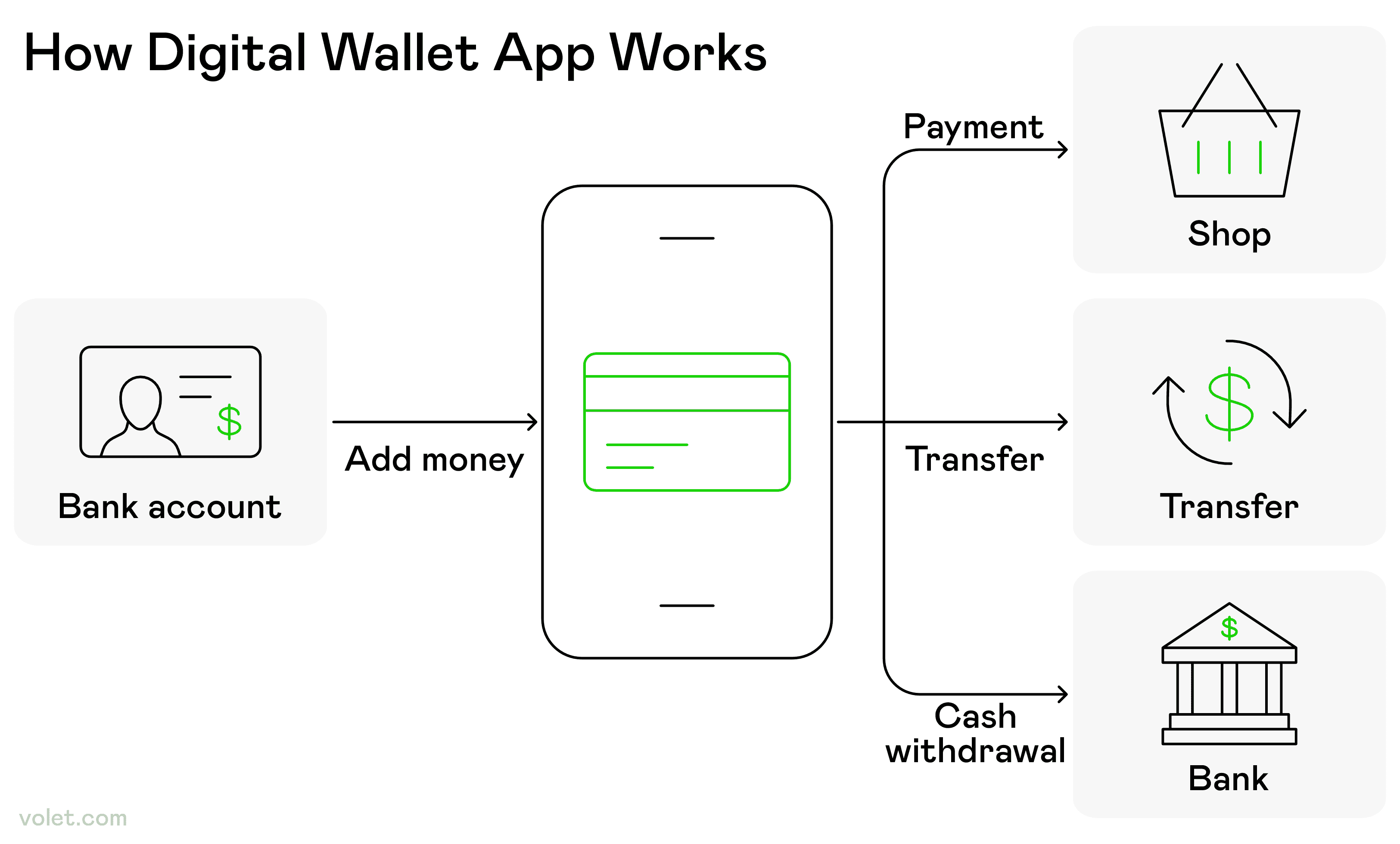
How a mobile wallet app enables users to add money from a bank account and make payments, transfers, or cash withdrawals
Mobile wallets are a must for contactless payments and quick transfers. These digital solutions allow you to store and manage your financial accounts right on your phone.
Mobile wallets let you send and receive money through various apps and have advanced security features like biometric authentication. Using a mobile wallet you can send money by adding your payment and recipient info with just your mobile number.
Many mobile wallet services have minimal transaction fees for sending money, especially domestically. You can send money to someone who also uses a mobile wallet service, creating a seamless digital payment ecosystem.
The steps of a crypto transaction from initiation to confirmation on the blockchain
4. Cryptocurrency Transfers
With institutions like J.P. Morgan leveraging Quorum’s blockchain, as detailed in Baliga’s whitepaper, crypto transfers are gaining traction for tech-savvy users. Quorum’s RAFT and IBFT consensus algorithms ensure fast, secure transactions with privacy, ideal for high-value transfers like Kinexys. Here’s what everyday crypto transfers look like:
Direct Cryptocurrency Transfers
You can receive money through direct cryptocurrency transfers using popular coins like Bitcoin, and Ethereum or stablecoins like USDC. The sender needs your wallet address—a long string of characters that’s like your account number.
Pros:
Near-instant transfers (minutes vs. days)
Lower fees for international transfers
No traditional banking required
24/7 availability
Cons:
High volatility for non-stablecoin transfers
Requires technical knowledge
Limited merchant acceptance
Irreversible transactions
Crypto-to-Fiat Services
Services like Coinbase, Volet.com, PayPal (crypto feature), and Cash App allow you to receive cryptocurrency and instantly convert it to cash in your account. This bridges the gap between crypto and traditional money transfer.
The flow of international money transfers from sender to recipient through banks, processors, card networks, and SWIFT/SEPA systems
5. International Money Transfer Services
When you need to receive international payments, specialized money transfer services often offer better rates and faster delivery than banks.
Traditional International Services
Western Union: The Global Network Western Union is in over 200 countries, multiple ways to receive money—direct to your bank account, cash pickup at a location or loaded onto a prepaid debit card.
The flexibility is impressive. You can receive cash through their network of agents worldwide, making it accessible even in areas with limited banking infrastructure.
MoneyGram: The Alternative Network MoneyGram offers similar services with a focus on cash pickup locations and direct bank transfers. Their network spans globally, though it's slightly smaller than Western Union's reach.
Modern Digital Services
Online money transfer providers like Wise, Remitly, and others offer better exchange rates and lower fees than traditional banks or Western Union. Their tech-driven approach mirrors Quorum’s efficiency, as highlighted in the whitepaper, making international transfers faster and cheaper.
6 Traditional Cash Methods
Despite the digital revolution, traditional cash methods still have their place, especially when modern methods aren't practical or available.
Personal Checks and Cashier's Checks
Personal checks remain a common method of sending cash to someone, though they're becoming less popular. Cashier's checks are more secure as they're issued by a bank and drawn from the bank's own funds—I used one when buying my car as the dealer required guaranteed funds.
These provide security while maintaining the familiar check format, particularly useful for large transactions where both parties want guaranteed funds.
Money Orders: International-Friendly
Money orders guarantee the recipient a specific amount of money and can be used for international payments. They can be cashed only after the recipient endorses them, providing security against theft.
The beauty of money orders is their wide acceptance and relative security compared to personal checks, particularly useful when dealing with recipients without traditional bank accounts.
Prepaid Debit Card Options
A prepaid debit card can be loaded with money and doesn’t require a traditional bank account to use. They’re perfect for people without traditional banking relationships or for sending money to someone who doesn’t want to share their bank account details.
However, prepaid cards can get lost in transit when mailed. Most prepaid debit cards come with various fees for loading, using, and maintaining the card.
Closing Thoughts
After testing every way to receive money, my take is clear: there’s no one-size-fits-all. Your best option depends on whether you’re handling friend payments, international clients, or business deals.
For quick friend payments, I lean on Venmo or Cash App. For international clients, I compare modern services against wire transfers. For big deals like real estate, wire transfers are king, just as Quorum’s high-throughput design makes it ideal for J.P. Morgan’s massive transactions, per Baliga’s whitepaper.
My advice? Set up accounts with 2-3 different services to cover various scenarios. Have a P2P app for social payments, understand your bank's wire transfer process for large, urgent payments, and always prioritize security when sharing payment details.
Most importantly, always check the total cost before choosing a method. That "free" transfer might cost you more in hidden exchange rate markups than a service with transparent fees. Factor in transaction fees, delivery time, and security features when making your decision.
Disclaimer
This article is provided for informational purposes only and does not constitute legal, financial, or professional advice. Readers are advised to seek professional guidance before making financial decisions.
Frequently Asked Questions
P2P apps like Venmo, Zelle, or Cash App typically offer instant transfers. Zelle through your bank is often the fastest since funds appear immediately in enrolled users' accounts.
Most apps are free to receive money online, but fees apply when cashing out instantly to your debit card or when the sender uses a credit card to fund the transfer.
Wire transfers are the most secure since they go directly between financial institutions and are irreversible once processed.
Online money transfer services offer better exchange rates and lower fees than traditional banks or Western Union.
Only share routing numbers and account details through secure, encrypted channels. Never post this information on social media or send it through unsecured email.
Someone can send money by bank transfer, payment app, digital wallet, payment link, or international money transfer service. The best method depends on country, currency, and how quickly funds are needed.
If you are learning how to receive money from abroad, you can use an international bank transfer, multi-currency wallet, transfer service, or payment platform. Always check fees, exchange rates, and local availability.
In some cases, yes. Depending on the country and provider, funds may be received through a digital wallet, cash pickup, prepaid card, or other supported payout option.