Discover fast, secure, and reliable money transfer sites that meet your needs. Read our guide to find the best options for hassle-free transactions
In today's digital age, transferring money has become more convenient than ever. Whether you need to send money to a friend, family member, or pay for services, there are numerous platforms that make the process quick and hassle-free. This guide explores the best sites to transfer money, highlighting their features, fees, and security measures to help you make informed decisions about your transfers.
The Best Sites to Transfer Money
When looking for ways to send money online, you'll want platforms that offer reliability, speed, and reasonable fees. The market is filled with options, but not all money transfer services are the same. Here's a breakdown of the top platforms that make transferring money simple and secure.
PayPal remains one of the most popular ways to send money online. With its virtual wallet function, you can use it for various transactions online. What makes PayPal stand out is its versatility and widespread acceptance.
For those who need to send money quickly, PayPal offers the option to pay for an instant transfer to a linked debit card. You can easily send or receive money through their website or mobile app, available on both iOS and Android. Best of all, PayPal offers free transfers within the U.S. when you fund with a bank account or PayPal balance.
Pros:
Transfer money directly to friends and family within minutes; payments typically process within 30 minutes for instant transfers; widely accepted for online shopping; strong buyer protection policies.
Cons:
2.9% plus 30 cents fee when using credit card payments; international transfers can be expensive; account limitations can occur without warning; customer service can be difficult to reach.
Venmo has transformed the way friends split bills and share expenses with its social-focused interface. The platform makes sending money easy with a simple sign-up process and quick connection to your bank account.
Venmo's popularity stems from its user-friendly design and social features that make transferring money feel less transactional and more personal.
Pros:
Highly rated by users on both iOS and Android; social feed makes splitting costs with friends fun; free standard transfers to bank accounts.
Cons:
Charges a 1.75% fee for instant transfers (minimum $0.25, maximum $25); primarily designed for U.S. domestic transfers; limited customer support options.
Zelle connects to over 1,000 financial institutions and serves more than 150 million customers, making it one of the most accessible money transfer services. The service is often integrated directly into banking apps, providing a seamless experience for users.
Zelle's primary advantage is its deep integration with the banking system, allowing for rapid transfers between different financial institutions without additional fees.
Pros:
Send money instantly within minutes between accounts at different institutions; no fees for sending or receiving money; direct bank account transfers without needing a separate app.
Cons:
Limited to domestic U.S. transfers; no credit card funding option; cannot cancel a payment once sent; no buyer protection for goods and services.
Cash App has gained tremendous popularity for its straightforward approach to money transfers. The app is known for allowing instant money transfers without fees from a linked bank account.
For those seeking a no-frills money transfer experience, Cash App provides a direct and efficient solution for everyday transfers.
Pros:
Send and receive money for free using funds from your linked bank account or debit card; simple interface makes transferring money between users easy; offers bitcoin trading and stock investing features.
Cons:
Cash out instantly to your debit card incurs a 0.5%-1.75% fee (minimum of $0.25); primarily focused on the U.S. market; limited customer service options.
Western Union remains a titan in the international money transfer space, with its extensive network of agent locations around the world.
When sending money abroad through Western Union, you'll need to verify your identity with a government-issued ID. The service provides a tracking number so you can monitor your transfer's progress as it moves around the world.
Pros:
Offers services from hundreds of thousands of Western Union locations globally; recipients can collect cash at agent locations often within minutes; the Western Union app makes it convenient to send money overseas.
Cons:
Higher fees than digital-only services; exchange rates include significant markups; in-person transfers can require waiting in line at agent locations.
Walmart offers competitive money transfer services through its extensive network of stores across the country.
This service caters to customers who may not have access to digital banking tools or prefer cash-based transactions for their money transfers.
Pros:
Walmart2Walmart charges start at just $2.50 for cash transfers; convenient locations for those who prefer in-person transactions; recipients can pick up cash at any Walmart store; no bank account required.
Cons:
Maximum limit of $1,000 per day for transfers; limited to domestic transfers within the U.S.; requires visit to physical location; may require waiting in line.
Apple Cash provides a convenient way for Apple device users to send money directly through the Messages app or using Siri voice commands.
Apple Cash makes peer-to-peer payments incredibly simple for iPhone users, allowing them to send money as easily as sending a text message through their mobile device.
Pros:
Seamless integration with Apple ecosystem; easy to use within Messages; instant transfers between Apple Cash users; strong security with Touch ID or Face ID authentication.
Cons:
Limited to Apple devices only; 1.5% fee for instant transfers to bank account; no international transfer capability; requires Apple ID and debit card.
Wise has built a strong reputation for international transfers with transparent pricing and competitive exchange rates.
For those who frequently send money internationally, Wise offers some of the most competitive rates in the industry, making it an excellent option for transferring money abroad.
Pros:
Mid-market exchange rates with no markup; clear fee structure; supports 80+ countries and 50+ currencies; multi-currency account options.
Cons:
No cash pickup options; transfers can take 1-5 business days depending on the destination; limited customer service options compared to traditional banks.
Xoom (A PayPal Service): Fast International Transfers
Xoom specializes in quick international money transfers with multiple delivery options.
Xoom is particularly useful when you need to send money overseas quickly and offer the recipient multiple ways to receive their funds.
Pros:
Fast delivery to many countries; options for bank deposits, cash pickup, or home delivery; strong mobile app experience; backed by PayPal's security infrastructure.
Cons:
Higher fees than some competitors for certain corridors; exchange rates include a markup; limited coverage in some regions.
MoneyGram offers one of the largest global money transfer networks with both digital and physical service options.
MoneyGram global reach makes it a reliable option for sending money internationally, especially to regions where digital banking infrastructure is limited.
Pros:
Extensive global network with 350,000+ agent locations; multiple receive options including bank deposit, mobile wallet, and cash pickup; real-time transfer tracking.
Cons:
Higher fees than digital-only providers; exchange rate markups can be significant; user experience on digital platforms not as streamlined as newer competitors.
Remitly focuses specifically on immigrant communities sending money back to their home countries.
Remitly specialized focus makes it particularly effective for certain international transfer routes, offering both economy and express options to meet different needs when sending money overseas.
Pros:
First transfer often free or discounted; competitive exchange rates for major corridors; express delivery options available; strong mobile experience.
Cons:
Limited send countries (primarily North America, Europe, and Australia); focused mainly on remittance corridors rather than global coverage.
Launched in 2014, Volet.com brings blockchain technology to merchant services, focusing on international payment processing. Their innovative approach provides businesses with access to global markets through efficient cross-border transactions.
Volet.com represents the cutting edge of money transfer technology, utilizing blockchain to overcome many traditional barriers to international money movement.
Pros:
Blockchain technology for fast, low-cost international transactions; supports over 150 countries and 110+ fiat currencies; instant P2P transfers without requiring crypto expertise.
Cons:
Newer to the merchant services space; more focused on international transfers than comprehensive merchant services.
Transferring Money: Methods and Considerations
There are various ways to move your money from one account to another, each with its own set of advantages and considerations.
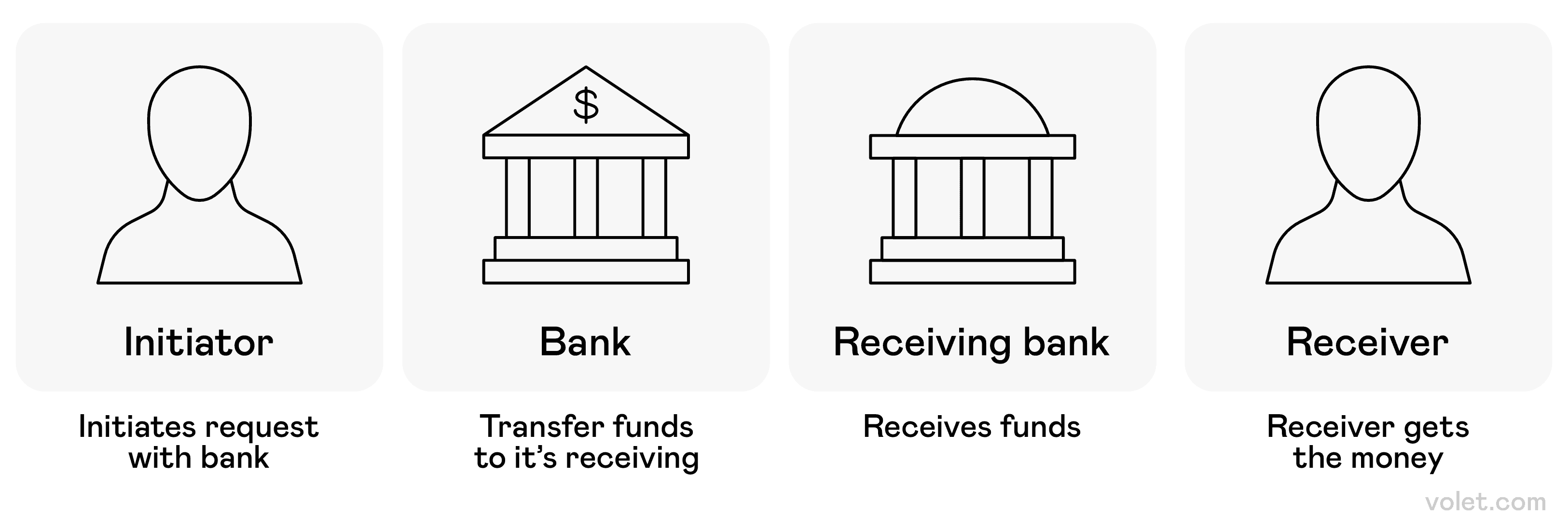
4 step process of a bank transfer, from the initiator’s request to the receiver getting the money. Source: Stripe
Bank Account Transfers
Direct bank transfers remain one of the most common methods for transferring money between accounts. Most banks offer this service through their online banking platforms or mobile apps.
Secure and reliable for transferring large sums
May take a few business days for funds to clear
Domestic transfers typically have lower fees than international ones
Wire transfers offer same-day processing but at higher costs
Bank wire transfers have a median domestic cost of $25 for sending and $15 for receiving. While this method is more expensive than digital alternatives, it provides a high level of security and reliability for important transfers.
For many users, bank account transfers represent the most trusted method for moving significant amounts of money, particularly for domestic transfers within the same financial institution.
The complete credit card payment cycle, from cardholder initiation to final transaction approval. Source: Corporate Tools
Credit Card and Debit Card Payments
Using cards for money transfers offers convenience but often comes with additional costs:
Credit card payments typically incur higher fees than bank transfers
Debit card transfers may process more quickly than those from a bank account
Many services charge a percentage-based fee for card transactions
When using a credit card for transfers, be aware that some card issuers may treat the transaction as a cash advance, potentially leading to higher interest rates and immediate interest accrual.
Despite the higher costs, credit card transfers offer convenience and may provide an additional layer of consumer protection for certain types of transactions when you shop online.
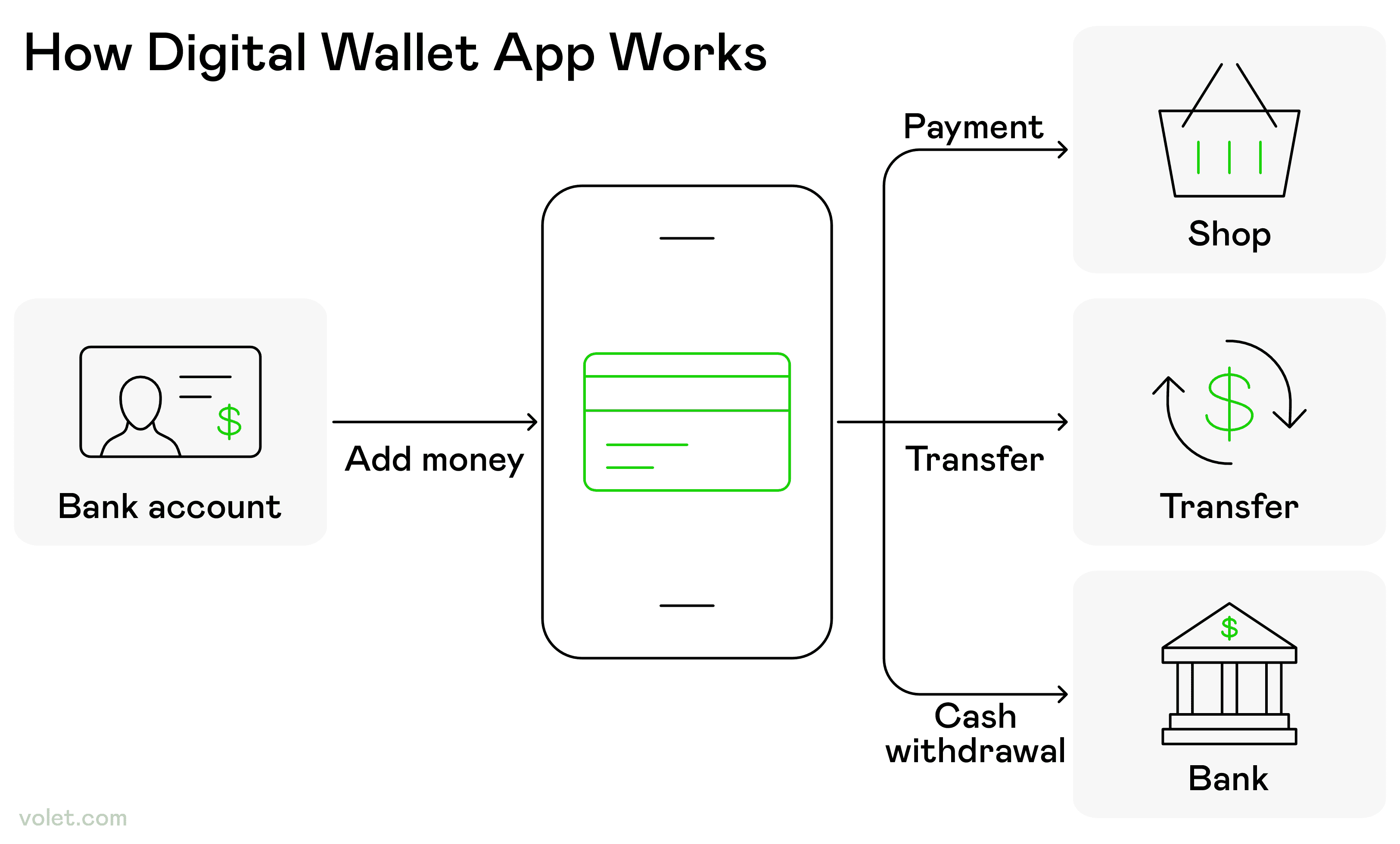
How a digital wallet app enables users to manage money by adding funds, shopping, transferring, or withdrawing cash seamlessly. Source: Techmagic
Mobile Wallet Options Around the World
Mobile wallets have revolutionized money transfers globally, especially in regions where traditional banking infrastructure is limited:
Allow users to store, send, and receive money using just a mobile device
Often integrate with various money transfer services for seamless transactions
Provide an accessible option for those without traditional bank accounts
These digital wallets are gaining popularity around the world as they offer convenience and reduce the need for physical cash or bank visits. Mobile wallets are particularly transformative in developing regions, where they enable financial inclusion for those previously excluded from traditional banking services.
Essential practices for ensuring safe and secure money transfers. Source: Fastercapital
Security Measures for Safe Money Transfers
When transferring money, security should be a top priority. Here are essential practices to protect your funds:
Use a PIN to secure your peer-to-peer payment account if available
Always double-check your recipient's details before confirming a transfer
Be aware that transfers to the wrong person are often irreversible
Consider the cybersecurity risks associated with money transfers
Most reputable services employ encryption and fraud monitoring, but user vigilance remains crucial in preventing unauthorized transactions. Many financial institutions have implemented additional security measures like two-factor authentication and instant alerts to help protect your account while transferring money.
How to Choose the Best Sites to Transfer Money
Selecting the best site to transfer money for your needs depends on several factors:
Speed requirement: Do you need the funds to arrive instantly or can you wait a few business days?
Transfer amount: Larger transfers may benefit from services with flat fees rather than percentage-based charges
International or domestic: Cross-border transfers require services with good exchange rates
Recipient's preference: Consider how they prefer to receive money (bank deposit, cash pickup, mobile wallet)
Your personal finance situation and the specific circumstances of each transfer will determine which service offers the best value. For example, when sending money online to someone who needs cash immediately, services with cash pickup options are worth higher fees compared to bank account transfers that take several business days to process.
Closing Thoughts
The landscape of money transfer services continues to evolve rapidly, with new technologies making transfers faster, cheaper, and more accessible than ever before. When choosing the best site to transfer money for your needs, consider not only the fees but also the security features, convenience, and delivery options that matter most to you.
Remember that the cheapest option isn't always the best—reliability and security should be primary concerns when sending money, especially for important or large transfers. By understanding the strengths and limitations of each platform, you can make informed decisions that save you both time and money while ensuring your funds arrive safely at their destination.
Disclaimer
This article is provided for informational purposes only and does not constitute legal, financial, or professional advice. All content is based on publicly available information and personal opinions. Readers are advised to seek professional guidance before making decisions or acting based on the material presented. The author and publisher assume no liability for any actions taken or not taken by the reader based on the information contained herein.
Frequently Asked Questions
Services like Western Union, Wise, and WorldRemit specialize in international transfers, offering different combinations of speed, convenience, and cost-effectiveness depending on your specific needs and destination country.
Many peer-to-peer services like Zelle offer free transfers between bank accounts. For international transfers, comparing multiple services and choosing slower delivery options can help minimize fees.
Yes, using a credit card is generally safe but typically incurs higher fees. Credit cards also offer additional fraud protection compared to direct bank transfers.
Yes, services like Western Union allow you to send cash from physical locations, and the recipient can collect the money as cash without needing a bank account.
Delivery times vary widely from minutes to several business days depending on the service, payment method, destination country, and whether you're paying for expedited processing.