Discover how DeFi applications enhance financial accessibility and empower users. Explore the key advantages and insights in our latest article. Read more!
I still remember the day I first dipped my toes into decentralized finance. After years of dealing with traditional financial systems—waiting days for transactions to clear, paying ridiculous fees, and being denied services because I didn't meet some arbitrary criteria—I was ready for something different. Little did I know that clicking "connect wallet" on a DeFi platform would completely transform my understanding of what financial services could be.
Let me take you on my journey through the world of DeFi, where I've experienced both thrilling successes and humbling lessons. I'm not a financial advisor (more on that later!), just someone who's spent countless hours exploring this DeFi space and wants to share what I've learned along the way.
How decentralized finance (DeFi) transactions between users through blockchain technology and smart contracts works.
Understanding Decentralized Finance (DeFi)
So what exactly is this DeFi thing everyone's talking about? At its core, decentralized finance represents a fundamental shift in how we think about money and financial services. It's a reimagining of banking, investing, and trading—but without the banks.
Before diving deeper, let's get something straight: DeFi isn't just cryptocurrency. It's an entire DeFi ecosystem built on blockchain technology that aims to recreate and improve traditional financial services without relying on centralized intermediaries like banks or payment processors.
Here's my simple explanation: Traditional finance relies on traditional financial institutions that act as trusted middlemen. DeFi stands for removing these traditional intermediaries and replacing them with transparent smart contracts that anyone can inspect and interact with.
For example, when I deposit money at my local bank, I trust them to:
Keep my money safe
Give it back when I ask
Pay me the promised interest
Not misuse my funds
In the DeFi ecosystem, I don't need to trust an institution—I trust the code instead. This shift from "trust in institutions" to "trust in code" is revolutionary, and it's happening right now.
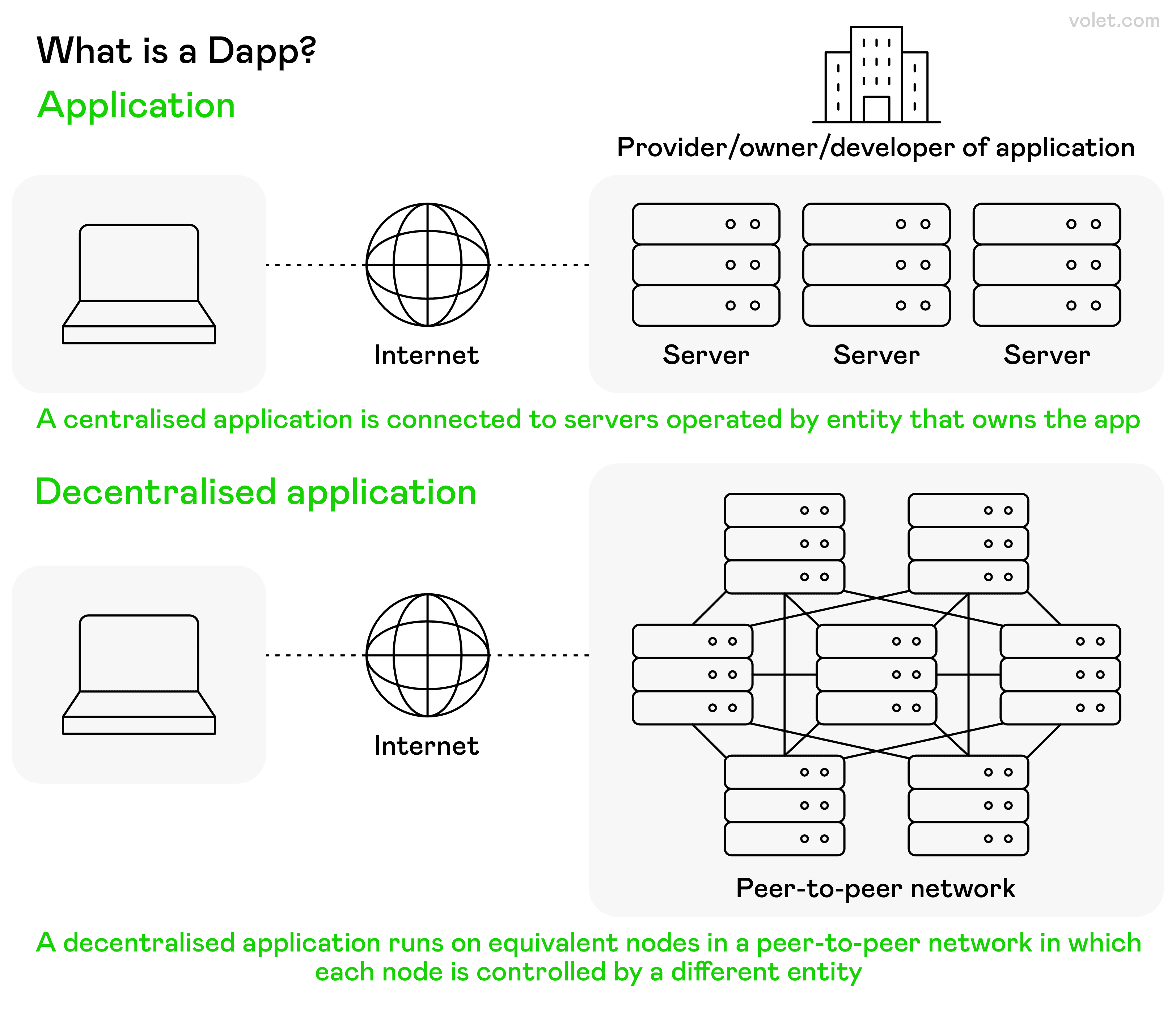
A graphical illustration explaining decentralized applications (dApps) and how they work.
What Are DeFi Applications?
The brilliance of decentralized finance lies in DeFi applications, which power financial services without centralized intermediaries like banks or payment processors. These apps, built on blockchain technology, use smart contracts—self-executing agreements coded to automate financial transactions. Running on blockchain networks like Ethereum, they ensure greater efficiency and enhanced security.
My first encounter with a DeFi application was a decentralized exchange. I connected my wallet and traded crypto assets instantly—no ID, no delays. This DeFi transaction felt liberating, driven by transparent code. DeFi applications like lending platforms, borrowing services, and yield farming protocols facilitate transactions for cryptocurrency trading, investment opportunities, and liquidity provision. They’re:
Programmable (rules are coded)
Transparent (open-source smart contracts)
Permissionless (anyone with an internet connection joins, regardless of socioeconomic status)
Always-on (no central authority downtime)
DeFi offers accessible financial services, democratizing access to financial markets while navigating market volatility, regulatory uncertainty, and smart contract vulnerabilities with robust security measures.
Highlights of the key advantages of decentralized applications (dApps).
What is One of the Main Advantages of DeFi Applications?
After spending years exploring various DeFi applications, I've concluded that the single most revolutionary key advantage is accessibility. Let me explain why this matters so much.
Traditional financial systems have always maintained traditional barriers to entry. Whether it's minimum balance requirements, credit checks, or simply the need for identification documents that many around the world lack, conventional banking excludes billions of people.
DeFi shatters these traditional barriers. As long as you have an internet connection and a crypto wallet, you can access sophisticated accessible financial services regardless of your location, socioeconomic status, or banking history.
I witnessed this firsthand when my friend in a developing country—who had been repeatedly rejected for a small business loan by local traditional financial institutions—accessed a DeFi lending platform and secured funding within minutes. The code doesn't care about his nationality, income level, or credit history. It only cares that he provided sufficient collateral according to the predetermined rules.
This accessibility extends beyond basic services. Through DeFi applications, people everywhere gain access to:
Global financial markets previously reserved for accredited investors
Yield farming opportunities beyond standard savings accounts
Financial tools that operate outside traditional banking hours
Services that work across borders without excessive fees
While other benefits of DeFi like transparency and efficiency are significant (and we'll explore those soon), nothing matches the revolutionary potential of bringing financial inclusion to the estimated 1.7 billion adults who remain unbanked worldwide.
Other Benefits of DeFi Applications You Need to Know
Beyond accessibility, decentralized finance offers several advantages that have kept me engaged despite the occasional market volatility. Let me walk through the key benefits that have made the biggest difference in my financial life:
Financial Inclusion Without Borders
Traditional financial institutions have geographic limitations and often exclude people based on various factors. I've experienced this frustration when traveling internationally and finding my accounts temporarily frozen because I forgot to notify my bank.
DeFi applications eliminate these problems by operating on borderless blockchain networks. Whether you're in New York or Nairobi, you can access the same accessible financial services with the same terms. This global accessibility means financial inclusion isn't just a buzzword—it's built into the DeFi ecosystem itself.
I recently spoke with someone who moved from Venezuela to Colombia during an economic crisis. While their traditional bank accounts became essentially worthless, their DeFi positions remained accessible and functional throughout the entire ordeal. That's the power of borderless financial services.
Transparency That Actually Means Something
"Transparency" gets thrown around a lot in financial marketing, but traditional financial systems rarely deliver on this promise. Have you ever tried understanding exactly how your bank determines your loan interest rate? Good luck with that!
In contrast, DeFi operates with radical transparency. Every DeFi transaction on the blockchain is publicly viewable, and smart contracts are open-source, meaning anyone can inspect the code.
I remember auditing a DeFi protocol’s smart contract before making a substantial deposit and discovering a potential smart contract vulnerability. I chose a different DeFi platform as a result. Try getting that level of insight into your bank's internal financial system! This transparency builds genuine trust—not because an institution claims to be trustworthy, but because you can verify everything yourself.
Enhanced Security Through Decentralization
Centralized financial institutions represent single points of failure. When Lehman Brothers collapsed in 2008, countless people suffered the consequences. DeFi platforms distribute risk across decentralized blockchain networks, making them resistant to single points of failure.
While smart contract vulnerabilities exist (more on risks later), the core security model offers enhanced security over traditional financial systems. I sleep better knowing my digital assets aren't controlled by a single entity that could suffer a catastrophic breach or internal fraud.
The absence of a central authority means no CEO can empty the coffers and flee to a non-extradition country. Instead, funds move according to predefined rules that no individual can override.
Unprecedented Control Over Your Assets
Using DeFi applications gives you direct custody of your digital assets, unlike traditional finance where banks and brokerages control your money. This self-custody model means no one can freeze your accounts or restrict your access.
I learned this lesson the hard way when my traditional bank froze my account for "suspicious activity" (buying crypto assets, ironically). It took three stressful days to resolve. With DeFi, I maintain complete control over my crypto assets at all times.
This control extends to how your digital assets are used. When you deposit money in a bank, they lend it out and profit from the interest while giving you pennies. In DeFi, you choose exactly how your crypto assets are deployed and receive the full benefits of DeFi minus transparent DeFi protocol fees.
Efficiency Through Automation
Leveraging smart contracts, DeFi protocols automate complex financial operations that traditionally require extensive human intervention. This automation drastically reduces both time and transaction costs.
For example, getting a mortgage through traditional finance can take weeks and involve multiple centralized intermediaries. A similar process in DeFi can be completed in minutes with minimal transaction costs.
I recently used a flash loan—a DeFi innovation that allows borrowing services without collateral if the loan is repaid within a single transaction block—to execute a complex arbitrage opportunity. This financial transaction would have been literally impossible in traditional finance, yet in DeFi, it happened in seconds.
Decentralized Exchanges: Trading Without Intermediaries
One of my favorite DeFi applications is decentralized exchanges (DEXs). Unlike Coinbase or Binance, these DeFi platforms operate without a central authority, allowing direct peer-to-peer cryptocurrency trading through liquidity pools.
My first experience with a DEX was eye-opening. After years of submitting to KYC procedures and worrying about exchange hacks, I traded directly from my wallet with no registration required. The entire process felt liberating.
DEXs facilitate transactions with several unique key advantages:
No account requirements or identity verification
Direct custody of crypto assets (you control your private keys)
Resistance to censorship and regulatory oversight
Usually lower transaction costs than centralized alternatives
These DeFi platforms use automated market makers (AMMs) rather than traditional order books. Users provide liquidity provision to liquidity pools, and algorithms determine prices based on the ratio of underlying assets in each pool. This innovative approach to financial markets represents one of DeFi’s most successful reinventions of traditional financial infrastructure.
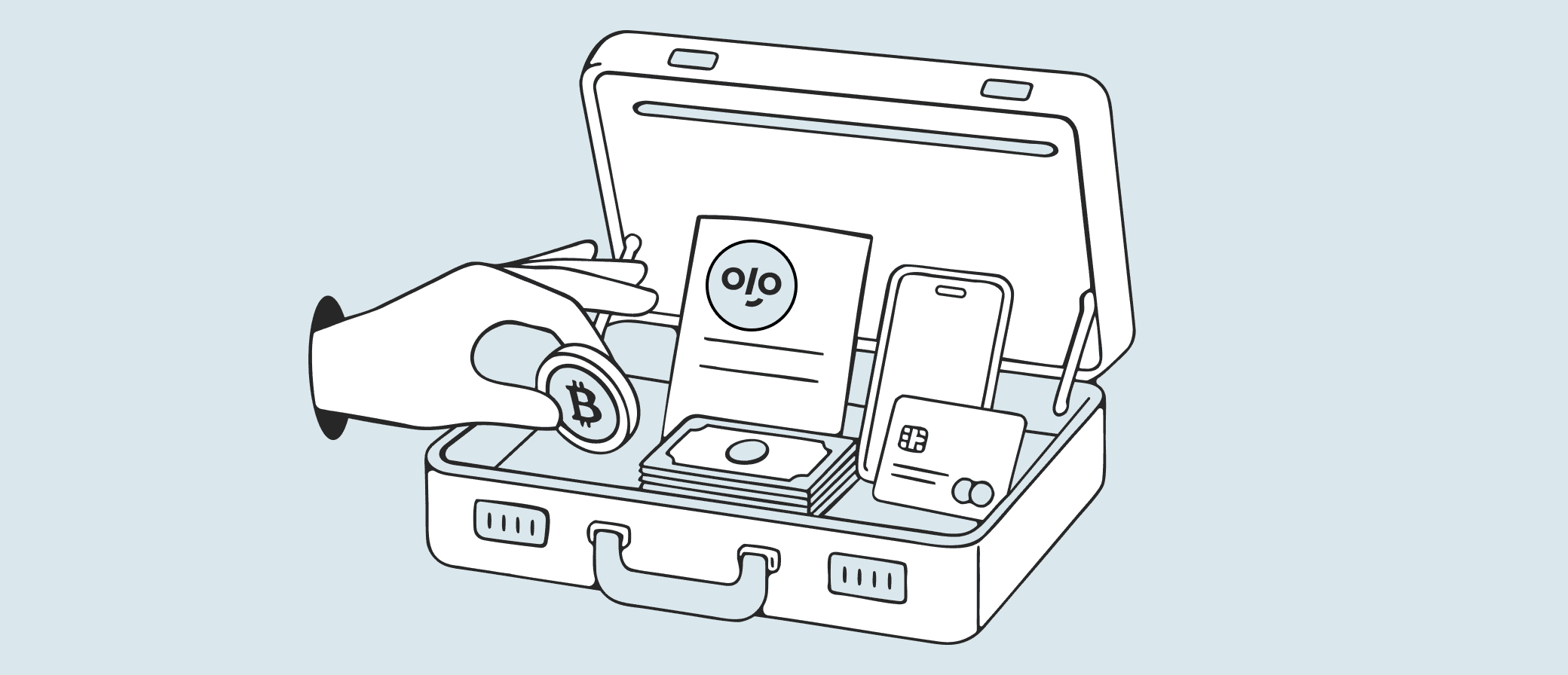
How DeFi lending platforms connect borrowers and lenders using crypto collateral and fiat deposits.
Lending and Borrowing Without Banks
Lending and borrowing platforms represent another cornerstone of the DeFi ecosystem. These DeFi protocols allow users to earn interest by providing liquidity provision or borrow underlying assets by posting collateral—all without traditional intermediaries.
My experience with DeFi lending and borrowing started cautiously. I deployed a small amount of stablecoins on a borrowing platform and watched in amazement as interest accrued in real-time (not monthly like my bank). The rates were substantially higher than traditional financial savings accounts, though with different risk profiles.
The lending and borrowing space showcases DeFi’s innovative potential:
Interest rates are determined algorithmically based on supply and demand
Real-time accrual of interest (no waiting for monthly payments)
Instant loan approval with sufficient collateral
No credit checks or lengthy application processes
However, most DeFi lending and borrowing remains overcollateralized, meaning you must deposit more value than you borrow. This limitation exists because these systems can't rely on traditional credit scoring. While this prevents unsecured consumer loans, it brilliantly solves other use cases like leverage, tax management, and short-term liquidity provision needs.
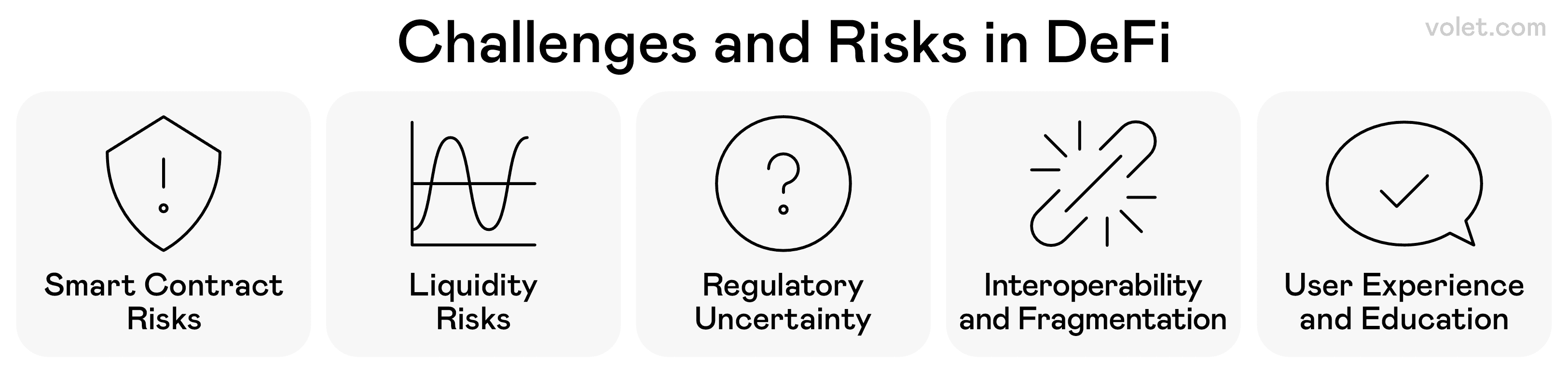
The main challenges and risks associated with decentralized finance (DeFi).
Risks and Challenges of DeFi
I'd be doing you a disservice if I painted DeFi as a risk-free utopia. Despite my enthusiasm, I've experienced enough challenges to maintain a healthy respect for the dangers in this DeFi space.
Smart Contract Vulnerabilities
Since DeFi applications rely on code, bugs or smart contract vulnerabilities in that code can lead to catastrophic failures. I've watched in horror as DeFi protocols were exploited, sometimes losing millions of dollars in minutes.
The "code is law" principle works both ways—if a hacker finds a legitimate exploit according to the smart contract’s rules, they can drain funds with no recourse. This risk demands extensive security measures, including code audits, formal verification, and gradual scaling.
Regulatory Uncertainty
The regulatory frameworks for DeFi remain unclear in most jurisdictions. This regulatory uncertainty creates risks for both users and developers.
I've seen DeFi projects shut down overnight following regulatory changes, leaving users scrambling. While decentralization provides some protection, regulatory frameworks will inevitably evolve to address this growing DeFi sector.
My approach has been cautious: I avoid DeFi projects that openly flout regulatory oversight and prefer those taking thoughtful approaches to compliance while preserving decentralization's core benefits of DeFi.
Market Volatility and Liquidation Risks
Cryptocurrency markets experience significant market volatility, creating risks for DeFi users, particularly those using leverage or collateralized loans.
During a market crash, I watched as several of my positions approached their liquidation thresholds. I had to quickly add collateral to avoid automatic liquidation—a stressful experience that highlighted the importance of risk management in this DeFi space.
User Experience Challenges
Despite improvements, DeFi applications still present significant usability hurdles for non-technical users. From wallet management to understanding gas fees, the learning curve remains steep.
I regularly help friends navigate these DeFi platforms and witness their confusion firsthand. While the interfaces are improving, mainstream adoption requires further simplification without compromising enhanced security or transparency.
Closing Thoughts
My journey through decentralized finance has transformed how I think about money, value, and financial systems. Despite the risks and challenges, I remain convinced that DeFi represents one of the most significant innovations in financial services in generations.
The key advantage of DeFi applications—borderless accessibility to accessible financial services—has the potential to create a more inclusive and efficient global economy. While traditional finance optimizes for the privileged few, DeFi’s open architecture creates investment opportunities for anyone willing to learn the new rules.
As you explore this DeFi space, remember that the greatest power comes with the greatest responsibility. Do your own research, start small, and never invest more than you can afford to lose. The DeFi ecosystem rewards the curious and careful while punishing the reckless.
I'm excited to see how this technology evolves and what new investment opportunities emerge as more people discover the power of truly open financial services. Whether DeFi completely replaces traditional financial systems or (more likely) creates a new hybrid financial landscape, the fundamental shift it introduces will permanently change how we think about money.
Frequently Asked Questions
DeFi applications facilitate financial transactions by leveraging smart contracts on blockchain networks, eliminating the need for a central authority like traditional financial institutions. Unlike traditional finance, which relies on centralized intermediaries such as banks or payment processors to process financial transactions, DeFi platforms enable peer-to-peer cryptocurrency trading, lending and borrowing, and other financial services directly through transparent, self-executing agreements.
Decentralized exchanges operate without a central authority, allowing users to trade directly from their wallets without creating accounts or submitting identification. They use automated market makers and liquidity pools instead of traditional order books, and users maintain custody of their crypto assets throughout the cryptocurrency trading process.
Key risks include smart contract vulnerabilities that could lead to loss of funds, regulatory uncertainty that might affect DeFi project viability, extreme market volatility that can trigger loan liquidations, and challenges in recovering funds if mistakes are made since DeFi transactions are typically irreversible.
Blockchain technology enables financial inclusion by creating borderless, permissionless blockchain networks that anyone can access regardless of location or socioeconomic status. It removes traditional barriers like minimum balance requirements or credit checks while providing transparent, programmable accessible financial services that operate 24/7 without requiring trust in centralized institutions.
When using DeFi applications, practice secure wallet management by using hardware wallets when possible, be cautious with permissions granted to smart contracts, start with small amounts until comfortable with a DeFi platform, choose DeFi protocols with security measures like audits and established track records, and remain aware of common scams targeting DeFi users.
Disclaimer
This article is provided for informational purposes only and does not constitute legal, financial, or professional advice. All content is based on publicly available information and personal opinions. Readers are advised to seek professional guidance before making decisions or acting based on the material presented. The author and publisher assume no liability for any actions taken or not taken by the reader based on the information contained herein.