Are you curious about how to invest in DeFi but unsure where to start? Decentralized finance offers remarkable opportunities to grow your digital assets, but navigating this rapidly evolving landscape requires strategic thinking. This guide cuts through the complexity with proven investment approaches designed specifically for newcomers. You'll discover not just what decentralized finance (DeFi) is, but exactly how to invest in DeFi to start building wealth in this innovative financial system while managing potential risks effectively.
How to Invest in DeFi: A Beginner's Guide to Smart Strategies
- 4/8/2025
- Akan Nse
- 14 min
Discover essential strategies for beginner investors in DeFi. Learn how to navigate this evolving space and make informed decisions. Read more now!
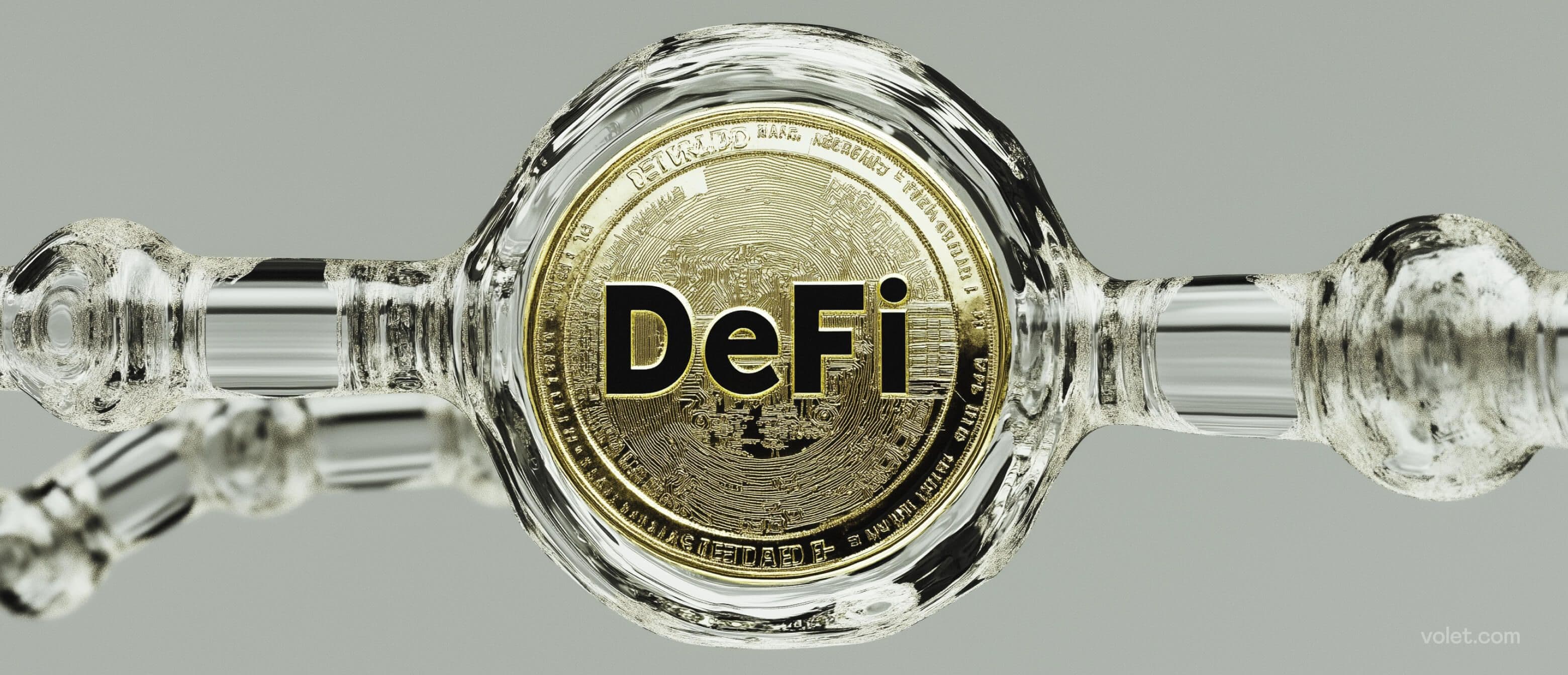

A visual definition of decentralized finance, highlighting its foundation in secure, distributed ledger technology.
Understanding Decentralized Finance: What Does DeFi Stand For?
When you first hear about the latest innovations in the financial system, decentralized finance (DeFi) likely tops the list of transformative technologies like blockchain technology. But what exactly does this mean for you as an investor looking to invest in DeFi? At its core, DeFi stands for a revolutionary approach to financial transactions that operates without traditional financial institutions acting as middlemen.
Unlike conventional banking, where a centralized financial system controls your money, decentralized finance (DeFi) creates financial applications using smart contracts on blockchain technology. This means your financial transactions occur peer-to-peer through decentralized exchanges, secured by smart contracts rather than by banks or other centralized financial institutions.
The beauty of decentralized finance lies in its transparency and accessibility. Without an intermediary or central authority dictating terms, you gain unprecedented control over your DeFi assets. All you need is an internet connection and a compatible Coinbase wallet to access a world of financial opportunities through DeFi platforms that were previously unavailable to the average person via traditional financial systems.
Blockchain technology forms the foundation of these services, providing the security and transparency that make decentralized finance (DeFi) viable. Platforms like Ethereum have become particularly important as they support smart contracts – self-executing agreements with the terms directly written into code for DeFi protocols.
When comparing traditional finance to decentralized finance, the differences become clear:
- Traditional finance relies on centralized financial institutions that control access
- Traditional financial institutions operate during limited business hours
- The current system often excludes individuals without traditional banking access like savings accounts
- Centralized financial institutions typically charge higher transaction fees for their securities trading services
In contrast, decentralized finance (DeFi) enables 24/7 operations, global accessibility through DeFi apps, and often lower transaction fees. This accessibility represents a significant shift from the centralized financial system that has dominated for centuries, powered by DeFi networks.

How to Invest in DeFi: Smart Investment Strategies for Beginners
When you're new to decentralized finance (DeFi), developing a sound investment strategy is crucial before diving in to invest in DeFi. Let's explore practical approaches that can help you safely start investing in DeFi while managing potential risks effectively with the right risk tolerance.
Start with Stablecoin Lending
As a beginner, one of the safest ways to earn passive income is through stablecoin lending on DeFi platforms. Platforms like Aave and Compound allow you to lend crypto assets like USDC or DAI, which maintain value close to the US dollar at a stable market price. This approach offers several advantages:
- Lower volatility compared to other DeFi assets
- Relatively predictable interest rates (typically 1-8% APY)
- Simpler mechanics that are easier to understand with smart contracts
- Lower risk profile while you learn the DeFi ecosystem
Begin with a small allocation—perhaps 5-10% of your crypto holdings—to understand how these DeFi protocols work before increasing your exposure to lend crypto.
The Dollar-Cost Averaging Approach
Rather than trying to time the market price, consider implementing a dollar-cost averaging strategy when you invest in DeFi tokens across DeFi platforms. This means investing fixed amounts at regular intervals regardless of market price. This strategy:
- Reduces the impact of volatility
- Removes emotional decision-making
- Creates discipline in your investment approach
- Potentially lowers your average cost basis over time
For example, you might decide to invest in DeFi with $100 weekly into a basket of established DeFi protocols like UNI (Uniswap), AAVE, or COMP (Compound) via decentralized exchanges, gradually building your position while managing risk tolerance.
The 80/20 Safety-Innovation Split
A practical portfolio allocation for beginners involves dedicating about 80% of your DeFi investments to established DeFi protocols with proven track records and the remaining 20% to promising but higher-risk opportunities in emerging financial technology:
- 80% Safety Allocation: Focus on blue-chip DeFi protocols with significant total value locked (TVL), multiple security audits, and longstanding operation. These include lending DeFi platforms like Aave, decentralized exchanges like Uniswap, and derivatives platforms like dYdX for securities trading.
- 20% Innovation Allocation: This portion allows for higher-risk, higher-reward opportunities in newer DeFi protocols that show promise. Always research thoroughly and invest only what you can afford to lose.
This balanced approach allows you to benefit from the relative stability of established projects while maintaining exposure to potential breakthroughs in decentralized finance.
The Stablecoin Safety Net
Maintaining a portion of your portfolio in stablecoins serves multiple purposes in your DeFi strategy:
- Creates a cash reserve for buying opportunities during market conditions dips
- Provides liquidity for new opportunities like yield farming without selling existing positions
- Enables participation in yield farming opportunities as they arise on DeFi platforms
- Reduces overall portfolio volatility
Consider keeping 30-40% of your DeFi assets allocation in stablecoins, particularly when you're starting to invest, to maintain flexibility and reduce risk with smart contracts.
Diversification Across Networks
While Ethereum hosts the largest DeFi ecosystem, expanding your investments across multiple blockchain platforms can reduce risk and increase opportunity in DeFi networks:
- Ethereum: The largest and most established DeFi ecosystem with the most liquidity providers and users
- Solana: Known for high throughput and low transaction fees
- Avalanche: Offers compatibility with Ethereum tools while providing faster financial transactions
- Polygon: Ethereum's leading scaling solution with growing DeFi adoption
Spreading your investments across these DeFi networks not only diversifies risk but also helps you understand the unique advantages of different blockchain technology implementations.
Your Step-by-Step Guide to DeFi Investment
Now that you understand both the fundamental strategies and the nature of decentralized finance (DeFi), let's walk through a practical step-by-step guide to begin your journey to invest in DeFi:
Set up a Secure Wallet
Begin with a self-custody wallet like MetaMask or Trust Wallet. These wallets give you control over your private key and connect directly to DeFi apps. Remember to:
- Write down your recovery phrase and store it securely offline
- Never share your private keys or seed phrase with anyone
- Consider using a hardware wallet like Ledger for larger DeFi investments
Fund Your wallet
Purchase and transfer some ETH to your wallet as it's needed for transaction fees on Ethereum-based DeFi protocols. Start with a small amount as you learn—perhaps $100-500 worth, depending on your overall investment budget and risk tolerance.
Start With a Simple Lending Platform
Aave or Compound provides an excellent first experience for lending crypto. Here's how to begin:
- Visit the DeFi platform through your browser
- Connect your wallet when prompted
- Deposit funds, like a small amount of stablecoins
- Monitor the interest rates accruing in real-time via smart contracts
Explore Decentralized Exchanges
Once comfortable with lending, try making a small swap on a decentralized exchange like Uniswap. This helps you understand how token exchanges work without intermediaries and how market order mechanisms function in decentralized finance to trade DeFi coins.
Implement a regular investment schedule
Based on the dollar-cost averaging strategy mentioned earlier, set up a regular schedule to deposit funds into your DeFi investments. This might mean weekly deposits into lending DeFi protocols or monthly additions to your diversified token holdings on DeFi platforms.
Track your Investments
Use portfolio dashboard tools like DeBank or Zapper to monitor all your DeFi positions in one place. Regular monitoring helps you:
- Understand your actual returns with interest rates
- Identify underperforming DeFi assets
- Keep track of completed transactions
- Monitor changes in interest rates or yields from yield farming
Join Community Channels
The decentralized finance space evolves rapidly, and staying informed is crucial. Join Discord servers or Telegram groups for the DeFi protocols you're invested in to learn from experienced users and stay updated on important changes in DeFi apps.
Gradually Increase Complexity
After mastering these basics for 1-2 months, consider exploring more complex strategies like:
- Providing liquidity to liquidity pool services
- Participating in governance through voting
- Exploring basic yield farming opportunities
- Investigating cross-chain bridges to diversify across DeFi networks
This gradual approach helps build your knowledge while limiting exposure to potential risks you don't yet fully understand.

Exploring the Potential Risks of DeFi Investments
Now that you have actionable strategies and a step-by-step approach, let's examine the potential risks you need to manage when you invest in DeFi. Smart contract vulnerabilities represent one of the most significant concerns. Despite rigorous testing, coding errors can occur, potentially endangering your DeFi investments. In 2020, DeFi protocol hacks resulted in over $100 million in losses, highlighting the importance of choosing established DeFi protocols with multiple security audits.
To manage this risk:
- Stick to DeFi protocols that have undergone multiple security audits
- Start with DeFi platforms that have survived market crashes and retained user trust
- Never invest more than you can afford to lose in any single DeFi protocol
- Consider DeFi insurance products like Nexus Mutual for significant DeFi investments
Market volatility presents another consideration for your investment strategy. The market price of tokens can fluctuate dramatically based on market conditions, sometimes changing 20-30% in a single day. This volatility exceeds what you might experience with traditional assets regulated by the Federal Reserve or other governmental bodies.
Impermanent loss affects liquidity providers specifically. When you provide DeFi assets to a liquidity pool, changes in the relative value of the paired assets can result in holding less dollar value than if you had simply held the assets, even though you earned trading fees. Understanding this concept is crucial before providing liquidity on decentralized exchanges.
Regulatory uncertainty adds another layer of complexity to your investment planning. As governments worldwide develop frameworks for cryptocurrency regulation, sudden policy changes could impact your DeFi investments. The lack of insurance protection similar to what the FDIC provides for traditional financial institutions means you must exercise greater caution with your risk tolerance.
Understanding your risk tolerance becomes particularly important in this space. Ask yourself: could you withstand significant temporary losses without making emotional decisions? The answer helps determine how much of your portfolio to allocate to this emerging sector of decentralized finance.

The process of yield farming in decentralized finance, staking assets to earn rewards.
Maximizing Returns Through Yield Farming
Once you’ve mastered the basics, yield farming represents a more advanced strategy that could potentially enhance your returns in decentralized finance. This process involves providing liquidity to DeFi protocols in exchange for rewards, often paid in the protocol’s native token.
When you participate in yield farming, you typically deposit funds into a liquidity pool. These liquidity pools facilitate trading on decentralized exchanges, providing the necessary liquidity for other users to swap tokens efficiently. As compensation for providing these DeFi assets, you receive a portion of the trading fees plus additional token rewards from yield farming.
For beginners approaching yield farming, consider these practical strategies:
- Start with stablecoin pairs: Begin with stablecoin-to-stablecoin liquidity pools (like USDC-DAI) to minimize impermanent loss while learning the mechanics.
- Focus on established DeFi protocols: Prioritize yield farming on DeFi platforms with proven security records like Curve Finance for stablecoins or Convex Finance for boosted Curve yields.
- Calculate real yields: Look beyond the advertised APY. Consider factors like:
- Token inflation and sustainability
- Gas fees for claiming rewards
- Estimated impermanent loss
- Time commitment for monitoring positions
- Set profit-taking targets: Establish clear points at which you’ll convert some reward tokens to stablecoins or other DeFi assets to lock in gains.
- Stay informed about protocol changes: Yield farming incentives often change based on governance decisions. Join community channels to stay updated on upcoming modifications in DeFi apps.
The mechanics work similarly to earning interest rates, but with potentially higher returns and correspondingly higher risks. Annual percentage yields (APYs) can range dramatically, sometimes reaching triple or even quadruple digits during promotional periods, far exceeding traditional savings accounts' interest rates in traditional finance.
Remember that the highest yields often come with the greatest risks in yield farming. Unsustainable APYs usually indicate either high inflation of the reward token or temporary incentives that will eventually decrease. Building a diversified strategy across different DeFi protocols helps manage these risks while maximizing potential returns with smart contracts.

How to Lend Crypto Safely and Profitably
Lending represents one of the most accessible entry points to decentralized finance, allowing you to earn passive income on your crypto holdings. When you lend crypto, you essentially provide capital to borrowers in exchange for interest rate payments, similar to how banks lend money but with different mechanics and risk profiles using smart contracts.
For beginners, follow these practical steps to lend crypto safely:
- Choose established lending DeFi protocols: Start with DeFi platforms like Aave and Compound that have strong security records and significant liquidity pools.
- Understand the collateralization model: DeFi lending typically requires borrowers to over-collateralize their loans (provide assets worth 125-150% of what they borrow). This protects lenders but differs from traditional financial institutions.
- Begin with mainstream DeFi assets: Initially, focus on lending stablecoins or major cryptocurrencies like ETH that have deep liquidity and more predictable behavior.
- Diversify across DeFi platforms: Spread your lending activity across 2-3 reputable DeFi protocols to mitigate platform-specific risks.
- Monitor health factors: Lending DeFi platforms show borrower “health factors” indicating collateralization levels. Watch these metrics, especially during market volatility.
Popular lending DeFi platforms include Aave and Compound, both of which use pooled lending models. Rather than matching individual lenders with borrowers, these DeFi protocols create liquidity pools where algorithms determine interest rates based on supply and demand. These interest rates adjust dynamically – when many users want to borrow a particular DeFi asset, the interest rate increases, incentivizing more liquidity providers to provide liquidity with smart contracts.
The process works differently from traditional savings accounts. Instead of a fixed interest rate, you’ll see continuously variable returns based on market dynamics in decentralized finance. Currently, lending stablecoins like USDC or DAI typically yields 1-5% annually, though interest rates have reached much higher levels during peak demand periods.
Closing Thoughts
As you begin your journey into decentralized finance (DeFi), remember that success comes from a balanced approach combining curiosity with caution. The strategies outlined in this guide provide a foundation, but your path will evolve as you gain experience and as the financial system itself matures.
Balance curiosity with caution as you enter DeFi. Start small, prioritize learning over quick profits, and expand gradually as your confidence grows. Successful investors combine DeFi protocol expertise with broader market understanding.
Create a personal learning roadmap alongside your investment strategy. Weekly study of new concepts and community engagement often yields better returns than chasing high-yield farming yields.
By participating thoughtfully, you’re both growing DeFi assets and supporting a more open financial system. Begin with conservative strategies, maintain realistic expectations, and make security your priority. With patience and diligence, you’ll build a resilient portfolio for long-term success in decentralized finance.
Disclaimer
This article is provided for informational purposes only and does not constitute legal, financial, or professional advice. All content is based on publicly available information and personal opinions. Readers are advised to seek professional guidance before making any decisions or taking any actions based upon the material presented. The author and publisher assume no liability for any actions taken or not taken by the reader based on the information contained herein.
Frequently Asked Questions
Technically, you can start investing with any amount, but gas fees on networks like Ethereum mean smaller investments (under $1,000) may lose significant value to transaction costs. Consider starting with Ethereum Layer 2 solutions like Arbitrum or Optimism for low fees if your investment budget is modest. For absolute beginners, even $100-200 on a low-fee network can provide valuable hands-on experience with DeFi apps.
Look for comprehensive security audits from reputable firms like CertiK or OpenZeppelin, examine the team’s background, check the total value locked (TVL) history, and review the governance structure. DeFi protocols that have survived market downturns generally demonstrate greater resilience. The longer a DeFi protocol has operated without security incidents, the more confidence you can have—though no DeFi platform is entirely risk-free.
Yes, though some technical understanding helps. User-friendly interfaces like Aave’s app or aggregators like Yearn Finance simplify the process. Start with these more accessible DeFi platforms before moving to complex strategies that require deeper protocol knowledge. Many beginners find success by focusing on simple lending and staking strategies while gradually building their technical understanding of decentralized finance.
Most jurisdictions treat DeFi activities as taxable events. Lending, providing liquidity, and claiming rewards typically generate income tax obligations, while exchanging tokens creates capital gains/losses. Consult with a crypto-savvy tax professional and consider using specialized crypto tax software like CoinTracker or TokenTax to automatically track your obligations and maintain compliance with your DeFi investments.
DeFi offers more control over your DeFi assets, potentially higher yields than traditional fixed-income investments, 24/7 market access, greater transparency, and the ability to negotiate interest rates directly through market participation. For many investors, the ability to experiment with small amounts while learning about cutting-edge financial innovations provides both educational value and potential returns not available in traditional finance.
Do More With Your Money
Manage digital money effortlessly: send, receive, and exchange crypto for business and everyday life
Let’s talk about your payment needs!
Message your manager in any language:
Author

Akan NseCrypto/Finance Content & Copywriter
I’m a fiction writer turned crypto copywriter who explains blockchain and AI with clarity and creativity.
Follow us to never miss a new article