Demystifying Solana: A Comprehensive Network Guide
Explore the Solana Network with our comprehensive guide, covering its features, benefits, and potential challenges. Discover more by reading the article!
If you’ve spent any time in the crypto world, you’ve probably heard the name Solana thrown around. Maybe someone hyped it up as the Ethereum killer or maybe you just stumbled upon it while researching blockchain projects. Either way, you’re here now, and you’re probably wondering: What is Solana, and why is it such a big deal?
I’ve been down the crypto rabbit hole for a while now (some days, I wish I hadn’t fallen so deep—looking at you, rug pulls 😭). And let me tell you, Solana is one of those projects that genuinely stands out.
It’s fast, cheap, and built to handle massive amounts of transactions without breaking a sweat. But, of course, no blockchain is perfect. So let’s break it all down—the good, the bad, and the stuff they don’t always tell you upfront.
What is Solana Network?
Are you into blockchain development and enjoy diving into technical research? Go and check out Anatoly Yakovenko’s paper. In it, Yakovenko introduces Proof of History (PoH)—a novel mechanism that timestamps transactions before they’re added to the blockchain, making the network capable of handling up to 710,000 transactions per second on today’s hardware.
The first time someone explained Solana to me, they called it “the blockchain that actually works at scale.” I thought they were exaggerating until I saw it in action.
To understand Solana, I want you to imagine that Ethereum and Bitcoin had a baby. But instead of inheriting their sluggish transaction speeds and sky-high fees, this new blockchain got super-speed and cost efficiency. That’s kind of what Solana is.
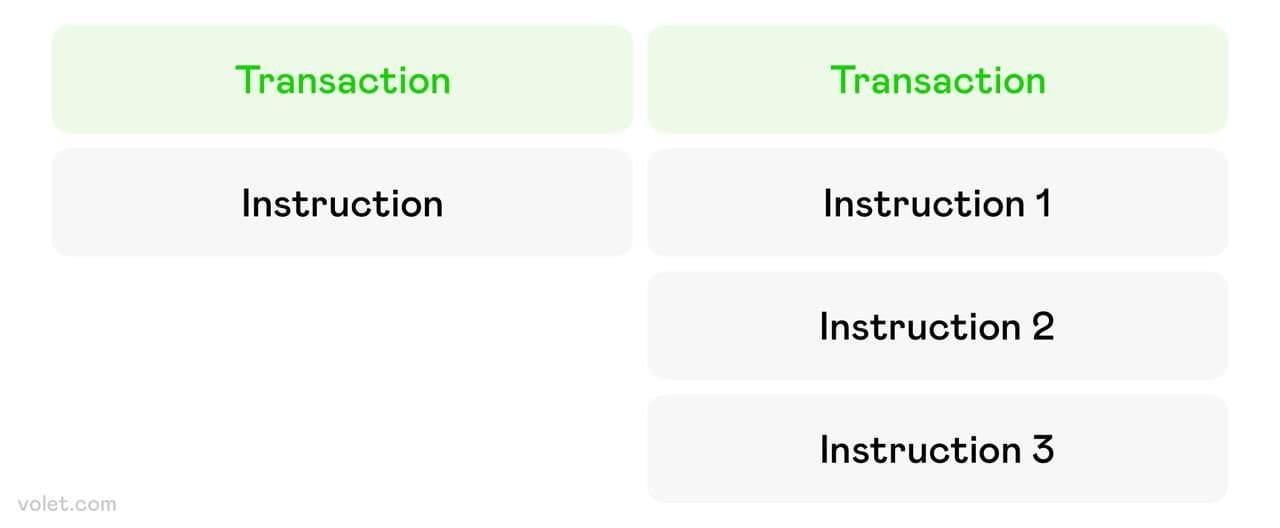
Transaction flow through the Solana Network
Solana is a high-performance blockchain built to handle thousands of transactions per second—without the lag and crazy fees that plague other networks. Unlike Ethereum, which is still trying to scale, Solana was designed for speed from day one.
At the heart of this high-speed performance are its innovative consensus mechanisms, including Proof of History (PoH). It’s basically the blockchain equivalent of upgrading from dial-up internet to fiber-optic speeds. And it’s not just hype—Solana delivers where it counts. Of course, nothing’s perfect (and we’ll get to the downsides later), but for now, let’s dive into an….
Overview of Solana
Solana is a fast, decentralized, and scalable blockchain platform designed to support a wide range of applications and use cases. Imagine a blockchain that can handle thousands of transactions per second without breaking a sweat—that’s Solana.
The Solana network is built to provide a secure, reliable, and efficient environment for developers to build and deploy decentralized applications (dApps). At the heart of this high-speed performance is its innovative Proof of History (PoH) consensus mechanism.
This unique approach allows Solana to timestamp transactions before they even reach the blockchain, ensuring that everything runs smoothly and quickly. In essence, Solana aims to be the go-to blockchain platform for anyone looking to build scalable and efficient dApps.
The Story Behind Solana: A Brief History
Every great project has an origin story, and Solana’s starts with one man: Anatoly Yakovenko. Back in 2017, Yakovenko was working on distributed systems at Qualcomm when he had a lightbulb moment.
Anatoly Yakovenko
He realized that traditional blockchains were horribly inefficient because they lacked a reliable, automated way to timestamp transactions. Instead, they relied on validators constantly checking with each other to confirm blocks.
This slowed everything down. His solution? Proof of History (PoH)—a new way of structuring blockchain transactions that made the whole process faster and more efficient.
By 2020, Solana launched, backed by Solana Labs in San Francisco and the Solana Foundation in Geneva. The project took off fast, gaining massive adoption during the DeFi and NFT boom of 2021.
SOL’s price skyrocketed, developers flocked to the ecosystem, and suddenly, everyone was talking about Solana as the “Ethereum killer.” (And if you’re wondering, Ethereum’s still alive and kicking—but Solana definitely gave it a run for its money.)
What Makes Solana Unique?
I remember sitting in a coffee shop, frustrated after waiting 20 minutes for an Ethereum transaction to go through. My friend leaned over and said, "You know, that would have been done in seconds on Solana."
Think of a transaction on Solana like an envelope containing forms. Each form is an instruction that tells the network what we are requesting to do. When you send the transaction, it's like mailing the envelope to get the forms processed.
What makes Solana different isn’t just marketing hype—it’s built on some genuinely innovative tech. So, what’s the secret sauce? Why can Solana do things that other blockchains struggle with? The answer lies in its unique technology stack. Here’s what sets it apart:
✔️ Proof of History (PoH) – This is the big innovation. PoH is like a cryptographic clock that timestamps transactions before they even reach the blockchain. This means validators don’t have to waste time constantly syncing with each other, speeding up the whole process.
✔️ Hybrid Consensus (PoH + PoS) – Solana doesn’t rely on just one system. It combines Proof of Stake (PoS) with Proof of History (PoH) to create a more efficient and secure network.
✔️ Parallel Processing – Unlike Ethereum, where transactions happen one at a time, Solana processes multiple transactions simultaneously. This prevents congestion and keeps fees low.
✔️ Sealevel Smart Contracts – This system lets multiple smart contracts run in parallel, unlike Ethereum, where they have to be executed sequentially. The result? Faster, more scalable dApps.
✔️ Gulf Stream Protocol – This technology pushes transactions to validators before the previous block is finalized, allowing Solana to maintain its high TPS without network slowdowns.
In plain terms? Solana’s architecture is designed to scale seamlessly without slowing down or becoming too expensive to use. But does it actually live up to these claims? Let’s dig a little deeper.
Solana Blockchain Technology
Solana’s blockchain technology is designed to provide a scalable and secure environment for decentralized applications. What sets the Solana blockchain apart is its unique combination of algorithms that eliminate performance bottlenecks typically caused by blockchain software.
This makes Solana not just scalable, but also secure and decentralized. The Solana network operates on a dual consensus model, combining Proof of History (PoH) and Proof of Stake (PoS). This hybrid approach allows for fast and secure transaction processing, making it a robust platform for a variety of applications.
Whether you’re into decentralized finance (DeFi), non-fungible tokens (NFTs), or gaming, Solana’s advanced technology has got you covered. It’s this blend of speed, security, and scalability that makes Solana a standout in the world of blockchain technology.
Who is Solana For?
Solana isn’t just for crypto nerds. Here’s who’s using it:
🔹 Developers – Solana’s fast and cheap transactions make it a prime choice for building dApps, DeFi protocols, and blockchain games.
🔹 DeFi Traders – With low fees and high-speed transactions, Solana is perfect for decentralized exchanges, lending platforms, and yield farming.
🔹 NFT Creators & Collectors – Thanks to low gas fees, many NFT projects have migrated to Solana from Ethereum.
🔹 Investors – SOL is a high-growth asset that many traders see as a promising long-term hold (despite the risks).
SOL Token: More Than Just Digital Cash
At the heart of the Solana ecosystem is SOL, its native cryptocurrency.
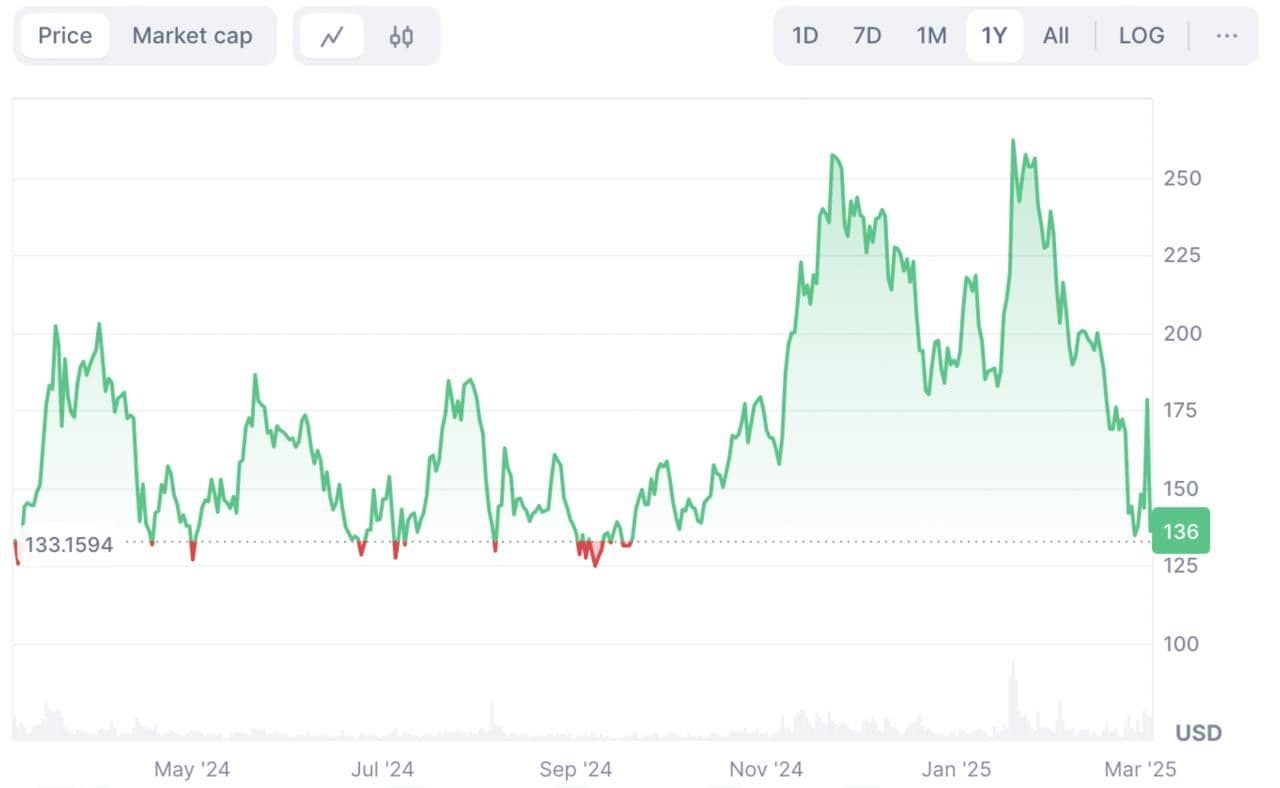
March 4th, 2025. Solana Token: 1-Year Performance.
🔹 Transaction Fuel – SOL is used to pay fees for smart contracts and transfers. 🔹 Staking & Validation – Holders can stake SOL to help secure the network. 🔹 DeFi Collateral – SOL is widely used in Solana-based lending platforms.
Unlike some cryptos with unlimited supplies, SOL has a capped max supply of 500 million tokens. This scarcity helps drive long-term value—at least in theory.
As of now, SOL sits around $140.88, but like every crypto, it has had its wild ups and downs.
Smart Contracts on Solana
Smart contracts are self-executing contracts with the terms of the agreement written directly into lines of code. On Solana, smart contracts are used to automate various processes and transactions, making it possible for developers to build complex decentralized applications.
Solana’s smart contract platform is designed to be fast, secure, and scalable, allowing for the creation of a wide range of decentralized applications. Thanks to its innovative technology, Solana can support the creation of complex smart contracts that can be used in a variety of applications, including DeFi, NFTs, and gaming.
Whether you’re looking to automate financial transactions or create unique digital assets, Solana’s smart contracts provide a powerful and flexible solution.
What’s Next for SOL? Price Predictions & Market Sentiment
When I first bought SOL back in 2021, I watched it surge by more than 100x during the DeFi boom. Then, like most crypto in 2022, it crashed hard—losing 94% of its value. Crypto isn't for the faint of heart!
Looking ahead, analysts are predicting gradual growth. Some forecasts suggest a minimal price of €576.54 by 2027, potentially reaching €1,908.57 by 2032. But honestly? Take these predictions with a grain of salt. The crypto market is notoriously unpredictable.
Current Market Sentiment:
🟢 Potential for growth 🔴 “Fear & Greed Index” showing extreme fear—markets are cautious
Short term? Prices are expected to hover around $143.57 by March 3, 2025, but crypto is volatile, so anything can happen.
Does Solana Have a Future?
Honestly? Yes—but with some caveats.
✅ Fastest growing blockchain – Solana’s adoption keeps rising. ✅ Strong developer support – Tons of projects are being built. ✅ Cheaper & faster than Ethereum – That’s a huge advantage.
However...
❌ Centralization concerns – High-performance nodes are expensive to run. ❌ Network outages – Solana has had multiple downtime issues. ❌ Competition from other blockchains – Ethereum, Avalanche, and even newer L2 solutions are fighting for market share.
If Solana can keep innovating and address its stability issues, it’s in a strong position to remain a top blockchain.
Is Solana Worth Your Attention?
After spending years exploring the Solana ecosystem, here's my take:
If you're a developer: Absolutely. The speed, low costs, and growing ecosystem make it an excellent platform for building dApps.
If you're an investor: Maybe. SOL has shown both tremendous growth and significant volatility. Do your research and only invest what you can afford to lose.
If you're a crypto user: Probably. If you're tired of high fees and slow transactions, Solana offers a refreshing alternative.
Final Thoughts
When I first decided to learn about Solana, I didn't expect it to change my perspective on blockchain technology. But experiencing sub-second transactions and fees that barely register has made it hard to go back to slower networks.
Solana isn't perfect—no blockchain is. It faces challenges with centralization risks and occasional network congestion. But its innovative approach to scalability, combined with a growing ecosystem of applications, makes it a serious contender in the blockchain space.
Whether you're looking to build, invest, or simply explore, Solana offers something genuinely different in the crypto landscape. And for me, that difference has been worth the journey.
FAQs
What is the Solana Network?
Solana is a high-speed blockchain designed for scalable dApps, DeFi, and NFTs, with ultra-low fees and fast transaction times.
How does Solana achieve high transaction speeds?
It combines Proof of History (PoH) with Proof of Stake (PoS) to process transactions efficiently, avoiding the bottlenecks that slow down other blockchains.
What is SOL used for?
SOL is used for paying transaction fees, staking for rewards, and securing the network.
How does Solana compare to Ethereum?
Solana is faster and cheaper, but Ethereum has a more established ecosystem and greater decentralization.
Is Solana a good investment?
It has high growth potential, but crypto is risky. Always do your research before investing.
Disclaimer
This article is provided for informational purposes only and does not constitute legal, financial, or professional advice. All content is based on publicly available information and personal opinions. Readers are advised to seek professional guidance before making any decisions or taking any actions based upon the material presented. The author and publisher assume no liability for any actions taken or not taken by the reader based on the information contained herein.