Discover the fundamentals of BlockDAG technology in crypto, its unique advantages, and how it differs from traditional blockchains. Read on to learn more!
Blockchain has changed decentralized systems but as the crypto space advances so do the technologies that support it. Enter BlockDAG an innovative solution to overcome the limitations of traditional blockchains.
If you’re wondering what BlockDAG is, how it works and why it’s gaining traction in the crypto space this guide will break it all down for you. We’ll explore the BlockDAG ecosystem, its features and benefits and functionality in the crypto world.
Key Takeaways
BlockDAG uses a Directed Acyclic Graph (DAG) structure to process multiple transactions at the same time, significantly increasing speed and scalability.
The BlockDAG ecosystem supports decentralized applications (dApps) and low-code tools for developers.
Mining BDAG coins is easy and rewarding with 80% of coins allocated for mining rewards.
BlockDAG’s hybrid Proof-of-Work mechanism ensures security and decentralization.
Designed for large scale operations BlockDAG is suitable for industries like IoT and supply chain management.
Source: woolyblog.com
Traditional Blockchains vs BlockDAG
Building on the previous discussion of BlockDAG’s benefits it’s important to understand how this new technology compares to traditional blockchains. While both aim to change decentralized systems their underlying structure and functionality are very different.
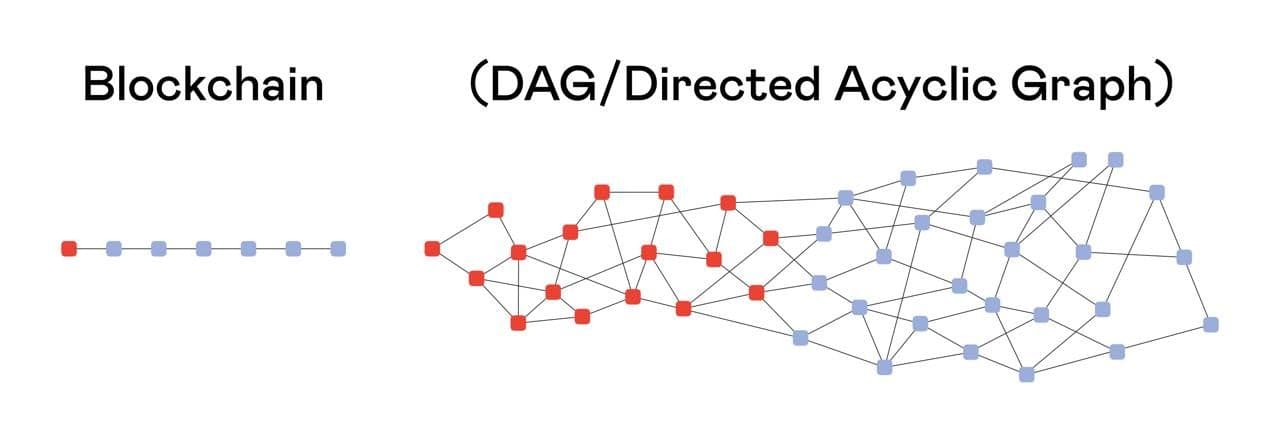
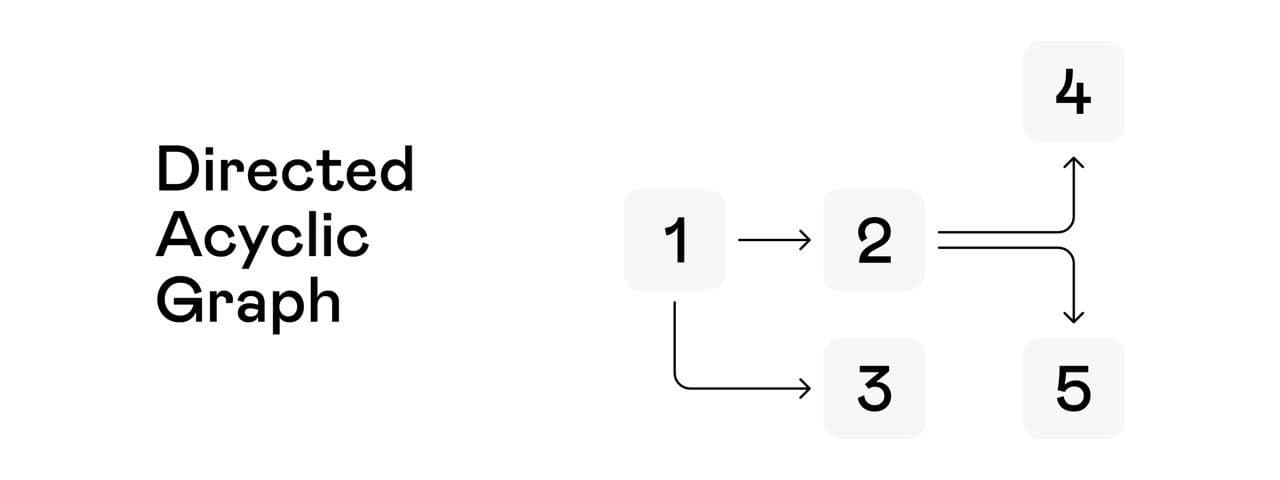
Most decentralized systems like blockchains are organized as a series of blocks linked together in a straight line. Each block holds a list of transactions and the order of these transactions is important because everyone needs to agree on what happened first, second and so on. But here’s the catch: this linear setup can run into problems as more people use it. Since every computer (or "node") in the network has to process every single transaction things can slow down and fees can go up. Plus many transactions don’t actually depend on each other so there’s no real need to process them in a specific order they could happen at the same time and still give the same result.To solve this they came up with a smarter way to handle transactions. Instead of forcing everything into a straight line they created systems where unrelated transactions can be processed at the same time. This approach uses something called a directed acyclic graph (DAG) which is a fancy way of saying it’s a web of blocks instead of a straight chain. BlockDAG for example uses a protocol called Phantom GhostDAG to make this work.
Here’s how it works in simple terms: in a BlockDAG blocks can reference multiple previous blocks instead of just one. A new block is considered “valid” when it’s connected to a sufficient number of earlier blocks. This connection process creates a network of blocks that are interlinked.
Source : boardinfinity.com
The idea behind this is that as a block gets connected to more and more previous blocks it becomes harder to alter or remove because it’s increasingly supported by other blocks in the system. The more connections (or “references”) it has the more “secure” and “permanent” it becomes in the network.
BlockDAG is also fully compatible with the Ethereum Virtual Machine (EVM) which means it works seamlessly with Ethereum based tools and smart contracts. If you’re a developer who’s used to building apps on Ethereum (using tools like Solidity) you’ll find it easy to move your projects over to BlockDAG. In fact you can migrate existing Ethereum apps and tokens to BlockDAG with very little effort.
BlockDAG Benefits
BlockDAG technology offers a promising alternative to traditional blockchains bringing multiple benefits along with some notable challenges. Unlike conventional blockchains which process transactions sequentially BlockDAG allows parallel transaction processing. This enables multiple transactions to be confirmed at once improving scalability and handling higher transaction volumes. As a result BlockDAG is ideal for high-throughput applications like real-time payments and microtransactions.
Security is another strong point of BlockDAG. It uses a hybrid Proof-of-Work (PoW) consensus mechanism which combines PoW’s security with the efficiency of a Directed Acyclic Graph (DAG). This setup makes BlockDAG more resilient to common attacks like double-spending and Sybil attacks ensuring secure transactions. The decentralized nature of BlockDAG also enhances its security by making it harder for bad actors to take control of the network.BlockDAG reduces network congestion resulting in lower transaction fees. By processing multiple blocks at the same time it reduces competition for block space and makes transaction flow more efficient. This is especially beneficial for users who make frequent or small transactions as they can get lower fees even during peak hours.
It also supports decentralized application (dApp) development with low-code tools which makes it easier for developers to build dApps. This encourages innovation and helps expand blockchain adoption.
BlockDAG Challenges
Of course BlockDAG is not without challenges. A key challenge is the development of a consensus mechanism. BlockDAG’s non-linear structure makes consensus more complex requiring solutions that balance security, efficiency and scalability. Research is ongoing.
Its architecture is more complex to develop and maintain compared to traditional blockchains. Developers need to manage multiple chains and ensure they work together seamlessly which requires continuous optimization. This added complexity can lead to higher operational costs and may be a barrier for smaller projects or organizations.
Adoption is another hurdle as BlockDAG is still an emerging technology. For it to succeed it must integrate seamlessly with existing blockchain infrastructures and be compatible with other systems in the broader crypto ecosystem. This will take time and continuous development.
One more challenge is network synchronization and data integrity. Unlike traditional blockchains where block confirmations follow a linear process BlockDAG requires mechanisms to ensure consistency across multiple chains. Without these data integrity can be compromised.
While BlockDAG improves scalability its ability to handle extremely high transaction volumes without compromising speed, security or decentralization is still being tested. As adoption grows it will be crucial for BlockDAG to manage increasing transaction loads efficiently avoiding bottlenecks faced by traditional blockchains.
Source: BlockDag
What is BlockDAG Coin (BDAG)?
If you want to engage with the BlockDAG ecosystem you need to understand BDAG.
BlockDAG Coin (BDAG) is the network’s native utility coin which facilitates transactions, rewards and overall functionality within the ecosystem. BDAG plays a crucial role in maintaining a smooth and efficient digital economy.
How BDAG Works:
Transaction Fees – Every transaction on the BlockDAG network requires BDAG to cover fees. This helps sustain the network and reward validators for securing the system.* Peer-to-Peer Transactions – BDAG enables wallet-to-wallet transactions without intermediaries. This means instant, secure and cost-effective transfers.
Staking Rewards – Validators stake BDAG to secure the network and get rewarded. This promotes network decentralization and stability.
Access to dApps – Holding BDAG gives users access to various dApps within the ecosystem and encourages adoption and engagement.
As the backbone of BlockDAG BDAG ensures secure transactions, incentivized participation and a thriving digital economy.
Source: Btcc Academy
BlockDAG Mining
When it comes to crypto mining BlockDAG offers an innovative and profitable opportunity. The network uses a hybrid Proof-of-Work consensus mechanism so you don’t need expensive equipment to participate.
To start mining BDAG coins you can simply download the BlockDAG mobile app and mine directly from your smartphone. This makes mining accessible to a wider audience and encourages more participation.
BlockDAG has allocated 80% of BDAG coins as mining rewards so early adopters and active participants will benefit greatly. With an optimized hash rate mining BDAG is efficient and rewarding.
Mining Rigs and Specifications
BlockDAG has a range of mining devices for different types of miners whether you’re just starting out or running a large scale operation. The X10 Miner is great for beginners and small scale miners. It doesn’t specify hash rate or power usage but it’s designed to boost rewards when paired with the X1 Mobile Miner. This setup allows you to mine up to 200 BDAG coins a day and is easy to set up via Bluetooth or Wi-Fi and syncs seamlessly with the X1 Miner app.
For those with more experience the X30 Miner steps it up with more power and efficiency. It’s for intermediate users looking to scale up their mining and can mine up to 600 BDAG coins a day. Although hash rate and power isn’t specified it uses advanced ASIC technology which boosts efficiency and security.
The X100 Miner is for larger scale operations and offers the highest performance in BlockDAG’s lineup. Can mine up to 2,000 BDAG coins a day and is perfect for professional miners who need a robust solution for long term operations and uses ASIC technology.However one thing to note is that BlockDAG’s website doesn’t provide much technical details such as hash rate or power consumption so it’s hard to compare directly with other mining rigs in the market. Instead the focus is on how many BDAG coins you can mine per day which depends on network difficulty and current price of BDAG.
For those who want a simpler way to start mining BlockDAG also offers the X1 Mobile Miner a smartphone app that lets you mine directly from your phone. While the earnings from this app is much lower than the dedicated rigs it’s a good starting point for anyone who wants to try mining without investing in heavy equipment.
Projects and Cryptocurrencies Using BlockDAG Technology
BlockDAG technology is transforming multiple industries by providing faster, more secure and transparent solutions. Several forward thinking projects are using BlockDAG technology to boost performance and scalability:
Finance
Kaspa: A cryptocurrency that achieves fast transaction speeds making it suitable for everyday use and high volume transactions. Fast confirmations enhance retail and online payment experiences.
Internet of Things (IoT)
Taraxa: Focuses on microtransactions in IoT environments, processing many small transactions efficiently for applications like smart cities. This enables new business models for monetizing IoT generated data.
Supply Chain Management
Obyte: A decentralized platform that emphasizes privacy and security, ideal for handling sensitive data in sectors like healthcare and finance. It ensures secure handling of sensitive information making it suitable for financial and healthcare applications.
Healthcare
Obyte: In healthcare sector Obyte can store and share patient data securely, ensuring privacy while allowing authorized access for healthcare providers. This enhances data security and accessibility in medical environments.
BlockDAG Applications Across Industries
1. Decentralized Exchanges (DEXs) – Fast and Secure Crypto Trading
BlockDAG technology enables high-throughput and low-latency trading which is crucial for real-time crypto exchanges. Projects like Kaspa are built on BlockDAG so faster transactions and better scalability for decentralized exchanges. Kaspa’s architecture allows for rapid processing of large transaction volumes so seamless and secure trading experience for users. By processing transactions concurrently rather than sequentially BlockDAG supports real-time trading addressing the limitations of traditional blockchain systems.
2. Lending & Borrowing Platforms – Users can earn interest and access collateralized loans
In DeFi (Decentralized Finance) space lending and borrowing platforms benefit from BlockDAG’s scalability and speed. Aave a leading DeFi lending protocol offers decentralized lending services where users can lend and borrow assets, earn interest on their deposits. Although not built on BlockDAG the platform can benefit from its architecture to speed up transactions and reduce delays during peak hours. Similarly platforms like Liquity which enables decentralized borrowing can leverage BlockDAG to process many transactions more efficiently and securely improving user experience.
BlockDAG enhances the scalability and performance of payment systems making it ideal for stablecoins. Dai a decentralized stablecoin uses the MakerDAO protocol to maintain a stable value for easy cross-border transactions. Tether (USDT) another popular stablecoin benefits from fast and secure transactions for crypto payments. By using BlockDAG these stablecoin networks can ensure even faster transactions and lower costs for users especially for real-time settlements and low-fee cross-border transactions.
4. Non-Fungible Tokens (NFTs) – Creating and exchanging unique digital assets
NFTs (Non-Fungible Tokens) are unique digital assets stored on a blockchain representing ownership of items like art, music, videos and virtual goods. BlockDAG’s efficiency in handling large transaction volumes and fast processing speeds are beneficial to NFT platforms. Obyte a decentralized platform built on BlockDAG supports the creation and exchange of NFTs making minting and trading of unique digital assets more efficient. BlockDAG’s architecture allows NFT marketplaces to handle high volume of transactions without bottlenecks so smoother user experience with lower fees. Similarly platforms like Mintable (not built on BlockDAG) can also benefit from this technology providing faster and more scalable NFT operations.
5. Decentralized Storage – Secure and reliable data storage solutions
BlockDAG can also be applied to decentralized storage systems. Filecoin a decentralized storage network allows users to rent out unused storage space. BlockDAG can improve Filecoin’s performance by speeding up data transactions and retrieval. Similarly Sia another decentralized storage solution can leverage BlockDAG technology to speed up, reliability and efficiency of its data storage services so data can be accessed and stored securely at scale.
Partnerships and Integrations
BlockDAG has partnered with leading blockchain projects:
Chainlink
By integrating with Chainlink BlockDAG ensures that decentralized applications can securely and efficiently access real-world data. This is particularly important for DeFi platforms and smart contracts that rely on accurate and tamper-proof external information such as price feeds, weather conditions and financial market data.
Platforms like Synthetix benefits from this collaboration as it allows for real-time price updates improving the reliability and security of decentralized trading. BlockDAG enhances Chainlink’s oracle network by speeding up transactions and scalability when smart contracts request external data. Chainlink nodes retrieve and validate data and feed it into smart contracts and with BlockDAG’s parallel processing capability these updates can be executed faster and more reliably.
Polkadot
BlockDAG has strengthened cross-chain communication and interoperability by allowing efficient and high-speed asset transfers between different blockchain networks. Polkadot’s multi-chain architecture allows parachains to talk to each other and BlockDAG’s scalable transaction structure enhances this by allowing multiple transactions to be processed in parallel.
Projects like Acala Network leverages this capability to provide DeFi services like lending, borrowing and staking across multiple blockchain ecosystems. BlockDAG enhances Polkadot’s interoperability by speeding up transactions and scalability. Since Polkadot connects multiple blockchains having a structure like BlockDAG that allows parallel processing of transactions ensures smoother cross-chain communication and reduces congestion.
Binance Smart Chain
Through its integration with Binance Smart Chain (BSC) BlockDAG enhances Ethereum-compatible decentralized applications (dApps) by scaling and reducing transaction costs. Developers building on BSC can leverage BlockDAG’s structure to execute smart contracts faster and cheaper so platforms like PancakeSwap can process transactions faster and with minimal delays.BlockDAG reduces BSC’s network congestion and confirmation times. BSC uses Proof-of-Staked-Authority (PoSA) consensus and by integrating BlockDAG’s structure multiple transactions can be confirmed at the same time optimizing the network.
Source: Disruptafrica
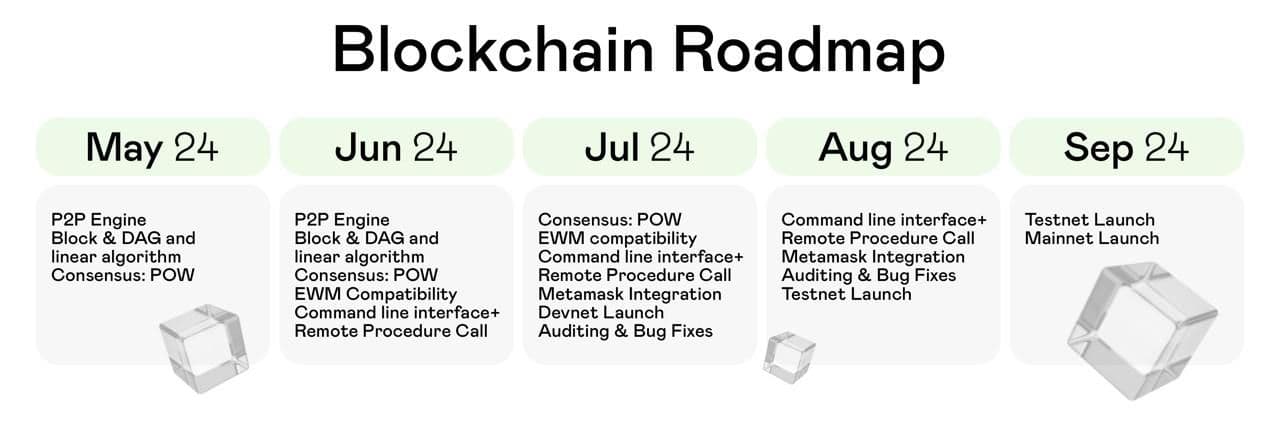
Roadmap and Future Developments
BlockDAG is pushing the boundaries of decentralized technology and will always be at the forefront of innovation. The roadmap includes several exciting developments to expand the ecosystem, scale and drive mainstream adoption. Here’s what’s coming:
1. More DeFi Services and Lending Platforms
BlockDAG will add more decentralized finance (DeFi) services and lending platforms. More ways for users to earn, borrow and invest within the BlockDAG ecosystem.
Timeline: 2024–2025
DeFi is growing fast and BlockDAG will capitalize on this by integrating advanced DeFi tools and services. This is in line with the industry trend of expanding DeFi beyond simple swaps and staking to more complex financial instruments.
2. IoT Devices for Secure Data Exchange and Micropayments
BlockDAG is exploring the integration of Internet of Things (IoT) devices to enable secure data exchange and micropayments. IoT devices will interact with the BlockDAG network and create new use cases in smart homes, supply chain management and healthcare.
Timeline: 2025–2026
Blockchain and IoT is a growing trend as it provides a secure and decentralized way to manage data and payments. BlockDAG’s DAG structure is perfect for handling the high volume of microtransactions from IoT devices.
3. Scaling to Support Growing Transaction Volumes
As BlockDAG grows the platform will focus on scaling to handle increasing transaction volumes without compromising speed and security. This includes optimizing the GhostDAG protocol and layer-2 solutions.
Timeline
Ongoing, major updates expected by 2025. Scaling is a challenge for blockchain and DAG-based systems. BlockDAG will scale to support mass adoption and compete with traditional payment systems.
4. Decentralized Governance for the Community
BlockDAG is working on its decentralized governance model to give the community more control over the platform. This includes voting for protocol upgrades, funding and ecosystem development.
Timeline: 2025
Decentralized governance is a Web3 fundamental and BlockDAG is following the community-driven trend.
5. Global Partnerships for Mainstream Adoption
BlockDAG is partnering with businesses, governments and other blockchain projects to drive mainstream adoption. These partnerships will integrate BlockDAG into real-world applications like payments, remittances and enterprise solutions.
Timeline
Ongoing, major announcements expected in 2025
Strategic partnerships are key to blockchain adoption and BlockDAG is positioning itself as a major player in the industry.
BlockDAG (BDAG) Price Prediction 2025
Analysts expect BDAG to reach $1 by 2025. Currently BDAG is trading at $0.07995 on the BDAG/WETH pair on Uniswap v2.
This is a big return for early investors. As the BlockDAG ecosystem grows it will attract institutional and retail investors and become a top 10 cryptocurrency.
With growing adoption, real-world use cases and ongoing developments BDAG could see big price appreciation in the next few years.
BlockDAG (BDAG) Price Prediction 2030
Looking further ahead experts expect BDAG to reach $30 by 2030. According to CryptoNews and CoinPaper BDAG is expected to grow to $3.75 and $24 respectively by 2030.
Similarly Bitcoinist analysts predict BDAG could hit $20 by 2027 after a 2100% increase from its pre-sale value.
This is bullish for BlockDAG:
Scalability – Handles high transaction volumes efficiently.
Energy Efficiency – A more sustainable alternative to Proof-of-Work (PoW) systems.
Speed & Security – Faster transactions with enhanced network security.
Eco-Friendly Solutions – A greener alternative for environmentally conscious investors.* Future Development – Integration with major blockchain networks.
As BlockDAG grows its ecosystem BDAG will increase in demand and become one of the best long-term crypto investments.
Factors Affecting BDAG’s Price Growth
Here are the key factors:
1. Adoption
The more businesses, developers and users integrate BlockDAG the higher the demand and price of BDAG.
2. Market Trends
Crypto cycles, investor sentiment and macroeconomic factors will impact BDAG’s price.
3. Partnerships and Integrations
Partnerships with other blockchain projects and financial institutions will drive mainstream adoption and utility for BDAG.
4. Technology
Ongoing network upgrades, scalability and new use cases will make BlockDAG more competitive in the blockchain space.
Conclusion
BlockDAG is going to be one of the most revolutionary technologies in blockchain. Unlike traditional blockchains which are limited by scalability and speed, BlockDAG introduces a DAG framework allowing multiple transactions to be processed at the same time. This means faster transactions, more scalability and better security – all essential for decentralized networks.
Of course no technology is perfect, BlockDAG is still evolving and will take time to refine. But the potential is huge and it’s one of the most exciting things in blockchain today.
As research and development continues BlockDAG will play a key role in decentralized finance, smart contracts and cross-chain compatibility. Its impact will go beyond blockchain as we know it today.
FAQs
BlockDAG is a decentralized technology that uses a Directed Acyclic Graph (DAG) structure to process multiple transactions at the same time, making it faster and more scalable than traditional blockchains.
By processing multiple blocks at once BlockDAG eliminates congestion and fast transactions.
Yes! BlockDAG has a mobile mining app where you can mine BDAG coins directly from your smartphone without expensive hardware.
BDAG has a total supply of 150 billion coins, 80% for mining rewards and 33% for presale.
BlockDAG’s DAG structure and hybrid PoW makes it faster, more scalable and more secure than traditional blockchains.
Disclaimer
This article is provided for informational purposes only and does not constitute legal, financial, or professional advice. All content is based on publicly available information and personal opinions. Readers are advised to seek professional guidance before making any decisions or taking any actions based upon the material presented. The author and publisher assume no liability for any actions taken or not taken by the reader based on the information contained herein.