Learn what an ERC-20 wallet is and how to store your tokens securely. Discover essential tips to protect your digital assets
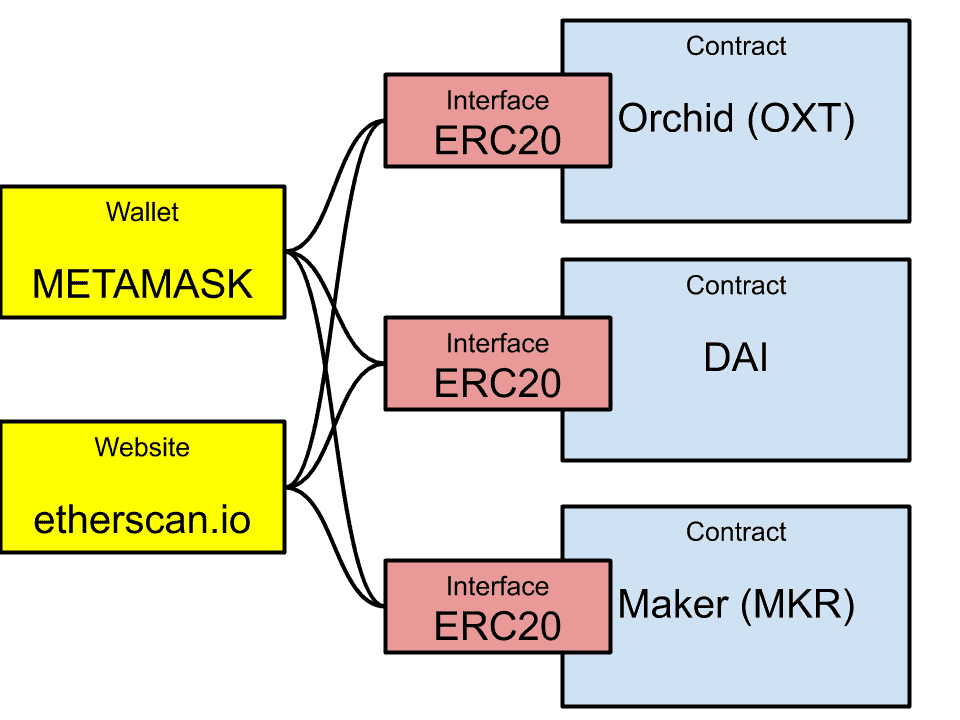
As you can probably understand, to store and manage ERC-20 tokens, users typically need a digital wallet compatible with the Ethereum blockchain. An ERC-20 wallet is designed to support tokens that adhere to the ERC-20 standard which is defined by the Ethereum Request for Comment number 20. It simplifies the process of interacting with decentralized applications (dApps), token-based ecosystems and normally includes access to your private keys, ensuring that you have full control over your digital holdings. Of course, there can be different types of wallets that are compatible with the ERC-20 token standarв.
Let's start with a quick overview for now, and we'll dive into wallet types in more detail later.
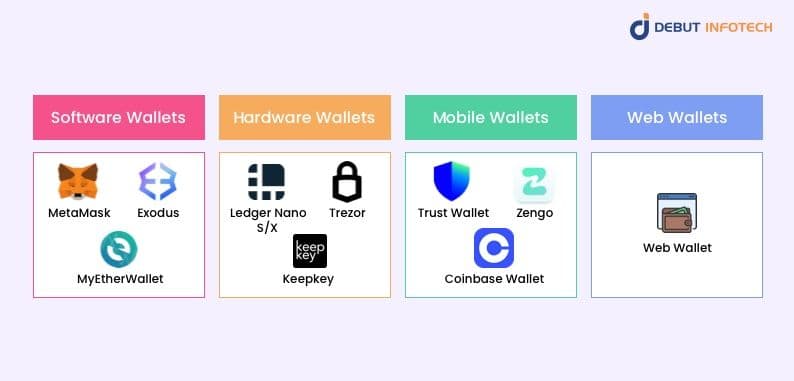
Hardware wallets, such as Ledger hardware wallets, are physical devices that store private keys offline. This offline storage provides an additional layer of security against hacking and other online threats. Software wallets, like MetaMask and Trust Wallet, are programs that run on a computer or mobile device, offering a user-friendly interface for managing digital assets. Mobile wallets, such as Coinbase Wallet, are apps that allow users to store and manage digital assets on their mobile devices, providing convenience and portability.
In addition to storing and managing ERC-20 tokens, as mentioned earlier, all of these crypto wallets also enable users to interact with dApps on the Ethereum network. dApps are programs that run on the Ethereum blockchain, offering various services such as lending, borrowing, and trading.
Overall, ERC-20 tokens and compatible crypto wallets are integral components of the Ethereum ecosystem. They provide powerful tools for developers and users to create, manage, and interact with digital assets, driving innovation and expanding the possibilities within the blockchain space.
Introduction to ERC-20 tokens
That’s all good. But why paying attention to ERC-20 tokens at all? Well, they are tradable and many of them, such as memes, have earned money to their owners over their years. In general, ERC-20 tokens are a type of fungible token, holding equal value and being interchangeable with another of the same type, and each ERC-20 token is identical and of equal value to every other token of the same type. Much like 1 US dollar is equal in value to all other 1 US dollars.
The creation of ERC-20 tokens is facilitated by smart contracts—self-executing contracts with the terms of the agreement directly written into lines of code. This allows for a wide range of applications, from representing assets and voting rights to serving as utility tokens within various platforms.
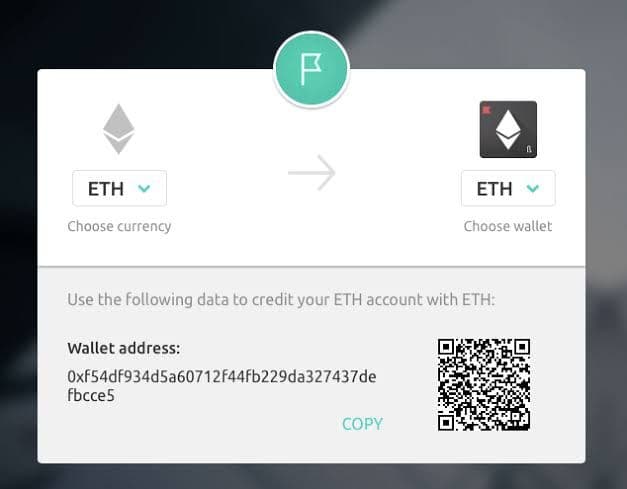
When you have an ERC-20 wallet, you can generate an address — which we’ll talk more about later — you can share that address with others to receive tokens, and initiate transactions. For instance, if someone wants to send you a specific ERC-20 token, they will simply transfer it to your ERC-20 address using any compatible wallet or exchange.
Ethereum provides a decentralized platform for the generation and trading of these tokens, ensuring security and transparency through its blockchain. The decentralized nature is a cornerstone of the Ethereum ecosystem, allowing developers to issue their own digital assets without the need for a central authority.
Ethereum wallet address and why you’ll hear about it more than once
So, we have a wallet with a certain address on Ethereum to send and receive ERC-20 tokens. An address on Ethereum is created from a 40-character hexadecimal number that may combine numbers (1-3) and letters (A-9). This character string is generated by a public key encryption algorithm and might look like this: 0x5eb6053F3E94C9b9C09a3f33699436.
When sending or receiving tokens from or to your crypto wallet, you will use such an address to identify your recipient or yourself. Always double-check the address to avoid any mishaps. Once a transaction is confirmed on the blockchain, it is irreversible.
Does every wallet have a new address?
There are no two wallets with the exact same address unless you deliberately import the same account with a seed phrase into multiple wallet instances. Each wallet you create typically generates a unique address derived from the seed phrase or private key.
This uniqueness ensures that all transactions and balances associated with that address are distinctly tied to the private key in question. If you ever see the same address in two different wallets (without intentionally importing it), that would be highly unusual and indicates potential mistakes or misunderstandings in the seed phrase management process.
How does an ERC-20 wallet work?
The term “ERC-20 Wallet” typically refers to a non-custodial wallet. In a non-custodial wallet, the user holds the private keys, granting full control over the funds. Unlike custodial wallets (where an exchange or third party holds your keys), non-custodial wallets do not require KYC verification if you simply want to interact with decentralized applications or manage your own assets.
Common forms of ERC-20 wallets include browser extensions, mobile apps, and desktop applications. These enable you to manage your tokens without relinquishing ownership to any third party. You remain responsible for your keys, so safeguarding them is crucial. If you lose access to your keys or seed phrase, you could lose access to your funds permanently.
Types of ERC-20 wallets
ERC-20 tokens can be stored in various types of wallets, each with different pros and cons. Here are the primary categories:
Source: Debut Infotech
Hardware Wallets (like Ledger Nano and Trezor):
Most secure as they keep keys offline.
Ideal for significant long-term holdings.
Software Wallets (desktop or mobile-based):
Often easier for frequent transactions.
Keys may be on an internet-connected device, increasing potential risk.
Paper Wallets:
Theoretically secure but prone to physical damage or loss.
Involve generating keys offline and printing them on paper.
Web or Online Wallets:
Convenient for quick access.
Reliant on third parties; risk of hacking or phishing if not properly secured.
Mobile Wallets
Due to the portability of mobile devices, these wallets make it convenient to use your token holdings on the go, interact with decentralized apps, or even perform contactless payments where supported.
Because phones can be more vulnerable to hacking or physical theft, it’s imperative to set up robust security measures such as PIN codes, biometric authentication, and backups.
Selecting the correct wallet type depends on your usage patterns, transaction frequency, and risk tolerance.
Top ERC-20 wallets to consider
This list provides an overview of the best wallets for storing Web3 asset data on EVM-compatible chains like Ethereum. Each wallet offers unique features:
Ledger Nano Series:
Hardware Wallet with top-tier security.
Perfect for long-term holders and high-value traders.
Trezor Model T:
Another popular hardware Wallet; user-friendly interface.
Integrates with various dApps and Web3 services.
MetaMask:
A browser extension and mobile Wallet for Ethereum and other EVM chains.
Easy to use for decentralized applications (DeFi, NFTs).
Trust Wallet:
Mobile Wallet that supports multiple blockchains.
Owned by Binance, recognized for its user-friendly approach.
MyEtherWallet (MEW):
A web-based Wallet that has been around for years.
Offers good compatibility with the Ethereum ecosystem.
Hardware wallets are worth considering in the first place if you’re planning to hold for a long time. Because these wallets isolate your keys from potentially compromised computers or mobile devices, they significantly reduce the risk of theft. This heightened security makes hardware wallets, such as Ledger Nano and Trezor, highly attractive.
When transacting from a hardware wallet, you typically confirm each transaction on the device itself. This step adds a layer of verification that prevents attackers from sending funds without your explicit approval. In the context of ERC-20 tokens, these devices seamlessly integrate with dApps and wallet interfaces like Ledger Live or MetaMask.
Other examples of ERC-20 wallets
Many modern digital wallets are designed for ERC-20 tokens. Popular examples include TacoCrypto, MyEtherWallet (MEW), MetaMask, Coinbase Wallet, and Trust Wallet. Each ERC-20 wallet has its own unique interface, set of features, and compatibility layers. The key is finding a wallet that meets your security requirements and usability preferences.
TacoCrypto: A lesser-known Wallet focusing on user experience.
MyEtherWallet: A classic web-based Wallet for Ethereum tokens.
MetaMask: A leading extension and mobile Wallet known for DeFi and NFT usage.
Coinbase Wallet: An option from a major exchange, bridging centralized and decentralized ecosystems.
Trust Wallet: As described above, a simple, secure mobile Wallet with broad Token support.
How to choose the right ERC-20 wallet
Choosing an ERC-20 Wallet is critical if you wish to manage your tokens securely and conveniently. Key points to consider:
Security
Hardware or non-custodial wallets where you own the private keys.
Multi-factor authentication and robust encryption.
User Experience
Interface simplicity.
Compatibility with desktop and mobile devices.
Straightforward setup and clear instructions.
Compatibility
DeFi and NFT support.
Integration with popular dApps.
Access to different EVM-compatible networks.
Backup Options
Securely storing your seed phrase or recovery phrase offline.
Reputable wallet providers will guide you on this.
Consider your personal habits, how often you transact, and the volume of tokens you hold. The best Wallet is the one that balances security with convenience, ensuring you can access your Token holdings while minimizing risk.
How to set up your ERC-20 wallet
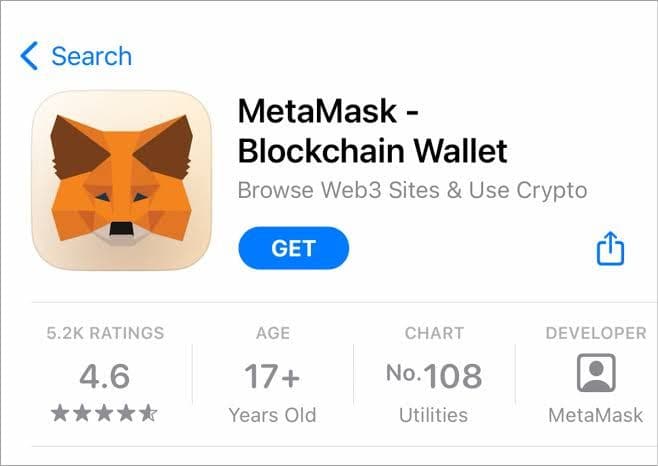
Setting up an ERC-20 Wallet is straightforward. Here is a general approach, we’ll use MetaMask as an example, which we'll install as a browser extension (Chrome, Firefox) or mobile app.
Click “Create a Wallet” and follow the setup prompts.
Set a strong password.
Backup Your Seed Phrase
MetaMask will generate a 12 or 24-word phrase. Write this down and keep it secure offline.
Never share your seed phrase with anyone.
Fund Your New Address
Obtain your MetaMask Address by clicking “Account.”
Transfer a small amount of Ethereum (for gas fees) and any ERC-20 tokens you want to store.
Interact with DApps
Once set up, you can connect to DeFi platforms, NFT marketplaces, and other Web3 services.
Always double-check you are downloading the correct MetaMask extension or app from official sources to avoid phishing traps.
How to set up a hardware ERC-20 wallet: Ledger Nano X
For a hardware wallet example, let’s walk through the Ledger Nano X setup:
Unbox the Device
Make sure the package is sealed and untampered.
Install Ledger Live
Download the Ledger Live app to any desktop or mobile device.
Connect Your Ledger Nano X
Link via USB cable or Bluetooth.
Follow on-screen prompts to set a PIN.
Backup Recovery Phrase
You’ll be given a 24-word recovery phrase. Write it down carefully and keep it offline.
This phrase is your only way to recover the Wallet if it’s lost or stolen.
Install Ethereum App
On the Ledger Live interface, install the Ethereum app to enable ERC-20 Token management.
Create an Account
Inside the Ethereum app, create or link a new Address to store your ERC-20 tokens.
You can now manage your tokens securely within Ledger Live.
With a hardware wallet, always confirm transactions on the device itself. This additional step ensures no malicious actor can send a transaction without your approval.
How to set up a Volet.com crypto account
Volet.com offers a user-friendly and hassle-free way to buy cryptocurrency, making it ideal for both beginners and seasoned traders. Follow these simple steps to purchase crypto effortlessly with Volet.com.
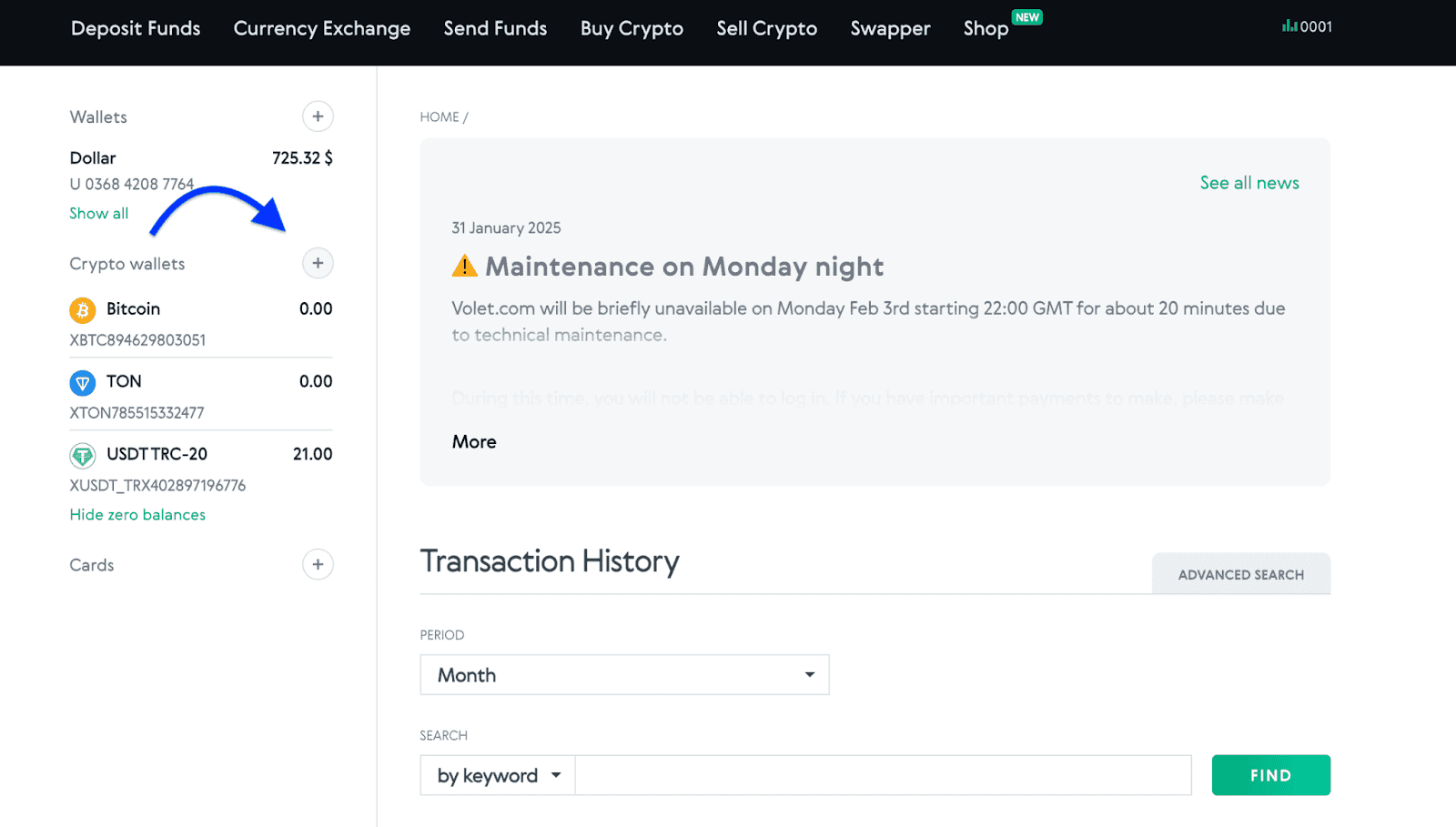
Getting started with Volet.com is quick and easy! Sign up for an account and set up your crypto wallet by simply clicking the “+” button. The Volet.com platform serves as your all-in-one hub for securely managing your cryptocurrency transactions, including ERC-20 tokens.
Just tap the “+” button while setting up your crypto wallet on the platform
Fund Your Wallet: Easily add funds to your Volet.com wallet using fiat currency like USD or EUR. Volet.com supports various payment methods, including credit cards, debit cards, and bank transfers, ensuring a smooth and secure funding process.
Buy crypto: Once your wallet is funded, head over to the cryptocurrency purchasing section on Volet.com. Enter the amount of crypto you want to buy, confirm the transaction, and your Bitcoin will be instantly credited to your Volet.com wallet—ready for use or future investments.
Volet.com’s platform ensures transparency and security, making it an excellent choice for anyone looking to enter the world of cryptocurrency.
Ensuring you meet your security goals
By understanding how an ERC-20 Wallet works, you can safeguard your tokens from common threats. Whether you opt for a hardware wallet like Ledger, a mobile wallet like Trust Wallet, or a browser extension like MetaMask, the important thing is that you remain vigilant:
Keep your software up to date.
Use strong passwords and enable multi-factor authentication where possible.
Never share your private keys or seed phrase.
Double-check each Address before sending any Token.
Final thoughts
An ERC-20 Wallet is your gateway to the Ethereum ecosystem, enabling you to hold, send, and manage a broad range of ERC-20 tokens. By adhering to best security practices and choosing the type of wallet that fits your lifestyle, you’ll enjoy peace of mind while exploring the endless possibilities of DeFi, NFTs, and beyond. Whether you store tokens for long-term investment or interact daily with decentralized platforms, remember that managing your own private keys places significant responsibility on you—but also grants a high level of autonomy and control over your digital assets.
Staying informed and proactive is key to navigating the fast-moving world of crypto. By regularly updating your knowledge and wallet software, you’ll ensure smooth transactions and resilient security for your ERC-20 tokens.
FAQ
What makes an ERC-20 Wallet different from a regular crypto wallet? An ERC-20 Wallet specifically supports token standards on the Ethereum blockchain, ensuring your ERC-20 tokens can be received, stored, and sent without compatibility issues.
Do I need Ethereum (ETH) in my ERC-20 Wallet to send tokens? Yes. Because ERC-20 transactions require gas fees paid in ETH, you must hold a small amount of ETH in the same address to cover transaction costs.
How secure are hardware wallets like Ledger for storing ERC-20 tokens? Very secure. Ledger stores your private keys offline, significantly reducing exposure to hacks or malware. You confirm transactions on the device, preventing unauthorized transfers.
Can I manage multiple ERC-20 tokens under one address? Absolutely. As long as your Wallet and Address are ERC-20-compatible, you can store multiple Token types simultaneously, all controlled by the same private key.
What should I do if I accidentally send a non-ERC-20 asset to my ERC-20 wallet? Most digital assets not on Ethereum (or not EVM-compatible) won’t show up in your ERC-20 wallet. If the asset isn’t ERC-20, it might be irretrievable. Always confirm address compatibility before sending any token.