Smart contract crypto payments are going mainstream. Here's what it means for your business.
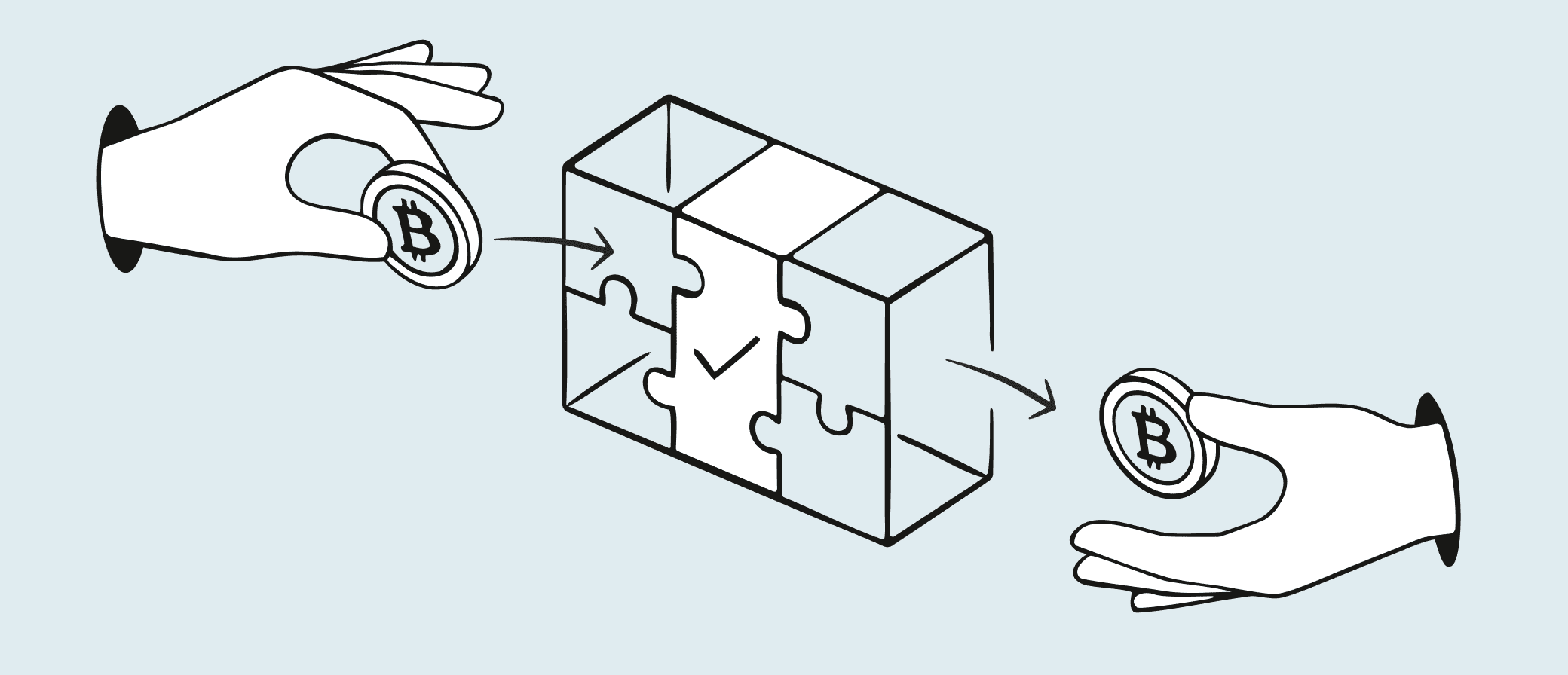
Picture this: your customer pays in crypto. A smart contract reads the conditions, verifies the input, and executes — directly, automatically, in seconds, with no processor sitting in the middle and no settlement window to wait through.
Smart contracts make things possible that traditional payment infrastructure simply can't: winnings reaching a player's wallet before they've closed the game; a marketplace seller paid the instant a buyer confirms delivery; a subscription unlocking the moment payment arrives. This is what happens when code replaces the intermediary.
This isn't a Web3 experiment or a niche use case for crypto-native startups. In June 2025, Shopify and Coinbase jointly launched the Commerce Payments Protocol — a smart contract standard for real-world commercial transactions. Stripe introduced smart contract-based stablecoin subscriptions. WalletConnect — the infrastructure layer behind crypto wallet connections — processed $400 billion in transaction volume in 2025 and now powers payment flows at Coinbase, BitPay, and CoinGate.
When companies the size of Stripe and Shopify are rebuilding their payment infrastructure around smart contracts, the question for every merchant isn't whether this matters — it's whether you'll understand it before your competitors do.
Smart contract crypto payments are the stronger fit when:
Your users are crypto-native and actively hold funds in self-custody wallets – MetaMask, Phantom, Trust Wallet, etc.
You operate in a vertical where custodial processors frequently restrict or close accounts.
You need programmable payment logic — escrow, conditional release, automated splits — that a standard gateway doesn't support.
Eliminating counterparty risk on your revenue is a business priority.
Custodial crypto payments remains the more practical fit when:
The majority of your users hold crypto on centralized exchanges – Binance, Bybit, etc.
You need automatic crypto-to-fiat conversion and settlement.
In a standard custodial crypto payment gateway, a third party sits in the middle. They receive funds from your customer, hold them, convert if needed, and settle to you later — typically within 24 to 72 hours. To put it bluntly, your revenue is temporarily in someone else's hands. Account freezes, rolling reserves, and de-platforming are all possible precisely because that intermediary has custody of what you earned.
There is a way to remove that intermediary — and accept crypto payments without putting your revenue in someone else's hands. A smart contract is self-executing code deployed on a blockchain.
Think of a vending machine: you insert a coin, the mechanism reads the input, and the product drops — no cashier to approve the transaction, no manager to release the goods, no one deciding whether the rules apply in your particular case. The machine (the code) itself is the agreement.
A smart contract works on the same principle: the conditions are written once, deployed on-chain, and executed identically every time — for every transaction, in every jurisdiction, at any hour.
Once deployed, the contract code is immutable: it cannot be modified by anyone, including the provider who wrote it. The trust isn't built on a company's promise to honour the terms — it's built on code that is structurally incapable of breaking them.
When a customer connects their wallet and approves a transaction, funds move on-chain directly according to the contract's rules. The provider's role shifts from custodian to infrastructure layer: they supply the contract, the connectivity, and the compliance tooling — but they never hold your money.
The table below compares a standard cryptocurrency payment gateway to the smart contract model:
Four reasons businesses move to smart contract payments
1️⃣ Instant, final settlement. Custodial gateways batch-process payments and settle to merchants in 24 to 72 hours — sometimes longer for new accounts or high transaction volumes.
When a payment confirms on-chain via smart contract, funds are in your wallet. Confirmation speed depends on the network: milliseconds on L2 networks like Arbitrum or Base, seconds on Ethereum mainnet. No settlement window, no waiting on a provider's processing schedule.
For businesses that deliver value instantly — software licenses, in-game items, iGaming payouts, subscription access — the difference is direct. Settlement speed isn't a convenience feature; for iGaming platforms specifically, instant withdrawal capability is one of the primary drivers of player retention.
2️⃣ No counterparty risk on your revenue. A custodial provider holds your revenue between receipt and payout. That creates real exposure: to their solvency, their security infrastructure, and their regulatory standing in your jurisdiction. When custodial platforms have frozen accounts or gone insolvent, merchants with balances on those platforms became unsecured creditors with limited recourse.
With a non-custodial smart contract model, the provider never has access to your funds at any point. There is nothing to freeze.
3️⃣ Programmable payment logic built into the payment layer. A smart contract isn't only a payment rail — it's a conditional agreement embedded in code. Escrow that releases automatically on confirmed delivery. Revenue that splits between multiple addresses the moment payment arrives. Platform access that unlocks on payment without a separate API call. Logic that would otherwise require backend development, manual reconciliation, and ongoing maintenance can live directly in the payment contract.
For P2P marketplaces, this changes the trust architecture entirely. The buyer pays into the contract, not to the seller directly. Funds are locked while the transaction is in progress. On confirmed delivery — either manually approved by the buyer, or automatically triggered by your platform's backend via an API call to the contract — funds release to the seller.
If the buyer fails to confirm or dispute within a defined window, the contract releases automatically. Commission is collected by the contract on each successful release, without a separate billing system. Both parties trust the code, not the company. The platform isn't holding funds — and as a result, isn't exposed to the fraud liability, dispute handling, and money transmission regulatory scrutiny that comes with holding funds in a traditional escrow model.
4️⃣ Works where traditional processors routinely don't. iGaming, adult content, crypto-adjacent services, and other verticals classified as high-risk face regular account closures, elevated rolling reserves, and processor restrictions that tie up capital and scale against you as transaction volume grows. Transaction reversal rates in these categories run significantly higher than in standard e-commerce — a persistent cost that doesn't go away.
Smart contract payments are permissionless by design: a payment provider cannot de-platform a merchant by revoking access to the contract, because the merchant interacts with the contract directly — not through a platform that can withdraw access.
On-chain transactions are irreversible, which removes an entire category of revenue leakage: once a confirmed result is recorded and the contract executes a payout, there is no dispute mechanism for a counterparty to trigger after the fact.
What the user experience looks like
To pay via a smart contract, a customer needs to connect their crypto wallet to it — that's how the contract identifies who's paying and executes the transaction directly.
WalletConnect is the protocol that makes this connection possible. It supports 700+ wallets — MetaMask, Trust Wallet, Phantom, and others. Think of it as the bridge between the user's wallet and your payment contract: instead of asking customers to copy-paste addresses or enter payment details manually, WalletConnect creates a secure session between their wallet app and your checkout. The customer sees the transaction details, approves it in their wallet, and the signed instruction goes directly to the contract.
The full WalletConnect payments flow looks as follows:
The user selects a crypto payment option at checkout.
A wallet connection prompt appears — either inline in the browser or as a QR code to scan with a mobile wallet app.
They connect MetaMask or their preferred wallet.
The platform passes transaction parameters — amount, token, network, contract address — through WalletConnect to the connected wallet.
The user reviews the transaction details and approves.
The transaction broadcasts to the blockchain, confirms on-chain, and the platform updates the order status.
The confirmation step is explicit and intentional. It resembles a bank's 3DS authentication — a brief switch to another interface, a deliberate action, then return — more than a one-click checkout. For crypto-native audiences, wallet confirmation is a familiar daily interaction and conversion rates are comparable to standard checkout flows.
Smart contract security checklist
Smart contract bugs and infrastructure attacks resulted in over $2 billion in losses in the first half of 2025. When you integrate a pre-deployed contract from a provider, their security posture becomes your exposure. Run through these four checks before signing with any provider — and treat vague or unavailable answers as a signal, not just an inconvenience.
Who audited the contract, and is the audit report publicly available? Ask for the auditing firm's name and a link to the full public report — not a summary. What you're looking for: were the findings resolved before deployment? An audit with zero findings is rare and warrants questions. Reports older than 12 months without a re-audit are worth flagging.
Is there an active bug bounty program? Immunefi is the standard platform for smart contract bounties. Check the program directly — look at how long it's been running and what the maximum payout is. A program with a $100,000+ maximum signals the team is confident enough in the code to invite serious testing. A program launched last month carries less weight than one that's been active for a year.
What real-time monitoring exists for anomalous on-chain activity? Audits are point-in-time reviews. Ask specifically: if anomalous activity is detected, is there an automatic circuit breaker that can pause the contract, or only a manual response? Automatic response is significantly stronger. Providers who can't describe their monitoring setup in concrete terms likely don't have one.
What controls exist on the infrastructure layer? Most major hacks in 2025 happened not in the contract code but in signing interfaces, frontend deployments, and third-party dependencies. Ask whether the provider has run a recent frontend security audit — it's a distinct check from the contract audit, and one that's frequently skipped.
If a provider can't answer these questions with documentation, that's the answer. Security posture should be transparent by default.
If you're using Volet.com's pre-deployed contract, the provider is responsible for security infrastructure, monitoring, and maintenance. Contact the Volet.com team directly for details on the contract's audit history and security documentation before going to production.
How Volet.com helps in implementing smart contract payments
Volet.com supports non-custodial crypto payment processing via smart contracts alongside its full custodial payment stack — API, Hosted Checkout, and CMS plugins for WooCommerce and OpenCart.
Both the custodial and non-custodial payment paths are available from the same account, giving merchants everything they need to accept crypto payments online from any segment of their customer base.
For the Volet.com path using a pre-deployed contract, no Solidity expertise or blockchain-specific knowledge is required. WalletConnect provides well-documented SDKs; the payment contract is already deployed. You don’t need a blockchain-native dev team — a developer with JavaScript or TypeScript experience and familiarity with REST APIs will suffice.
What your team needs to build — realistic timelines
Scope
Estimated time
Basic integration (API call, test transactions)
1–2 days
Production-ready checkout (error handling, all transaction states)
3–5 days
Full operational setup (reconciliation, support flows, refund process)
1–2 weeks
KYB verification (with documents ready)
0.5–2 days
The 1–2 day estimate is accurate for getting a working integration. Shipping it to real customers with proper error handling and support infrastructure is a 1–2 week project for most teams. Plan accordingly.
Fees and settlement options. For merchants who need a crypto to fiat payment gateway with automatic conversion, Volet.com handles that within the same account. Crypto acquiring starts from 0.25% — no setup fee, no monthly subscription, no charge for API calls.
Start global payouts today — in crypto and fiat
Reach creators, partners and teams in any country with payouts in USDT, USDC or to Volet.com wallets.
A smart contract is immutable by design: once deployed to the blockchain, it runs exactly as written — permanently. That's the source of its trustworthiness, but also its constraint. You can't add a feature to a live contract. If you need cashback logic, a custom fee structure, or any payment flow beyond the basics — accept payment, make payout, take fee — you need a new contract written specifically for that logic.
Standard contracts are intentionally granular. They cover the most common cases reliably. Mid-market and larger businesses often hit the ceiling quickly: a loyalty program, a tiered commission structure, conditional payouts tied to platform events — none of that comes out of the box.
Volet.com builds custom smart contracts on request, designed around your specific processing requirements and deployed by the team. Typical timeline: approximately one month from specification to production. Contact the Volet.com team to discuss your use case.
FAQ
A standard crypto payment gateway — or cryptocurrency payment gateway — works custodially: the provider receives funds, holds them, and settles to the merchant within 24–72 hours.
Smart contract crypto payments remove the intermediary entirely. Also called non-custodial crypto payments, this model moves funds directly from the buyer's wallet to the contract — the provider never holds your revenue.
Smart contract payments are the right choice when you need programmable logic, instant settlement, or protection from de-platforming risk.
Not to get started. Volet.com provides a pre-deployed contract for non-custodial payment processing — contact the team for details on audit documentation and security measures.
Custom contracts make sense only when your use case requires payment logic a standard contract doesn't support: conditional escrow, automatic splits, or platform-specific access controls.
A refund is a new outbound transaction that you initiate.
Define your refund policy before launch — same-token refund, fiat equivalent transfer, or platform credit are all viable approaches. The important thing is that your support team knows the process before the first request arrives.
Not directly. WalletConnect requires funds in a self-custody wallet.
For users holding crypto on a centralized exchange, the custodial path — payment by address or QR code — works without any additional steps and is the right default option for that segment.