Discover 5 proven strategies to effectively earn money with DeFi. Learn practical tips to navigate this evolving landscape and boost your income today.
March 2020. I'll never forget it.
I was standing in line outside my bank—mask on, six feet apart from the stranger in front of me—desperately trying to withdraw enough cash to get through what was looking like an extended lockdown. The stock market had crashed, companies had just announced layoffs, and financial panic was setting in globally.
After an hour of waiting, I finally reached the teller only to discover they'd imposed withdrawal limits. "Sorry sir, bank policy during the emergency," she explained sympathetically from behind her plexiglass shield.
As I scrolled through increasingly alarming financial news that night, an old crypto-enthusiast friend messaged me: "This is exactly why decentralized finance matters. There are no withdrawal limits. No permission is needed. Your money is your control."
I'd dabbled in Bitcoin years earlier but had mostly written crypto off as speculative. But something about my experience that day—feeling powerless over my own money during a crisis—hit differently. The next morning, I bought some ETH and began my journey into the world of DeFi.
Fast forward to today, and that panicked bank visit feels like a lifetime ago. The traditional financial system still has the same limitations, but I've built a parallel financial life in DeFi that's given me something I never expected: actual passive income streams that don't require me to trade time for money.
Was it all smooth sailing? Absolutely not! (I’ve got some expensive lessons to share with you). But learning how to make money with DeFi changed my relationship with money and opened up opportunities I never knew existed.
If you’re feeling that same frustration with traditional finance—or just curious about building new income streams—let me show you what I’ve learned about generating returns in the DeFi space.
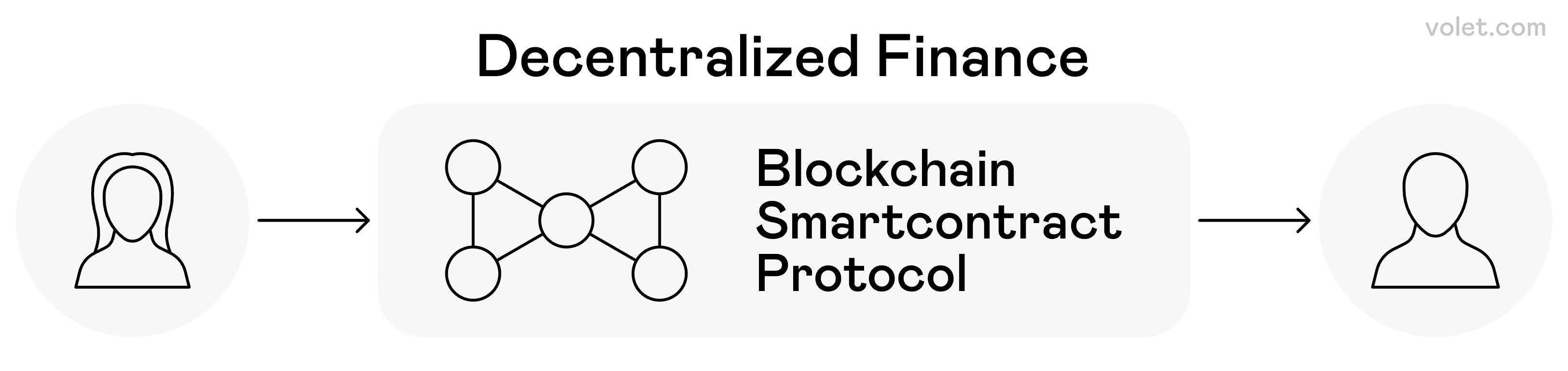
How decentralized finance (DeFi) enables direct transactions between users through blockchain technology and smart contracts.
What is DeFi: The Financial Revolution Changing Everything
DeFi, or decentralized finance, is a complete rethinking of how financial systems can work. Unlike traditional financial institutions where banks and brokerages are the gatekeepers, DeFi operates on blockchain networks—financial services that are open, permissionless and transparent.
The History and Evolution of DeFi
While conceptually rooted in the cypherpunk movement of the 1990s, DeFi’s practical foundation was laid with Bitcoin in 2009. The real DeFi movement started to take shape around 2017 when Rune Christensen launched MakerDAO, the first decentralized stablecoin system.
As Ethereum matured, entrepreneurs built critical infrastructure like Aave for lending and Uniswap for decentralized exchange. When the pandemic hit in 2020, interest in alternative financial systems went through the roof during what became known as “DeFi Summer”. Compound introduced governance tokens and liquidity mining, and suddenly users and platforms were aligned. Total Value Locked (TVL) in DeFi protocols went from around $1 billion to over $20 billion by the end of the year.
Today’s DeFi ecosystem spans dozens of blockchains, hundreds of DeFi protocols and over $100 billion in value. What started as an experiment has become a real alternative financial system with real utility—especially for earning passive income with DeFi.
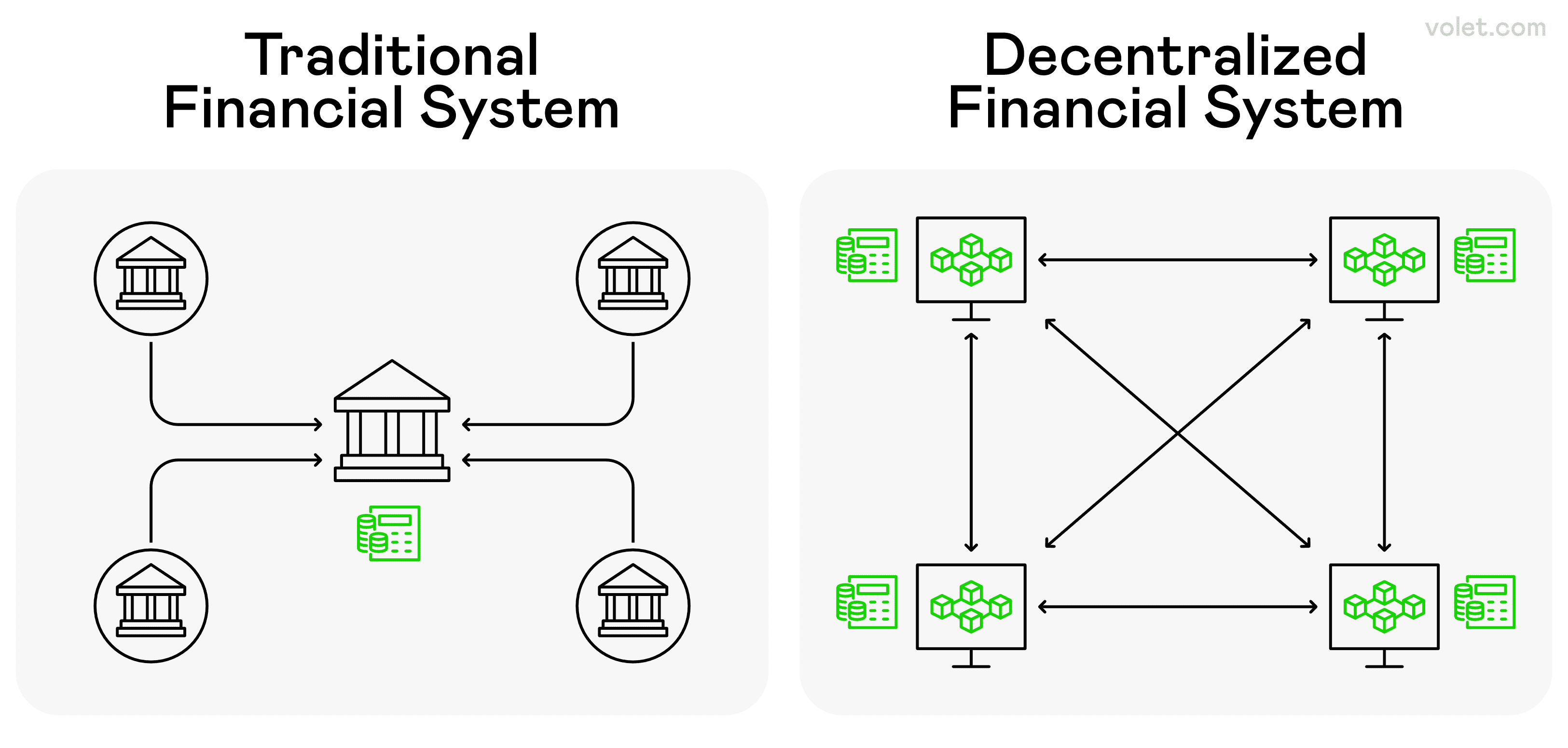
The differences in how transactions are managed in centralized and decentralized financial (DeFi) systems.
DeFi vs Traditional Finance: Why This Matters
When I first got into DeFi, what struck me most was how different it felt from traditional financial services. Here’s a quick comparison:
Traditional Financial Institutions:
Requires identification, credit checks, and minimum balances
Limited operating hours
Settlement times are measured in days
Centralized control with limited transparency
Interest rates near zero for depositors
Decentralized Finance:
Permissionless (anyone with internet can participate)
24/7/365 operation
Near-instant financial transactions
Governed by code and community
Complete transparency
Competitive yields (sometimes 10-20x traditional savings accounts)
The most profound difference is who controls your assets. With traditional banks, your funds are essentially IOUs. In the DeFi world, you maintain control of your digital assets through your private keys.
This shift from institutional trust to cryptographic verification changes everything about how financial services work—and opens new possibilities for passive income generation. Now, let's explore how to start earning passive income with DeFi!
How to Make Money with DeFi: 5 Proven Strategies
When people ask me how to make money with DeFi, I always say there’s no one-size-fits-all approach. Your strategy should align with your risk tolerance, technical comfort level and time commitment. That said, here are five strategies that have worked for me and many others in the DeFi space.
How blockchain networks use a staking mechanism to validate transactions and reward participants.
Strategy #1: DeFi Staking - The "Set It and Forget It" Approach
Staking was my entry point to passive income with DeFi and remains one of my favorite strategies for its simplicity and reliability.
What is DeFi Staking?
At its core, staking involves locking up your crypto assets to support a blockchain network’s operations and security. In return, you earn rewards—typically additional tokens.
The concept comes from Proof of Stake (PoS) consensus mechanisms which are far more energy efficient than Bitcoin’s Proof of Work system. Instead of solving complex mathematical puzzles, PoS networks select validators based on how many tokens they’ve staked.
How I Got Started with Staking
My first staking experience was with Ethereum 2.0. I connected my wallet to a staking platform, selected how much ETH to stake, confirmed the transaction—and then waited for staking rewards.
And they came! Every day my staked balance would increase slightly. It wasn’t life changing money but seeing those rewards accumulate without any effort was oddly satisfying.
Types of Staking Options
As I’ve explored the DeFi space more I’ve discovered several ways to stake:
Native Protocol Staking: Staking directly with networks like Ethereum, Polkadot or Solana to earn rewards and support network security
Liquid Staking: Using services like Lido or Rocket Pool to receive tradable “receipt tokens” while assets remain staked
DeFi Protocol Staking: Staking governance tokens of specific DeFi projects to earn rewards and voting rights
Staking Pools: Joining forces with other stakers to increase reward chances by depositing tokens into collective pools
The Pros and Cons of Staking
Pros:
Relatively low risk compared to other DeFi strategies
Predictable returns (usually between 3-15% annually)
Minimal ongoing management required
Contributes to network security
Often provides governance rights
Cons:
Sometimes requires locking assets for extended periods
Returns are generally lower than other passive income opportunities
Smart contract vulnerabilities still exist
May have complicated tax implications
Best DeFi Platforms for Staking
Through trial and error, I've found several platforms that offer excellent staking experiences:
Lido Finance: My go-to for ETH staking due to its liquid staking solution
Marinade Finance: Great for Solana staking with robust security measures
Cosmos Ecosystem: For staking ATOM and other Cosmos-based tokens
What I appreciate most about staking is it's a "set it and forget it" approach that doesn't require constant monitoring. Perfect for busy people who want to generate passive income without becoming full-time crypto managers.
How yield farming works by depositing Ethereum tokens into liquidity pools and staking contracts to earn trading fees and token rewards.
Strategy #2: Yield Farming - For the More Adventurous DeFi Explorer
If staking is the slow and steady approach to earning passive income with DeFi, yield farming is more like an adrenaline sport. It's potentially more rewarding but requires more active management and carries higher risks.
What is Yield Farming?
Yield farming involves moving your digital assets between different DeFi protocols to maximize returns. The "yields" typically come from a combination of trading fees, interest from lending, and token incentives from protocols.
I discovered yield farming during the famous "DeFi Summer" of 2020. Everyone was chasing astronomical APYs, some claiming returns of 1,000% or more. While many were unsustainable, the concept of optimizing your crypto holdings for maximum yield was revolutionary.
My Yield Farming Journey
My first attempt involved supplying liquidity to a small exchange and then staking the LP (Liquidity Provider) tokens on another platform for additional rewards. The APY was initially over 100%, which seemed amazing—until I learned about impermanent loss when ETH's price skyrocketed. My returns were still positive, but not as good as if I'd simply held my ETH.
Popular Yield Farming Strategies
Over time, I've tried various yield farming approaches:
Liquidity Mining: Providing liquidity to decentralized exchanges and earning trading fees plus incentive tokens
Lending Optimization: Moving assets between lending platforms to capture highest interest rates
Leveraged Yield Farming: Using borrowed funds to amplify returns (risky for beginners)
Auto-compounders: Using protocols that automatically reinvest yields for compounding interest
The Risks and Rewards
✅ Rewards:
Potentially high yields (sometimes 50%+ APY, though rarely lasting)
Exposure to new DeFi projects through incentive tokens
Learning opportunity about different defi protocols
Can be optimized for tax efficiency in some jurisdictions
❌ Risks:
Smart contract vulnerabilities
Impermanent loss when providing liquidity
Transaction fees can eat into profits on Ethereum
Project/token risks if incentives are paid in native tokens
Requires active management and monitoring
Tips for Safer Yield Farming
After some expensive lessons, here's what I've learned:
Start small: Use amounts you can afford to lose
Research thoroughly: Check protocol audits, team backgrounds, and community sentiment
Beware of unsustainable APYs: If it sounds too good to be true, it probably is
Monitor your positions: Market volatility can change conditions rapidly in crypto
Calculate impermanent loss potential: Especially for volatile asset pairs
Yield farming isn't passive in the truest sense—it requires regular attention—but it can be very rewarding both financially and as a learning experience.
A simple overview of how liquidity provision works in decentralized finance (DeFi) platforms.
Strategy #3: Liquidity Provisioning - Becoming the Bank of the DeFi World
One fascinating aspect of DeFi is how it allows regular people to perform functions traditionally reserved for large financial institutions. Liquidity provision is a perfect example—you're essentially becoming the bank that facilitates trading.
How Liquidity Provisioning Works
When you provide liquidity to a decentralized exchange (DEX), you're depositing equal values of two assets into a liquidity pool. These assets facilitate trades for other users, who pay trading fees for the service. As a liquidity provider, you earn a share of these fees proportional to your share of the pool.
My first experience was with an ETH/USDC pool on Uniswap. Every time someone traded between these tokens, I earned a portion of the 0.3% transaction fees generated.
The Economics of Liquidity Provision
Most DEXes use an automated market maker (AMM) model with a formula like x*y=k, which maintains a constant product of the two assets. This means:
You earn fees regardless of which direction people trade
Your exposure to both assets remains relatively balanced
The value of your position changes based on relative price movements
Different Types of Liquidity Pools
I've discovered various types of liquidity pools:
Standard Pools: Equal 50/50 value of two tokens (like ETH/USDC)
Stable Pools: Designed for stablecoins with similar values (like USDC/DAI/USDT)
Weighted Pools: Allow for custom ratios between assets (like 80/20)
Concentrated Liquidity: Protocols like Uniswap v3 let you provide liquidity within specific price ranges
The Impermanent Loss Challenge
The biggest challenge with liquidity provision is impermanent loss (IL), which occurs when the price ratio of your pooled assets changes. The greater the change, the greater the loss compared to simply holding.
I once provided liquidity to an ETH/LINK pool right before ETH went on a major run. While my pool value increased, it wasn't by as much as if I'd simply held both assets.
The name "impermanent" comes from the fact that the loss is only realized when you withdraw. If prices return to their original ratio, the loss disappears. However, in practice, prices rarely return to exact previous ratios.
Choosing the Right Pools
Through trial and error, I've developed criteria for selecting liquidity mining pools:
Correlated assets tend to cause less impermanent loss (like ETH/wBTC)
High-volume pools generate more trading fees, which can offset impermanent loss
Incentivized pools offering additional reward tokens can boost returns
Consider fee tiers - higher fees might be better for volatile pairs
I now focus most of my liquidity providing on stablecoin pairs or correlated assets where impermanent loss is minimized.
The process of DeFi lending and borrowing, showing how borrowers use crypto as collateral to obtain loans and lenders earn interest by providing funds.
Strategy #4: DeFi Lending and Borrowing - Putting Your Crypto to Work
Remember how traditional banks take deposits and lend them at higher interest rates? In DeFi, you can cut out the middleman and become the lender yourself. This remains a core part of my DeFi portfolio.
How DeFi Lending Works
DeFi lending platforms allow you to deposit crypto assets into a lending pool, where borrowers can borrow assets by providing collateral. As a lender, you earn interest on deposits, which comes from interest payments paid by borrowers.
The first time I deposited DAI into Aave, I was amazed at how simple the process was compared to opening a traditional savings account. No paperwork, no credit checks, no minimums—just connect your wallet and start earning interest immediately.
Popular DeFi Lending Platforms
Over the years, I've used several lending platforms:
Aave: My favorite for its security, multiple markets, and stable rates
Compound: One of the pioneers with a straightforward user experience
Maker: The original DeFi lending protocol, allowing users to mint DAI stablecoin
Solend: A solid option for lending on Solana with lower transaction fees
Interest rates fluctuate based on supply and demand. I've seen rates as high as 20% for stablecoins during market volatility, though more typically 1-10% depending on the asset and conditions.
Lending Strategies I've Used
Through experimentation, I've found several lending strategies that work well:
Stablecoin Lending: Consistent returns without exposure to crypto volatility
Supply and Borrow Same Asset: Leveraging position while minimizing liquidation risk
Interest Rate Arbitrage: Borrowing from one platform with low rates and lending on another with higher rates
Leveraged Yield Farming: Using borrowed funds to farm yields (with significant risks)
The Risks of DeFi Lending
Pros:
Generally lower risk than many other DeFi strategies
Predictable returns, especially for stablecoins
No impermanent loss
Good liquidity—you can usually withdraw quickly
Cons:
Smart contract vulnerabilities still apply
Interest rates can fluctuate dramatically
Some assets have low liquidity
Platform insolvency risk if too many bad loans occur
Tips for Safer Lending
After using DeFi lending platforms for several years, I recommend:
Diversify across platforms to reduce risk from smart contracts
Focus on established protocols with good security records
Understand liquidation mechanics if borrowing
Monitor interest rates as they change rapidly with market volatility
Be wary of new assets with suspiciously high interest rates
Lending has been one of the most reliable ways for me to earn passive income with DeFi. It doesn't have the highest returns, but its relative stability makes it a cornerstone of my strategy.
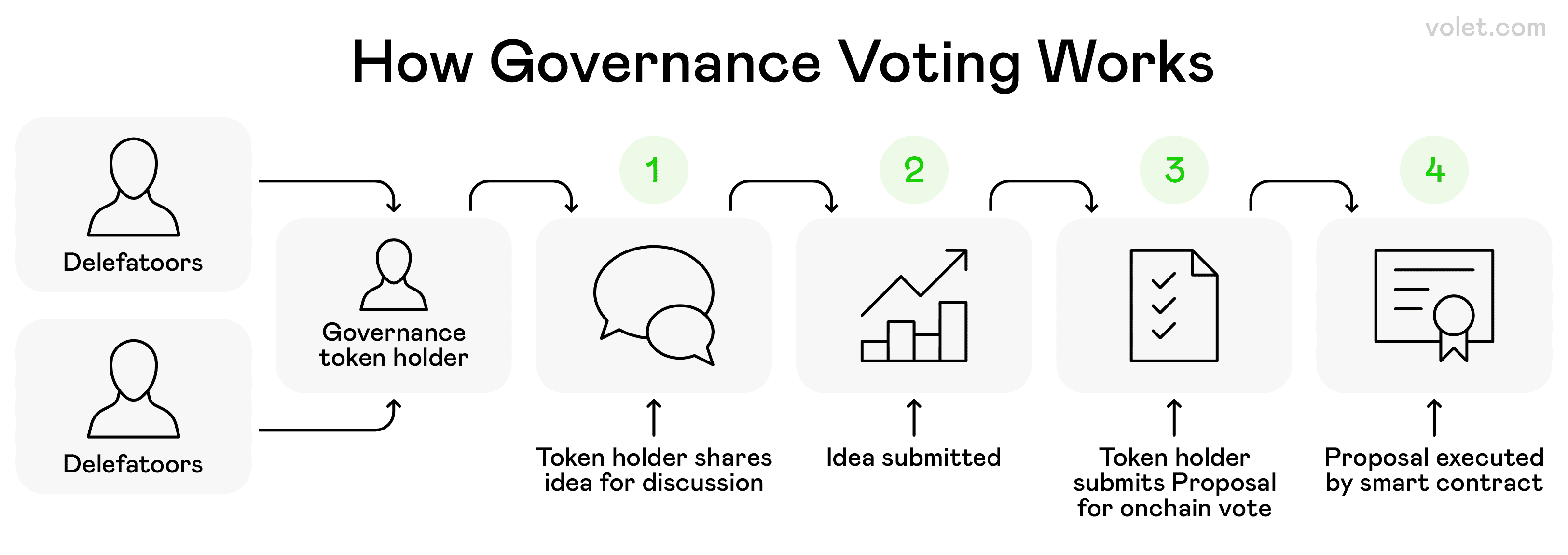
A step-by-step overview of the governance voting process in decentralized organizations.
Strategy #5: Governance and Protocol Participation - The Long Game
The final strategy is perhaps the most overlooked but potentially most rewarding long-term: actively participating in protocol governance and community activities.
Earning Through Governance Tokens
Many DeFi protocols distribute governance tokens to active users. These tokens provide voting rights on protocol decisions and often accrue value as the protocol succeeds.
My experience with Compound's COMP token was eye-opening. Initially just using the platform for lending, when they introduced COMP rewards, I suddenly had a say in the protocol's future and an additional source of DeFi income.
Ways to Earn Through Participation
Over time, I've found several ways to earn rewards by actively participating:
Governance Staking: Many protocols reward users who stake governance tokens and participate in voting
Protocol Incentives: Some DeFi projects offer incentives for specific activities
Participating in DAOs: Decentralized Autonomous Organizations often compensate active contributors
Airdrops: Active participation sometimes qualifies you for token airdrops
Building Your DeFi Reputation
Something unexpected was how valuable a good on-chain reputation would become. As you interact with various protocols and demonstrate responsible behavior, you may gain access to:
Whitelists for new project launches
Special investment opportunities
Early access to new features
Community recognition and influence
The Long-Term Vision
What makes this strategy powerful is its compound effect over time. By actively participating in promising protocols:
You accumulate governance tokens that may appreciate in value
You help steer protocols in value-creating directions
You build a portfolio of "proof of participation"
You develop a deeper understanding, improving all your other strategies
This approach requires more time investment than pure financial strategies, but it aligns your interests with protocols you believe in and can unlock passive income streams if those protocols succeed.
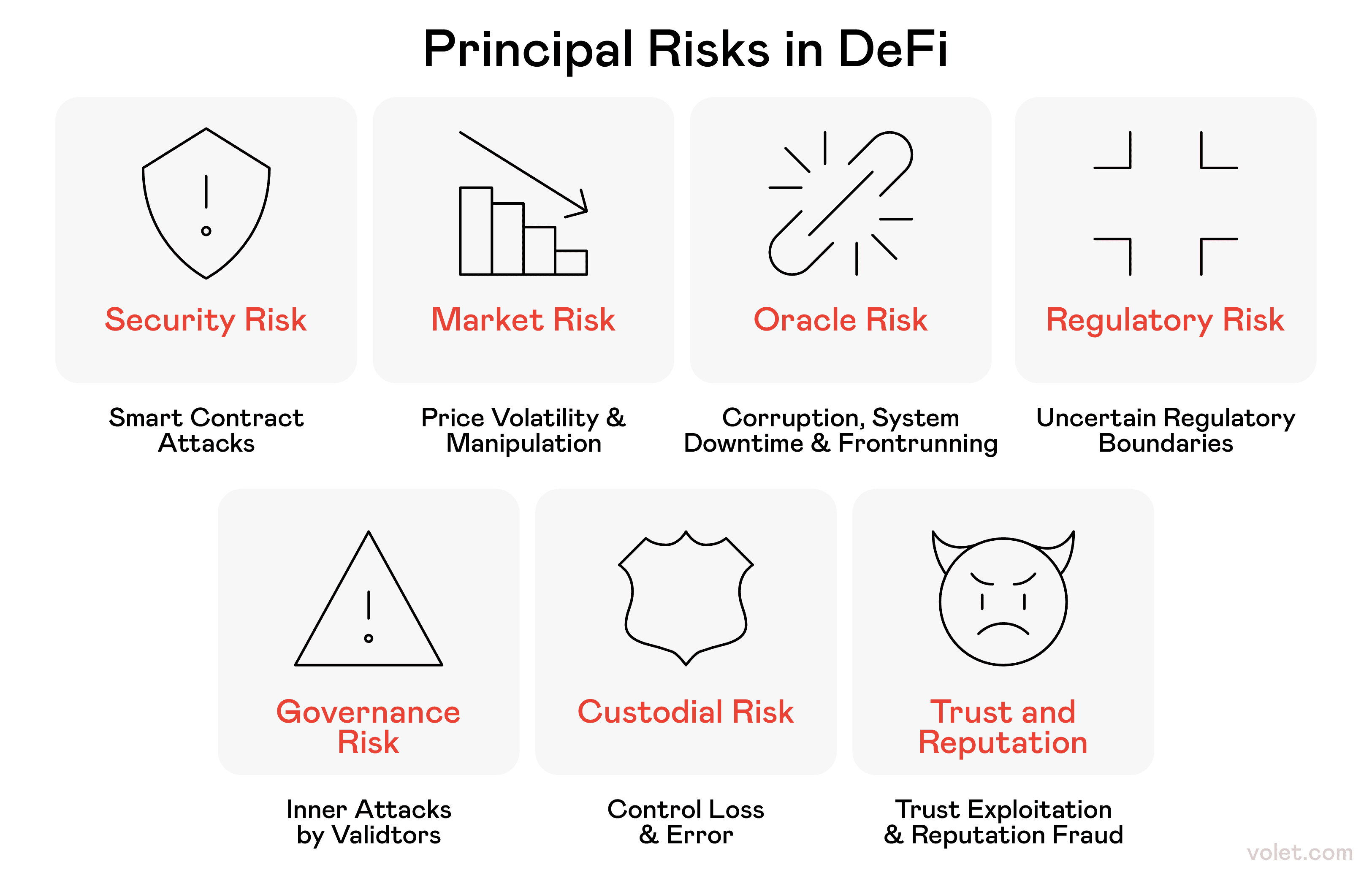
The principal risks associated with decentralized finance (DeFi).
Understanding the Risks in DeFi
I wouldn't be honest if I didn't acknowledge that my DeFi journey hasn't been all sunshine and profits. Here are key risks to be aware of:
Smart Contract Vulnerabilities
DeFi relies heavily on smart contracts—self-executing code on blockchains. While audited contracts are generally safe, bugs exist.
I learned this when a protocol suffered an exploit, resulting in partial loss of funds. Since then, I've made it a rule to:
Only use protocols with multiple professional audits
Start with small amounts when trying new platforms
Avoid being the very first user of any new contract
Market Volatility
Crypto markets are notoriously volatile, affecting almost all DeFi strategies. Sudden price swings can:
Trigger liquidations if using leverage
Cause significant impermanent loss in liquidity pools
Reduce the USD value of yield farming rewards
I now stress-test strategies by asking: "What happens if this asset drops 50% overnight?"
Liquidation Risks
When borrowing in DeFi, you typically need to over-collateralize your loan. If collateral value drops below a certain threshold, you can be liquidated—meaning your collateral is sold at a discount.
After a close call during a market dip, I now maintain much healthier collateral ratios than required and set up monitoring alerts.
Regulatory Uncertainty
The regulatory landscape for DeFi is still evolving. Regulatory uncertainty could impact:
The legality of certain activities in your jurisdiction
Tax implications of DeFi income
The viability of certain protocols
I stay informed about regulatory developments and favor protocols making efforts to be compliant.
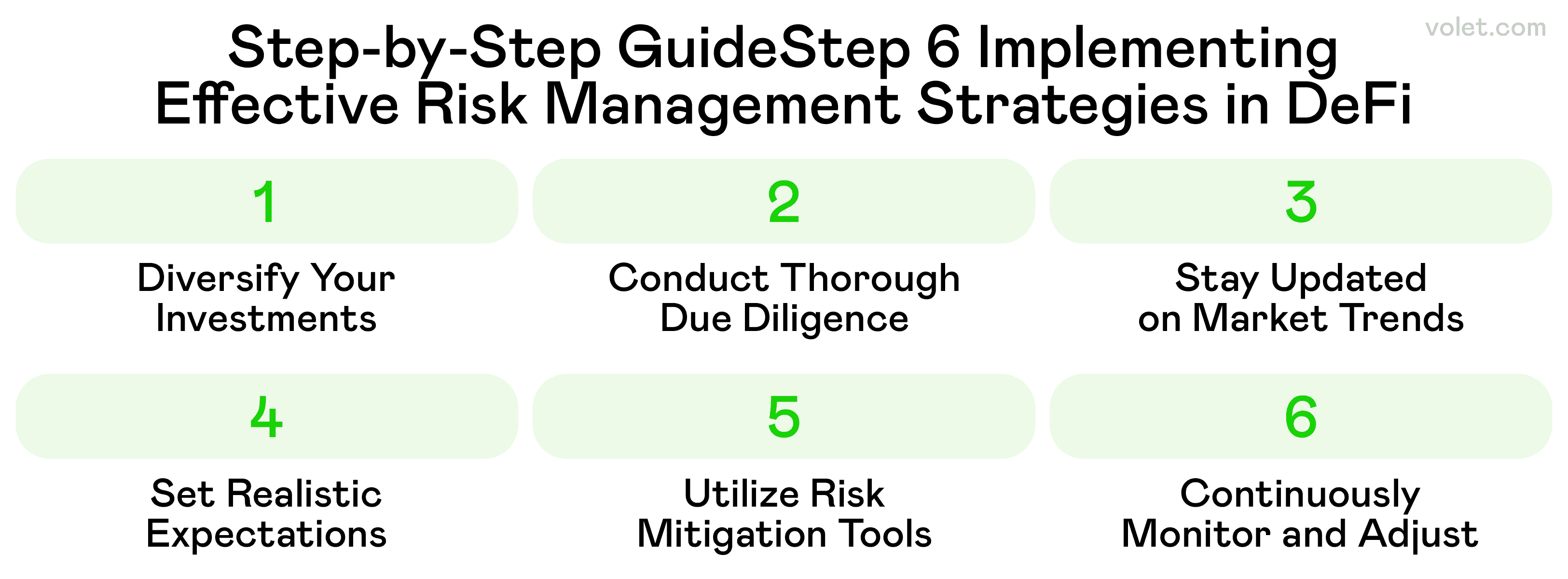
Key steps for effective risk management in Decentralized finance (DeFi).
Risk Management Strategies
Through experience, I've developed personal risk management rules:
Portfolio allocation: Never put more than 20% of crypto into any single protocol
Risk tranches: Divide DeFi activities into low, medium, and high-risk buckets
Insurance: For larger positions, sometimes purchase DeFi insurance
Test transactions: Always send a small amount first when using a new platform
Regular audits: Review positions monthly to ensure they align with risk tolerance
Remember that in DeFi, you are your bank—which means you're responsible for your own security.
Getting Started: How to Start Earning Passive Income with DeFi
If you're convinced that DeFi might be right for you, here's my step-by-step guide:
Native tokens for any other blockchain networks you want to explore
Start with small amounts while learning.
Step 3: Start Simple
For your first DeFi experience, try:
Staking a small amount of a major crypto like ETH on a staking platform
Lending a stablecoin on an established DeFi lending platform like Aave to earn interest
Providing liquidity to a stablecoin pair
These activities will help you learn the mechanics with minimal risk.
Step 4: Learn and Expand
As you grow more comfortable:
Join Discord servers for protocols you're interested in
Follow educational content creators
Gradually try more complex strategies with small amounts
Document your experiences to learn from mistakes
Step 5: Build Your Strategy
Eventually, develop your own DeFi strategy based on:
Your risk tolerance
The time commitment you can make
Financial goals
Technical comfort level
My personal approach has evolved to a 40/30/20/10 split between staking, lending, liquidity provision, and experimental strategies—but yours might look completely different based on how you want to earn passive income with DeFi.
Closing Thoughts
As I reflect on my three years in the DeFi space, I'm struck by how much it's changed both the financial landscape and my own approach to money. Unlike traditional finance, it's opened passive income opportunities that simply didn't exist before, especially for someone without special access or massive capital.
That said, DeFi isn't for everyone. It requires a higher level of personal responsibility, technical understanding, and risk tolerance than traditional banking. You can't call customer service if you send funds to the wrong address or forget your private keys.
What excites me most about DeFi isn't just the potential returns—it's the fundamental reimagining of what financial services can be. It's the power to access lending, trading, and investing without gatekeepers. It's the ability for protocols to be transparently audited by anyone. It's the innovation that happens at lightning speed compared to traditional financial institutions.
The DeFi space will continue to evolve, with new opportunities and risks emerging regularly. The strategies that work today might not work tomorrow, which is why understanding the fundamentals of blockchain technology matters more than chasing the highest yields.
Whether you're looking to generate passive income, participate in the future of finance, or are just curious about applications beyond cryptocurrency, I hope this guide gives you a solid foundation to build on.
Happy DeFi-ing! (Yes, I just made that word up, but it should totally be a thing.)
Disclaimer
This article is provided for informational purposes only and does not constitute legal, financial, or professional advice. All content is based on publicly available information and personal opinions. Readers are advised to seek professional guidance before making decisions or acting based on the material presented. The author and publisher assume no liability for any actions taken or not taken by the reader based on the information contained herein.
Frequently Asked Questions
You can start exploring DeFi with as little as $50-100, though transaction fees on networks like Ethereum might make smaller amounts impractical. Consider starting with Layer 2 solutions or alternative blockchains with lower fees if your initial investment is modest.
The extremely high yields (100%+) are generally not sustainable, as they typically come from temporary token incentives. However, more moderate returns from trading fees, lending interest, and staking rewards represent real economic activity and can be sustainable over longer periods.
Always research thoroughly before using any DeFi platform. Check for security audits, team background, community sentiment, and protocol history. Never click links from unknown sources, verify contract addresses, and start with small amounts when using a new protocol.
Tax treatment of DeFi income varies by jurisdiction, but most tax authorities treat staking rewards, yield farming returns, and interest as taxable income. Additionally, providing liquidity or moving between different tokens may trigger capital gains events. Consult with a crypto-knowledgeable tax professional for your specific situation.
If you're new to the technical aspects, start with the most user-friendly platforms like Lido for staking or Aave for lending. These have intuitive interfaces and extensive documentation. Consider using mobile wallets with built-in DeFi features, which often simplify the process. As you gain confidence, you can gradually explore more complex strategies.