Ever wonder how your money magically travels across the globe while you’re shopping online? It's all thanks to payment APIs, the secret agents of the digital world. These clever tools act as secure bridges between stores and banks, translating payment info into a universal language that all financial systems understand. No more waiting on hold or worrying about borders – payments zip around the planet with ease! This article dives deep into the answer to the question, “What are API payments”, showing you how they work (think getting a magic key and sending secret messages) — but wait, there's more! We even show you a comparison table for top payment gateways like Stripe, PayPal, and Adyen to help you choose your perfect international payment provider based on features, fees, and security. ️So, ditch the checkout struggles and conquer the digital world!
Unlocking the Power of APIs: Transforming Digital Interactions Globally
- 04/09/2024
- Julia Gerstein
- 8 min
Unlock the secrets of global money magic! Discover how payment APIs like Stripe and PayPal zap your cash across borders instantly. Learn the tech behind seamless shopping, compare top gateways, and master international transactions. Your key to conquering digital commerce awaits!

Key Takaways

Payment APIs act as secure translators between online merchants and banks. They facilitate smooth transactions by converting your financial details into a format that banks can understand
Popular international payment systems Stripe, PayPal, Adyen, Worldpay, Braintree, Amazon Pay, and Sagepay are some leading options, each offering unique features and functionalities
The article compares leading payment gateways like Stripe, PayPal, Adyen, Worldpay, Braintree, Amazon Pay, and Sagepay. Key factors to consider include transaction fees, global reach, integration options, security features, and additional services like fraud prevention and recurring billing
Understanding APIs in Simple Terms
So, what is an API in payments? Imagine you're scrolling through the Hermès website, eyeing that perfect summer cap. You finally click "add to cart" and head to checkout. But how does Hermès in Paris get your money all the way from New York? That's where Adyen, an international payment API, steps in! Or maybe PayPal. Or Worldpay. Or Volet.com if your business is really innovative.
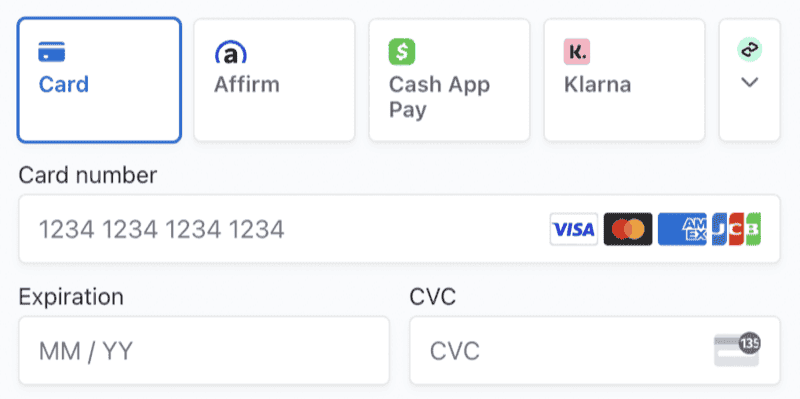
Payment Initiation
Think of all the services mentioned above as super secure, multilingual translators. Say, Adyen takes the payment info you enter on the Hermes website (your English) and translates it into the language the French bank understands (maybe fancy bank jargon?) This way, this international payment gateway acts like a bridge between Hermès in Europe and your bank in the US, making sure the payment goes through smoothly.
So, you click "pay," Adyen does its magic, and voila! Your new cap is on its way, and Hermes gets paid, all thanks to this international translator, the API, Application Programming Interface, a set of programming techniques that are available for software developers. In the world of international payments, these APIs are often called payment gateways, processors, service providers etc, depending on where you read about them. They're key to making sure transactions on your product go smoothly and efficiently, which makes APIs a fundamental part of modern digital interactions. For businesses scaling online, seamless payment API integration ensures secure data exchange, faster checkouts, and reduced friction in global transactions.
How Does a Payment API Work Under the Hood?
In the realm of online commerce, Payment APIs serve as the unsung heroes, orchestrating smooth and secure transactions behind the scenes. Ever wondered what happens when a customer clicks that "Pay Now" button? Let’s lift the veil and explore the inner workings of a Payment API.
The journey begins when a customer decides to make a purchase. This simple action sets off a series of intricate processes. When the customer clicks "Pay Now," their request, which includes crucial details such as the payment amount, currency, and payment method (like a credit card or digital wallet), is sent from the merchant’s website to the Payment API. Think of the Payment API as a bridge, linking the website to the payment processor.
Before this information makes its way to the payment processor, it undergoes a critical step — encryption. Encryption is akin to placing sensitive payment information into a secure box, accessible only by the intended recipient. This step is essential for safeguarding data as it travels across the internet, shielding it from potential hackers and unauthorized access.
With the data safely encrypted, the Payment API forwards it to the payment processor, the entity responsible for handling the transaction. Here, the processor verifies the customer’s payment details. It checks for sufficient funds, validates the payment method, and looks for any signs of fraud. If all checks are passed, the processor approves the transaction and sends confirmation back to the API.
Behind the scenes, the payment processor communicates with both the customer’s bank (the issuing bank) and the merchant’s bank (the acquiring bank). This step involves a rapid exchange of information to ensure that funds are seamlessly transferred from the customer’s account to the merchant's account. The Payment API plays a crucial role in managing these interactions, ensuring the entire process is completed in mere seconds.
Once the transaction is approved, the Payment API receives confirmation from the payment processor and relays this good news back to the merchant’s website. The customer is then greeted with a “Payment Successful” message, signaling that the transaction is complete and the funds are on their way to the merchant.
But the Payment API’s role doesn’t end with transaction confirmation. It continues to handle post-transaction tasks, such as sending receipts, updating inventory systems, and managing refunds or chargebacks. Some advanced Payment APIs even offer additional features like transaction analytics, providing businesses with insights to further optimize their payment processes.
Security remains a top priority throughout this entire process. Payment APIs are required to adhere to stringent security standards, such as PCI-DSS (Payment Card Industry Data Security Standard), to protect cardholder data. Many Payment APIs also include built-in fraud detection tools, helping businesses to spot and prevent fraudulent transactions before they occur.
Modern Payment APIs are also designed with flexibility in mind. These advanced API payments solutions allow businesses to tailor the payment experience, whether it’s by offering multiple payment methods, integrating with various e-commerce platforms, or supporting subscriptions and recurring payments. This versatility ensures that businesses can provide a seamless and user-friendly payment process.
In essence, while the act of making a payment may seem straightforward to the customer, a complex series of events unfolds behind the scenes. Payment APIs drive this process, ensuring transactions are secure, efficient, and customer-friendly. Whether you’re managing a small online store or running a large e-commerce platform, understanding the mechanics of Payment APIs can help you make informed decisions and enhance the payment experience for your customers.
Comparative Analysis of Leading Payment Gateways
Alright, hold onto your wallets (metaphorically, because with these gateways you won't need to!) The following showdown features heavyweights and international payment options like Stripe, PayPal, Adyen, Worldpay, Braintree, Amazon Pay, and Sagepay. Each is a gateway API and payment provider offering a unique blend of features. We'll be dissecting transaction fees, global reach, integration options, security, and bonus features like fraud prevention and recurring billing.
| Stripe | Paypal | Adyen | Worldpay | Braintree | Amazon Pay | Sagepay | |
| Focus | Developers & Businesses | Consumers & Businesses | Developers & Businesses | Businesses | Developers & Businesses | Consumers (with Amazon accounts) | Businesses & Consumers |
| Pros | Powerful API, customization global reach | Easy to use, brand recognition | Extensive global coverage, advanced features | Scalability, security, risk management | Integration with popular platforms, ease of use | Fast checkout for Amazon customers | PCI Compliance, fraud prevention |
| Cons | Can be complex for beginners | Limited customization, higher fees for high-risk | Pricing can be complex, may require coding | Can be expensive for smaller businesses | Limited customization, may require coding | Limited to Amazon customers | Can be expensive for smaller businesses |
| Global Reach | Over 120 countries | Over 200 countries | Over 170 countries | Over 140 countries | Over 130 countries | Primarily US & Europe | Primarily Europe & UK |
| Ease of Integration | More complex (API-driven) | Easy to integrate | Requires coding or developer resources | Requires coding or developer resources | Relatively easy (pre-built integrations) | Easy for Amazon sellers | Requires coding or developer resources |
| Currencies Supported | 135+ | 25+ | 130+ | 120+ | 130+ | 10+ | 30+ |
| Txn Fees | 2.9% + $0.30 per transaction | 2.9% + $0.30 per transaction | Varies by country and payment method | Varies by country and payment method | 2.9% + $0.30 per transaction | ? | ? |
| Payment methods | Credit/Debit Cards, ACH, Apple Pay, etc. | PayPal, Credit/Debit Cards, Venmo, etc. | Credit/Debit Cards, Local Payment Methods | Credit/Debit Cards, Local Payment Methods | Credit/Debit Cards, PayPal, Venmo, etc. | Credit/Debit Cards, Amazon Account | Credit/Debit Cards, PayPal, Apple Pay, etc. |
| Developer-Friendly APIs | Yes | Yes | Yes | Yes | Yes | Yes | Yes |
| Fraud Protection | Advanced machine learning | Advanced fraud detection | RevenueProtect (risk management) | FraudSight | Advanced fraud protection | Advanced fraud detection | Fraud Prevention Tools |
| Instant Payouts | Yes (for eligible accounts) | Yes (for eligible accounts) | No | No | Yes (for eligible accounts) | No | No |
| Customer Support | 24/7 email, chat, phone support | 24/7 customer support | 24/7 customer support | 24/7 customer support | 24/7 email, chat, phone support | ? | ? |
| Recurring Billing | Yes | Yes | Yes | Yes | Yes | Yes | Yes |
Try Volet.com instead
Feeling the squeeze from clunky international payments? Based on our observations, Volet.com might just be your financial superhero! It’s all about offering rock-solid security and innovative options, making managing your payments a breeze. The company has been a payment processing powerhouse since 2014, and now they're helping individuals and businesses all over the world with their secure fintech solutions. Ready to supercharge your online payments? Integrating Volet.com's API is a straightforward process. Whether you're dealing with local bucks or jet-setting with crypto, it has you covered with a whole toolkit for payments and live agents ready to help 24/7. So ditch the payment drama and breathe easy with Volet.com!
Conclusion
International payment gateways? No more mystery! These clever APIs act like digital concierges, smoothly handling your global transactions. Think of them as international payment ninjas, silently working behind the scenes to get your money where it needs to go. Ready to take your business global? Choosing the right payment API is key. Consider factors like fees, reach, security, and fancy features like fraud prevention. And don't be intimidated by the tech jargon - the core steps are actually pretty simple.
An API (Application Programming Interface) in payments is a set of programming techniques that allow different software applications to communicate. For example, payment APIs like Adyen, PayPal, and Worldpay act as secure translators that enable an online shop like Hermès to process payments from your bank
A payment API takes the payment information you enter on a website and translates it into a format that the bank understands. This process ensures that your payment goes through smoothly, allowing you to purchase items online seamlessly
An API key is a unique identifier that acts like a password, allowing you to access the API services. You need an API key to authenticate your requests and interact with the payment provider's services securely
API based payments allow businesses to build fully customized payment flows without relying on third-party front ends. These tools streamline everything from checkout to reconciliation, enabling faster settlement and enhanced automation. Platforms like Volet offer robust REST payment APIs to simplify global payment integration.
Developer payment tools give engineers full control over the transaction experience. With access to payment infrastructure APIs, teams can build embedded payments into apps, platforms, and marketplaces. This flexibility is essential for fintechs, SaaS platforms, and marketplaces aiming to scale globally.
API driven financial services allow real-time connectivity between systems, users, and financial institutions. From online payment integration to user onboarding and fraud checks, APIs enable modular, scalable services. Volet and similar providers help businesses unlock these capabilities without building infrastructure from scratch.
Let’s talk about your payment needs!
Message your manager in any language: