Explore CME gap analysis for 2026 and discover effective trading strategies to navigate market impacts. Read the article for actionable insights
Having a solid understanding of Bitcoin CME gaps is essential for traders aiming to refine their Bitcoin trading strategies and effectively navigate market fluctuations in the cryptocurrency market. By analyzing CME Bitcoin futures, identifying gap-fill patterns, and incorporating technical analysis, traders can gain valuable insights into potential future price movements, retracements, and breakouts. Whether you're a seasoned investor or new to Bitcoin trading, understanding how CME gaps influence Bitcoin’s price can help you make informed trading decisions and minimize risks in 2026.
Key Takeaways: CME Gap Analysis 2026
• 80% of breakaway gaps in Bitcoin futures get filled within 4-8 days
• Massive Bitcoin CME gaps can create 15-20% volatility spikes in crypto markets
• Effective risk management should account for price fluctuations at gap levels
• Market sentiment and trading volume are crucial factors for predicting gap fills
What Is a CME Gap?
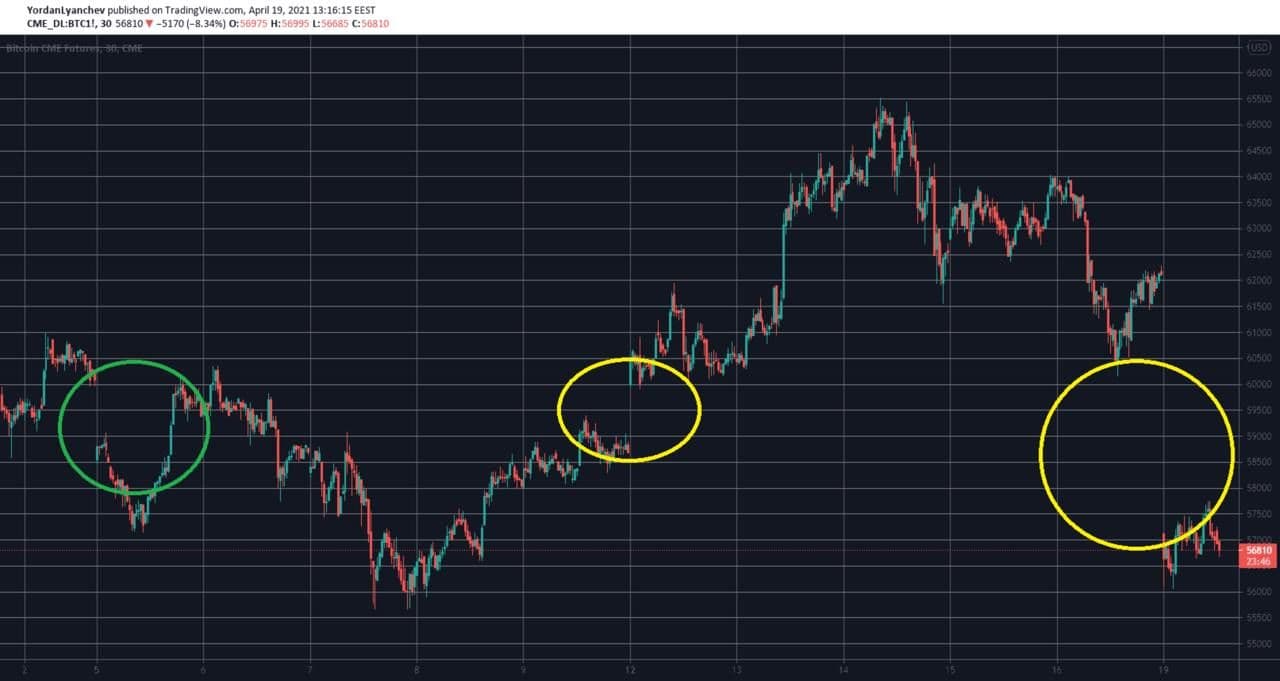
A CME gap refers to the difference between the closing price of a Bitcoin futures contract on the Chicago Mercantile Exchange (CME) and the next opening price when the market resumes trading. These price gaps occur because the CME Group, which facilitates CME Bitcoin futures (CME Bitcoin futures), operates within specific trading hours (Monday to Friday, 5:00 PM to 4:00 PM CT), unlike the cryptocurrency market, which trades 24/7.
Since Bitcoin trading continues across global exchanges, Bitcoin’s price can change significantly when the CME is closed. When the CME reopens, the opening price reflects the latest market conditions, sometimes creating a massive Bitcoin CME gap between Friday’s last traded price and Monday’s new opening price. Traders and analysts closely monitor these CME gaps because they often predict future price movements and influence Bitcoin CME gap trading strategies.
Why Do CME Gaps Occur?
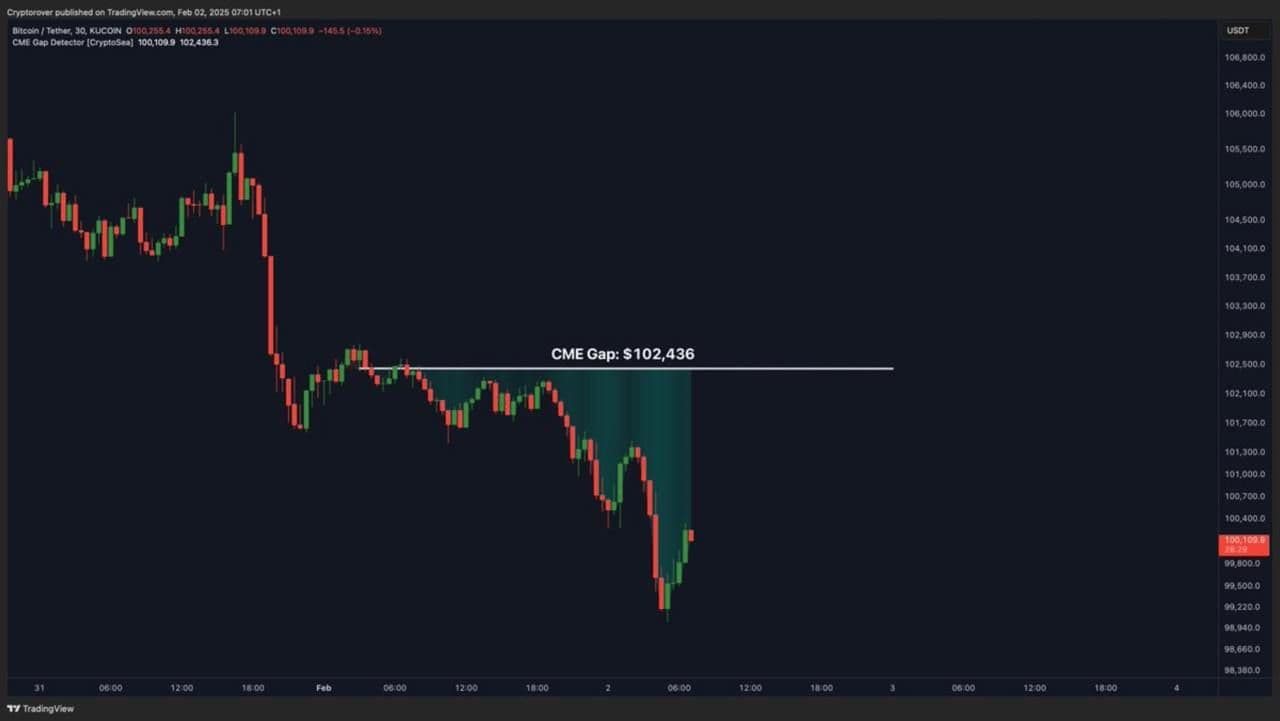
Massive Bitcoin CME GAP: $102,436 in February 2025 Source: X
CME gaps form when Bitcoin’s price action experiences significant movement outside CME trading hours. Since the cryptocurrency market never sleeps, events like news releases, macroeconomic trends, or sudden price action can lead to substantial price discrepancies between Friday’s closing price and Monday’s opening price.
CME gaps can be categorized into:
Breakaway Gaps: Indicate strong market sentiment and can signal a new trend.
Runaway Gaps: Occur in the middle of a trend and show market strength.
Exhaustion Gaps: At the end of a trend, signal a potential reversal.
Do CME Gaps Always Get Filled?
One common trading belief is that CME gaps eventually "get filled," meaning Bitcoin’s price revisits the gap area at some point. While historical data from the first quarter of 2025 shows that 60–80% of Bitcoin CME gaps are filled within weeks, there’s no guarantee that every gap will close. Factors like market conditions, liquidity, and fundamental analysis influence whether a gap fill occurs.
Checklist for Gap Fill Trading:
Confirm the gap level on CME charts.
Assess trading volume to gauge market sentiment.
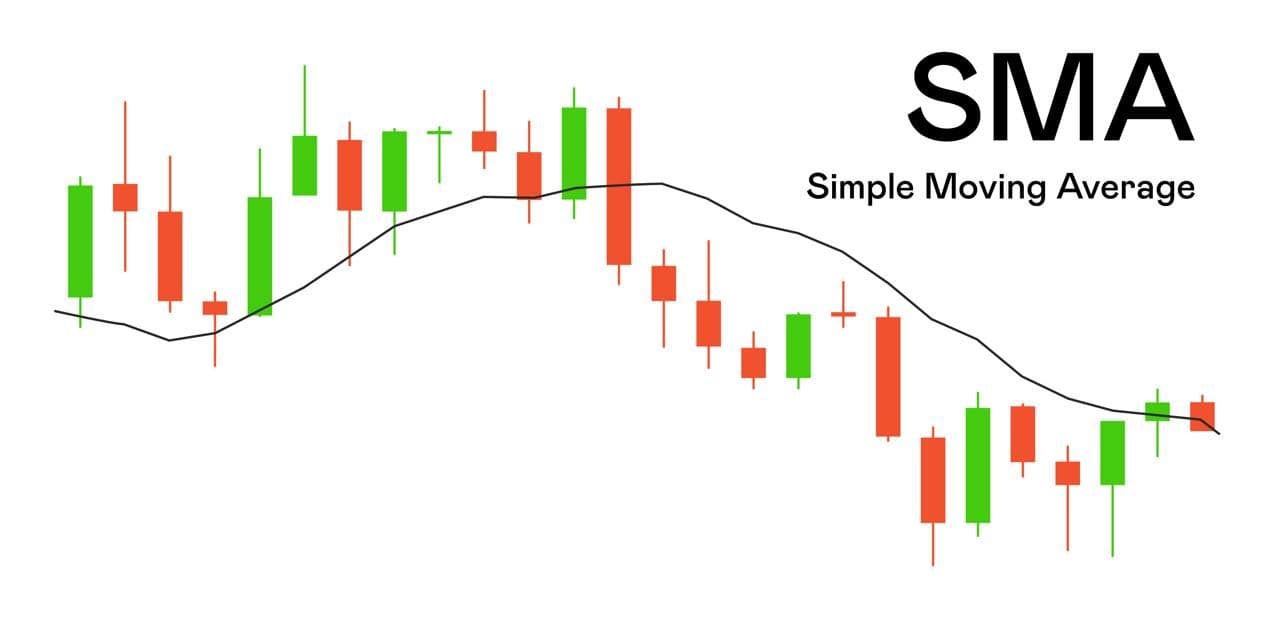
Use technical indicators like RSI or Moving Averages.
Monitor external factors such as regulatory updates.
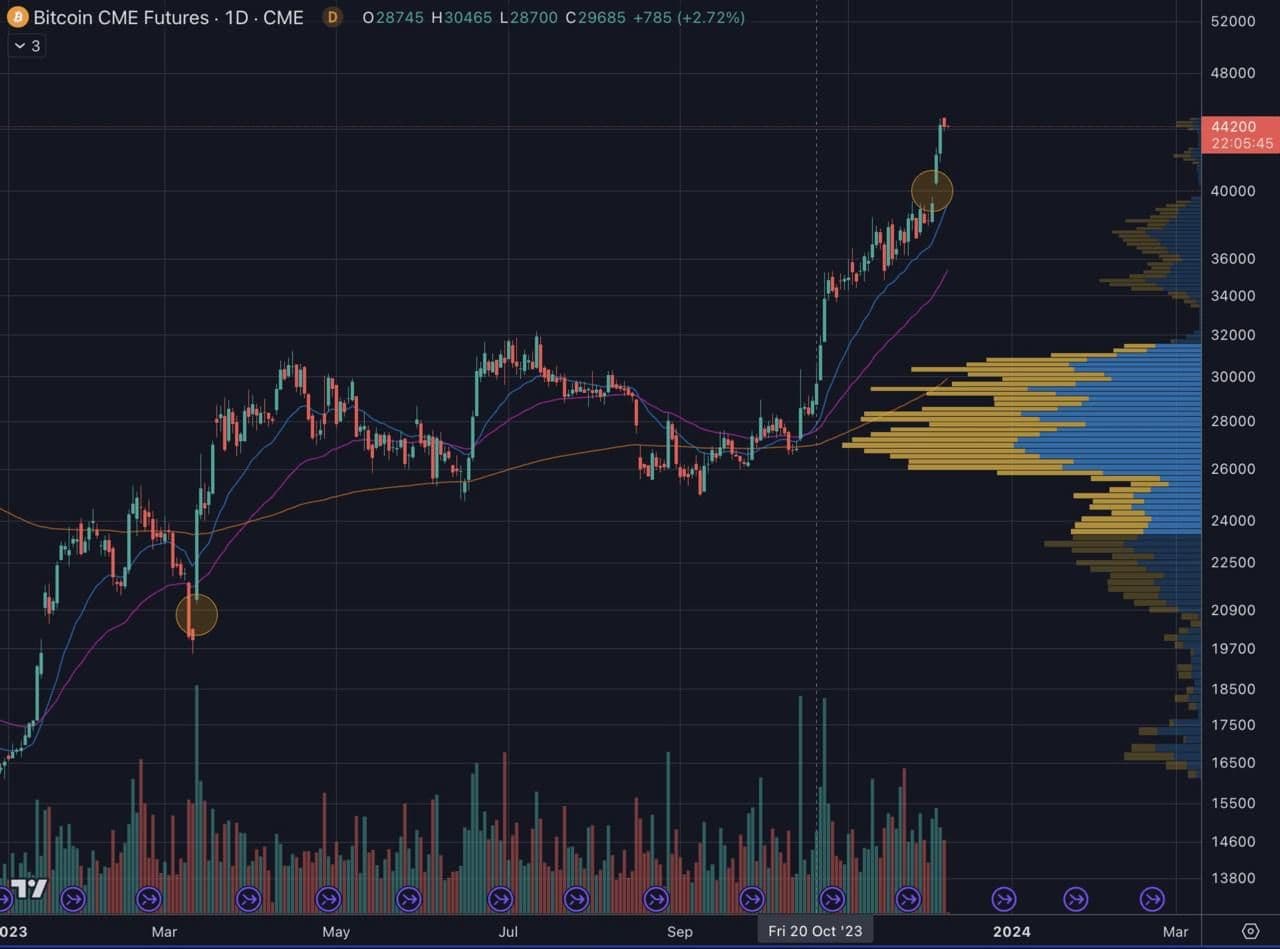
‘By my count 28 out of 30 gaps have been filled on CME daily candles (93%). The other unfilled gap is pictured in the lower left of this chart also’, says trader Willie Woo. Source: X
How CME Gaps Influence Bitcoin Price Movements
CME gaps play a significant role in Bitcoin’s price movements, often acting as a magnet that draws the price toward the gap level. This price behavior stems from both psychological and technical factors. Many traders believe that gaps represent price inefficiencies, and as a result, they adjust their positions to push Bitcoin prices back toward the gap. While gaps do not always get filled immediately, historical data suggests that a large percentage of CME Bitcoin gaps are eventually closed.
CME Gap Impact on Bitcoin (2026 Data)
Gap Type
Average Fill Time
Volatility Increase
Fill Rate
Breakaway Gap
4–8 days
12–18%
80%
Runaway Gap
2–5 days
10–15%
70%
Exhaustion Gap
8–15 days
15–20%
60%
CME Gaps in Traditional and Cryptocurrency Markets
The phenomenon of CME gaps is not exclusive to Bitcoin CME. Gaps occur in traditional markets, particularly in stocks, commodities, and forex, where market closures lead to price differences between the closing price and the opening price of the next session (gaps).
One of the most notable impacts of CME gaps is their ability to influence Bitcoin’s volatility. When gaps form, they often lead to increased trading activity as market participants react to price discrepancies. Traders closely monitor CME charts, expecting a potential gap fill, which drives increased market liquidity into the cryptocurrency market.
Unfilled Gaps as Key Support and Resistance Levels
Technical analysts often view unfilled gaps as important key support and resistance levels. If Bitcoin’s price is moving toward a gap, it may stall at that gap level before continuing its trend. Likewise, an unfilled gap can act as a psychological price target, influencing market sentiment and trading behavior. For instance, a 2025 CME gap at $84,200–$85,900 remained unfilled for weeks, acting as resistance before a breakout.
Top 5 Strategies for Bitcoin CME Gaps Trading
Traders use various Bitcoin trading strategies to capitalize on CME gaps:
Gap-Fill Strategy
If a CME gap appears, traders anticipate Bitcoin's price will return to fill the gap.
This strategy involves entering trades at key price levels where gaps are expected to close.
Momentum Trading
If Bitcoin continues moving in the same direction post-gap, traders ride the trend.
This approach relies on market sentiment and technical indicators like resistance levels.
Support and Resistance Trading
Traders analyze previous price action to determine whether a gap area will act as support or resistance.
Gaps in highly volatile markets often serve as strong price levels for future movements.
Breakout Trading
Trade breakaway gaps signal new trends, with an 80% fill rate in 2026.
Use RSI to confirm momentum.
Scalping Around Gaps
Execute quick trades during increased volatility post-gap, especially for exhaustion gaps with 15–20% volatility spikes.
Set tight stop-loss orders for risk management.
Factors That Influence CME Gaps
Several factors contribute to the formation and closure of CME gaps:
Market Volatility: Higher volatility increases the likelihood of gaps forming.
Interest Rates and Economic Data: Major financial events can influence Bitcoin futures prices.
While CME gaps are often cited in technical analysis, predicting Bitcoin price movements solely based on gaps can be risky. Many traders track gap patterns to identify market trends, but gaps should not be used in isolation.
The Risks of Relying on CME Gaps Alone
Market conditions are affected by external factors, including economic events, regulatory updates, and institutional trading activity. Traders should incorporate CME gaps into a broader trading strategy, utilizing other technical indicators such as:
Fibonacci Retracement Levels (to identify potential support and resistance)
Risk Management When Trading CME Gaps
Effective risk management is essential when trading Bitcoin CME gaps. Here are key principles to follow:
Set Stop-Loss Orders: Mitigate losses during price fluctuations, especially during 15–20% volatility spikes from exhaustion gaps.
Manage Position Sizes: Avoid over-leveraging trades based on gap-fill predictions.
Monitor Market Sentiment: Sudden news can create unexpected market movements.
AI AI-driven risk management tools: Use AI-driven risk management tools to analyze trading volume and market sentiment in real time.
Checklist for Risk Management in 2025:
Set stop-loss orders at 1–2% below gap levels.
Limit position size to 5–10% of the portfolio.
Stay updated on macroeconomic trends.
The Role of External Factors in CME Gap Trading
External influences such as macroeconomic trends, institutional interest, and central bank policies can impact Bitcoin prices. Traders should stay updated on financial news to anticipate market movements that could reinforce or contradict CME gap predictions.
Timing Your Trades Around CME Gaps
Timing is crucial when executing trades based on CME gaps. Some traders enter positions before the CME opens on Monday, expecting a gap fill, while others wait for confirmation through price action before trading, especially for runaway gaps that fill in 2–5 days.
Historical Analysis Checklist:
Study historical data on gap-fill speed.
Analyze trading volume near gap levels.
Check price action patterns before entering trades.
Using Historical Data for Better Timing
Studying past CME Bitcoin gaps can provide insights into how the cryptocurrency market has reacted in similar scenarios. Looking at historical charts, traders can identify:
How quickly gaps are filled (e.g., runaway gaps in 2–5 days).
Whether price retraces before closing the gap.
How trading volume reacts near the gap level.
By applying historical analysis, traders can make data-driven decisions when trading Bitcoin CME gaps.
How CME Gaps Might Change Over Time
As Bitcoin trading evolves, the dynamics of CME gaps may shift. Increased market liquidity and broader institutional adoption could lead to smaller and less frequent gaps in 2025. Additionally, the introduction of advanced trading algorithms may result in faster price convergence, reducing the impact of price gaps over time.
Algorithmic Trading and the Role of AI
The rise of algorithmic trading—where AI-driven bots execute trades based on market conditions—could play a significant role in Bitcoin CME gap trading in 2026:
Faster Price Adjustments: Algorithms detect and close gaps rapidly, shortening fill times for runaway gaps to 2–5 days.
Reduced Market Inefficiencies: Gaps become less frequent.
AI tools analyzing trading volume and market sentiment will enhance gap trading efficiency, particularly for breakaway gaps with an 80% fill rate (gap trading).
Long-Term Outlook for Bitcoin and CME Gaps
Despite uncertainties, the overall market sentiment toward Bitcoin and CME Bitcoin futures remains positive in 2025. The increasing adoption of digital assets by institutions could lead to further innovation in Bitcoin trading, potentially introducing new strategies for analyzing CME gaps.
The Role of Regulations and Institutional Involvement
With growing institutional investment in Bitcoin futures, regulatory frameworks will likely become more defined in 2026. Clearer regulations may attract more traditional market investors, increasing liquidity and stabilizing price fluctuations caused by CME gaps. Additionally, new financial instruments like Bitcoin ETFs could influence how CME Bitcoin futures interact with the broader cryptocurrency market, shaping the future of Bitcoin CME gap trading.
Closing Thoughts
Having sufficient knowledge of Bitcoin and CME gaps and their impact on trading strategies can improve your decision-making when trading Bitcoin and CME Bitcoin futures in 2026. While CME gaps provide profitable opportunities, traders should combine CME gap analysis 2026: market impact & trading strategies, fundamental analysis, technical analysis, and other technical indicators to make well-informed investment decisions. Always conduct your own research and prioritize risk management when incorporating CME gaps into your Bitcoin trading strategy.
Disclaimer
This article is provided for informational purposes only and does not constitute legal, financial, or professional advice. All content is based on publicly available information and personal opinions. Readers are advised to seek professional guidance before making any decisions or taking any actions based on the material presented. The author and publisher assume no liability for any actions taken or not taken by the reader based on the information contained herein.
FAQs
A CME gap occurs when the price of CME Bitcoin futures differs between the closing price on Friday and the opening price on Monday due to Bitcoin trading 24/7 while the CME market remains closed on weekends.
Not necessarily. While 60–80% of CME gaps will be filled in 2025, some remain unfilled, especially exhaustion gaps with a 60% fill rate in strong trending crypto markets.
Traders analyze CME charts and historical price movements to determine whether to trade a gap fill or follow the prevailing market trend.
CME Bitcoin futures provide institutional traders access to Bitcoin price movements while enabling risk management through regulated futures contracts.
Traders should use technical indicators, fundamental analysis, and market conditions to make informed trading decisions regarding CME gaps.