Streamline Your Transactions: The 10 Best Online Payment Solutions for UK Businesses in 2026
As businesses across the United Kingdom continue to embrace digital transformation, selecting the right payment gateway has become more important than ever. Whether you operate an eCommerce platform, a subscription-based service, or a brick-and-mortar store offering digital checkouts, a secure, scalable, and cost-effective solution is essential for customer satisfaction and operational success.
With so many providers offering services around the world, the options can feel overwhelming. This guide highlights the top 10 payment gateways for UK businesses in 2026 — platforms known for their transaction reliability, fraud protection, currency versatility, and advanced features like real-time reporting and virtual terminal support.
Key Takeaways
Online payment services are essential for e-commerce, providing secure transactions through various payment methods such as credit and debit cards, bank transfers, and digital wallets.
Key features of online payment platforms include robust security, efficient fund transfers, support for multiple payment methods, and advanced reporting tools, all crucial for improving customer satisfaction and business operations.
When choosing an online payment service, consider compatibility with your business system, transaction fees, security protocols, and adaptability to evolving customer needs and technology trends.
What is an Online Payment System?
Online payment systems are essential for modern e-commerce, enabling businesses to accept payments through various methods. These methods commonly include credit and debit cards, bank transfers, and digital wallets like Apple Pay and Google Pay. While these systems simplify payment processing, businesses still need to manage their integration and operation. Online payment systems strive to provide secure and seamless transactions, though security breaches and transaction issues can occasionally occur
How Online Payment Systems Work
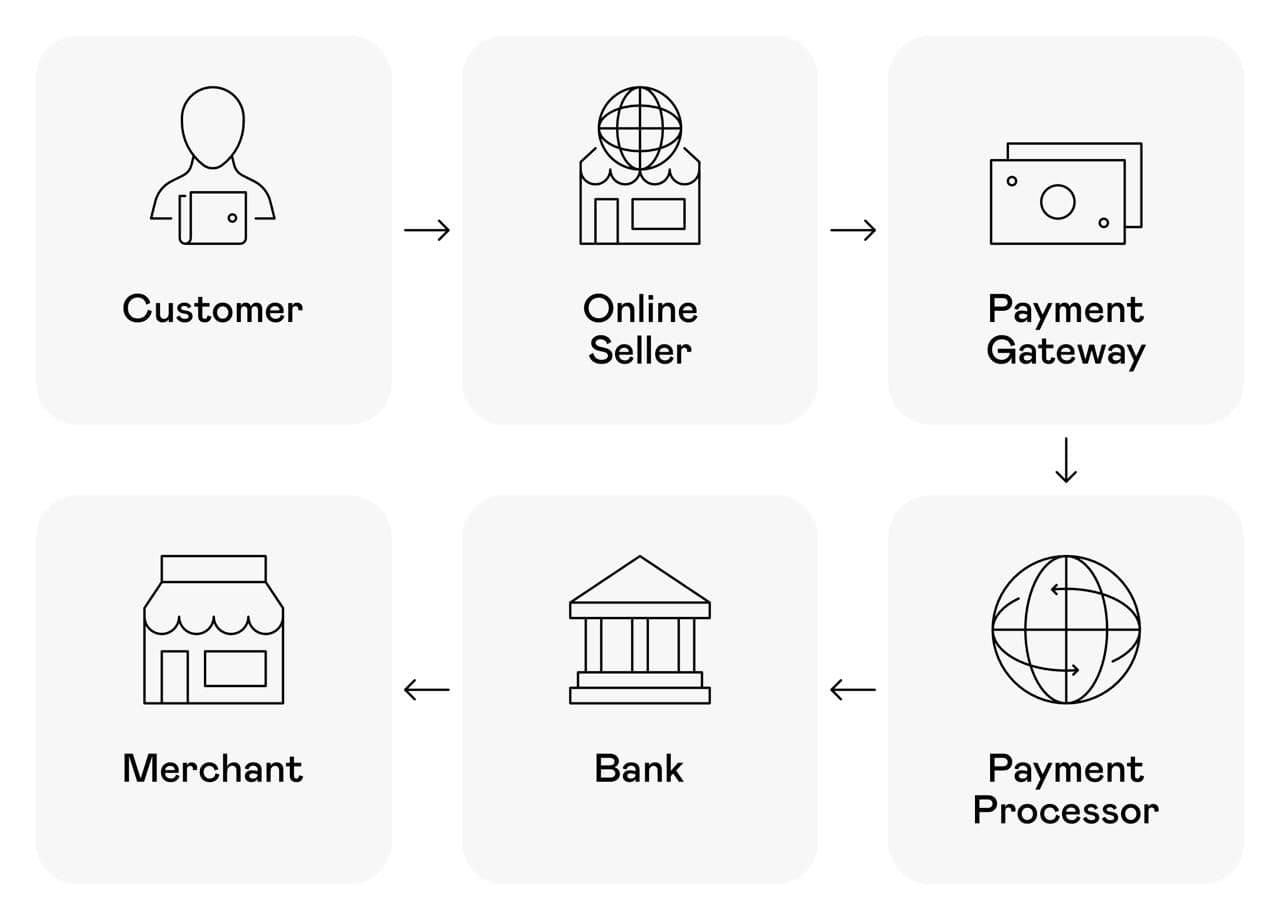
At the core of online payments are three key components: payment processors, gateways, and merchant accounts. These elements work together seamlessly to process transactions efficiently. Here’s how it works: when a customer makes a payment, the payment gateway steps in to encrypt their details and securely send them to the payment processor. The processor then coordinates with banks to authorize and complete the transaction. All of this happens in a matter of seconds, ensuring a seamless experience for both you and your customers.
An overview of the payment process flow from customer to merchant
When a customer initiates a payment, the payment gateway encrypts their details and securely sends them to the payment processor, which then interacts with banks and card networks to approve or decline the transaction—all in just a few seconds.
Understanding how these systems work can help you optimize your payment process and make the most of the tools available to you. For instance, features like checkout customization, transaction tracking, refund management, and automated email receipts not only streamline your operations but also enhance customer satisfaction. By leveraging the right payment tools, you can boost efficiency, improve security, and ultimately grow your business in today’s competitive e-commerce landscape.
Start sending and receiving money today
Use stablecoins for global reach and local fiat rails for easy top-ups and withdrawals.
When choosing an online payment service, it’s important to understand the key features that will directly benefit your business. Here’s a closer look at the essential capabilities you should look for:
Security
Security is a top priority when it comes to online payments. Compliance with PCI DSS standards ensures that cardholder data is protected, which helps maintain both security and trust. Robust protocols such as data encryption, 3D Secure authentication, and advanced fraud detection mechanisms safeguard sensitive customer information. These security measures are essential for maintaining credibility and ensuring safe transactions, which ultimately help businesses build trust with their customers.
Efficiency
In today’s fast-paced world, efficiency is key. Online payment services with quick settlement times can help reduce delays in fund transfers, which is essential for managing your cash flow. By automating tasks like invoice processing and reconciliation, you free up valuable time to focus on other growth areas of your business. This streamlined approach enhances productivity and reduces human error, helping your business operate more smoothly.
Support for Multiple Payment Methods
Providing a variety of payment options is crucial for both customer satisfaction and business growth. Look for systems that support a broad range of payment methods, from credit/debit cards to digital wallets and local payment options. This flexibility can enhance the user experience and help improve conversion rates. Additionally, multi-currency support is an important feature if you’re looking to expand internationally, allowing you to reduce transaction fees and cater to a global customer base.
Effective Reporting & Customer Support
Strong reporting tools are invaluable for keeping your operations running efficiently. Detailed reports on transactions, chargebacks, and customer behavior give you the insights you need to make informed decisions and optimize your processes. Reliable customer support is just as important. Quick resolution of any issues ensures that your payment systems stay operational without interruptions, providing peace of mind for you and your customers.
Benefits of Using Online Payment Services
Using online payment services isn’t just about streamlining transactions—it also offers significant advantages for your business and customers. Let’s dive into the benefits you’ll gain by implementing these services:
Process Optimization
One of the biggest advantages of online payment services is process optimization. Automating payment processing reduces the need for manual intervention, cutting down on administrative costs and saving valuable time. This allows you to better manage recurring payments and ensures that transactions are handled quickly and accurately, eliminating the risk of errors.
Diverse Payment Options
The more payment methods you offer, the more convenient it is for your customers. Supporting a wide range of payment options—such as credit/debit cards, bank transfers, and digital wallets—makes it easier for customers to complete transactions. This reduces friction during checkout, leading to higher conversion rates. Plus, using alternative online payment platforms can help reduce transaction fees, boosting your bottom line.
Enhanced Payment Security
Security is a major selling point for any business accepting online payments. Advanced security features like tokenization and encryption protect sensitive customer information, keeping it safe from fraud. Maintaining high security standards helps build trust with your customers, reassuring them that their transactions are secure. This, in turn, can lead to increased customer loyalty and more repeat business.
Top 10 Online Payment Services for UK Businesses in 2026
Selecting the right online payment service is important if you are a business owner in the UK looking for fast, secure, and efficient transaction platforms. With so many options available, it's important to understand the distinctive features and advantages of each service to make a well-informed choice. Below are the top 10 online payment services for UK businesses in 2026, each offering its own set of strengths and functionalities.
PayPal
PayPal is one of the most recognizable names in the payment industry, trusted by millions of businesses and consumers worldwide. Whether you're a small business or a global enterprise, PayPal enables customers to pay using credit and debit cards, PayPal balance, and PayPal Credit.
With support for over 10 local payment methods and 100+ currencies, PayPal is a go-to solution for businesses seeking international reach. Founded in 1998, PayPal has become synonymous with secure online payments and offers simple integration options, from easy-to-use pay buttons to fully hosted API checkout solutions.
Pros
Widely recognized and trusted by customers worldwide.
Supports various payment methods and currencies.
Simple integration via hosted buttons or APIs.
Provides payment solutions for both businesses and consumers.
Cons
High transaction fees, especially for small businesses.
Potential account suspensions during security checks.
Stripe
Stripe is one of the most powerful and flexible payment processors, ideal for businesses of all sizes. Supporting a wide range of payment methods, including credit and debit cards, bank transfers, direct debits, digital wallets, and local payment methods, it’s perfect for businesses that want to cater to a broad customer base.
Founded in 2010 by Patrick and John Collison, Stripe quickly became a favorite among startups and enterprises like Shopify, Amazon, and Google. More than just a payment processor, Stripe also provides an end-to-end billing solution that helps businesses manage invoicing, subscription payments, and financial reporting.
One of Stripe’s standout features is Stripe Connect, which allows businesses to process payments on behalf of third-party sellers and service providers. This makes it especially useful for marketplaces and platforms that facilitate transactions between multiple parties.
Pros
Supports various payment methods for global reach.
No hidden fees – fully transparent pricing.
Powerful developer tools for integration.
Ideal for platforms and marketplaces using Stripe Connect.
Cons
High transaction fees in some regions, including the UK.
Potential for withheld funds and customer support delays.
Worldpay
Worldpay is a leading payment service provider that facilitates both online and in-person payments. As a UK-based payment provider, it has built a strong reputation for handling over 40% of online card transactions in the UK.
A key advantage of Worldpay is its support for PayPal transactions, giving businesses even more flexibility in accepting payments online.
Worldpay offers a transparent pricing model, with monthly fee plans ranging from £19 to £45, and a straightforward transaction fee of 2.75% + 20p per transaction. This clarity in pricing makes it an attractive option for businesses seeking a predictable cost structure.
Pros
Multiple payment options, including PayPal integration.
Transparent pricing for better financial planning.
Secure processing with fraud prevention tools.
Cons
Limited availability outside of certain regions.
May not be cost-effective for small businesses with low transaction volume.
Adyen
Adyen is a global payment provider designed for large enterprises with complex payment needs. Supporting multi-currency transactions, diverse sales channels (eCommerce, in-store, mobile payments), and advanced fraud prevention, Adyen is a favorite among large brands like Uber, Microsoft, and LinkedIn.
Adyen’s scalability and customization make it ideal for businesses handling high transaction volumes. However, its pricing model can be complex, as fees vary by payment method and region.
Pros
Extensive multi-currency support for international transactions.
Customizable payment solutions tailored to business needs.
Trusted by major global brands.
Cons
Complex pricing models can make cost predictions difficult.
Best suited for large enterprises, making it overkill for small businesses.
Opayo (Formerly Sage Pay)
Opayo (previously known as Sage Pay) is a highly secure, all-in-one payment solution catering to businesses across various industries. It is known for its strong security infrastructure, encrypting all transaction data to ensure secure payments.
Opayo provides comprehensive payment solutions, supporting everything from card payments to subscriptions. Its smooth integration with business systems makes financial management simpler.
Pros
Strong security features ensure safe transactions.
Seamless integration with various business systems.
Cons
Longer setup time compared to other platforms.
Limited features outside the UK.
Mollie
Mollie is a user-friendly payment solution designed to help businesses get up and running quickly. With a fast and simple setup, it’s perfect for businesses that lack technical expertise but need an efficient and secure online payment processing system.
Mollie supports multiple payment methods, including credit and debit cards, bank transfers, and digital wallets, making it an attractive option for businesses that want flexibility in how they accept payments online.
Its transparent pricing model, with no hidden fees, ensures that businesses can manage costs effectively. Mollie’s combination of ease of use, cost-effectiveness, and clear pricing makes it a great choice for small businesses and startups.
Pros
Fast setup with minimal technical requirements.
Transparent, competitive pricing with no hidden fees.
Supports a variety of local and international payment methods.
Cons
Lacks advanced features found in larger payment processors.
Less customization compared to competitors like Stripe or Adyen.
Braintree
Braintree is a highly flexible payment processing platform, offering customized merchant accounts tailored to specific business needs. Acquired by PayPal in 2013, Braintree provides powerful tools for businesses looking to scale efficiently.
Whether you’re a small business, startup, or enterprise, Braintree’s custom pricing plans and integration options make it an excellent choice. Developers love Braintree because of its advanced API tools, allowing businesses to create custom payment experiences.
Pros
Customizable payment options for different industries.
Flexible pricing structures (standard and custom plans).
Ideal for developers who need advanced integration tools.
Cons
Can be complex for businesses that need a simple payment solution.
Best suited for tech-savvy users or those with development resources.
Checkout.com
Checkout.com is an all-in-one global payment processing platform that simplifies cross-border transactions. With a focus on efficiency and scalability, it provides a merchant account and payment gateway in one solution, making it ideal for businesses operating internationally.
This platform is perfect for high-turnover businesses that need seamless multi-currency transactions and robust fraud prevention.
Pros
Handles global transactions efficiently.
Supports multiple currencies and payment methods.
Built-in merchant account for smooth fund transfers.
Cons
More suitable for high-volume businesses, not ideal for small enterprises.
Complex setup with higher fees for smaller transactions.
Square
Square is a versatile payment platform that offers online and point-of-sale payment solutions. Originally designed for brick-and-mortar businesses, Square has expanded into the online payment space, allowing UK businesses to easily accept payments through its web-based tools. Square's easy-to-use interface and integration with various business systems make it a great choice for small to medium-sized businesses looking for a simple solution for both in-person and online payments.
Pros
Simple to set up and use.
No monthly fees for basic services.
Supports in-person and online payments.
Cons
Limited to UK and US businesses.
Transaction fees can add up for larger volumes.
Payoneer
Payoneer is a global payment service that specializes in cross-border transactions, making it a great option for businesses that need to make international payments. With support for 150+ currencies, Payoneer allows businesses to send and receive payments across borders with low fees and fast processing times. The platform also offers a range of other services, including working capital loans and multi-currency accounts.
Pros
Supports over 150 currencies for global payments.
Low fees for international transactions.
Offers additional financial services like working capital loans.
Cons
Limited features for domestic transactions.
Common Challenges in Online Payment Processing
Online payment processing can come with its own set of challenges that businesses need to navigate. For instance, payment transactions may be declined for various reasons, such as outdated credentials, suspected fraud, or insufficient funds. To help reduce unnecessary declines, gathering additional information—like the CVC, billing address, and postcode—can make a difference. However, it's important to keep in mind that a complicated checkout form can lead to customer frustration and potentially cause them to abandon their purchase.
Chargebacks can also be an issue, occurring when a cardholder disputes a payment. In these cases, the burden of proof falls on the merchant, which can complicate matters. To address this, automating payment processes can help minimize manual tasks and increase productivity, enabling businesses to better manage these challenges.
Another point to consider when using an online payment gateway in the UK is the impact on taxes. Fees associated with payment services are subject to VAT, but if your business is VAT-registered, you may be able to reclaim these fees, helping to offset some of the costs.
The Future of Online Payment Services in the UK
The UK's online payment landscape is undergoing rapid transformation, driven by technological innovation and evolving regulatory frameworks. Several key trends are shaping its future:
Real-Time Payments (RTP) Expansion: Building on the existing Faster Payments scheme, wider adoption of real-time payments is expected. This includes not just consumer-to-business transactions but also business-to-business and potentially even peer-to-peer payments, facilitated by open banking APIs. Expect increased integration of RTP into e-commerce checkouts and back-office systems.
Biometric Authentication: Password fatigue and security concerns are pushing biometric authentication to the forefront. Expect increased use of fingerprint scanning, facial recognition, and potentially even behavioral biometrics for secure and frictionless payment authorization. This ties into Strong Customer Authentication (SCA) requirements, making compliance smoother.
Embedded Finance: The integration of financial services, including payments, directly into non-financial platforms (e.g., social media apps, retail platforms) is gaining momentum. This creates seamless payment experiences within the user's existing digital environment.
Increased Focus on Security and Fraud Prevention: With the rise in sophisticated cyber threats, security is paramount. Expect advancements in fraud detection algorithms, tokenization, and end-to-end encryption to protect sensitive payment data. Zero-knowledge proofs and homomorphic encryption may also begin to see early adoption.
Cross-Border Payment Optimization: As e-commerce becomes increasingly global, efficient and cost-effective cross-border payments are crucial. Expect wider adoption of technologies like distributed ledger technology (DLT) for faster and cheaper international transactions, although regulatory hurdles remain. Also, expect increased partnerships between fintech companies and traditional financial institutions to streamline cross-border payments.
Regulatory Landscape: The UK's regulatory environment is adapting to these technological changes. Expect continued focus on data privacy (GDPR), SCA compliance, and potentially new regulations related to stablecoins and central bank digital currencies (CBDCs). Open banking initiatives will also play a crucial role in fostering innovation and competition.
Artificial Intelligence (AI) and Machine Learning (ML): AI and ML are being increasingly used to personalize payment experiences, optimize transaction routing, and enhance fraud detection. Expect these technologies to become even more sophisticated in the coming years.
The Metaverse and Web3 Payments: While still nascent, the metaverse and Web3 technologies hold the potential to disrupt payments. Expect exploration of cryptocurrency payments, micropayments, and potentially even new forms of digital currency within these virtual worlds.
Final Thoughts
Choosing the right online payment service is one of the most important decisions you can make for your UK-based business. It’s not just about processing payments—it’s about creating a seamless, secure, and satisfying experience for your customers while streamlining your operations. These services support efficient international transactions and scalable infrastructure.
As you evaluate your options, keep in mind the key features and benefits that matter most to your business. Whether it’s top-tier security, a wide range of payment methods, or easy integration with your current systems, the right solution is out there. The top 10 online payment services for UK businesses in 2026 are designed to cater to diverse needs, so you’re sure to find one that fits your goals and customer expectations.
Staying ahead of the curve with the latest trends and technologies will not only future-proof your payment processes but also help you stand out in a competitive e-commerce landscape. By making an informed choice, you’re setting your business up for smoother transactions, happier customers, and long-term growth.
FAQ
What are the key components of an online payment system?
The key components of an online payment system are a payment processor, payment gateway, and merchant account, which collectively ensure secure and efficient transactions. Understanding these elements is crucial for successfully managing online payments.
Why is security important in online payment services?
Security is essential in online payment services to safeguard sensitive customer information and mitigate fraud risks. Implementing strong encryption, adhering to PCI DSS standards, and utilizing advanced fraud detection measures are vital for secure transactions.
How do transaction fees vary among different payment service providers?
Transaction fees differ greatly among payment service providers, with some offering tiered structures and others fixed fees. Therefore, businesses should diligently compare these fees and consider any hidden costs when selecting a provider.
What are some emerging trends in online payment services?
Emerging trends in online payment services indicate a significant shift towards AI and machine learning for enhanced fraud detection, the growing adoption of digital wallets, real-time payment processing, and the use of variable recurring payments. These trends reflect the evolving landscape of payment solutions tailored to consumer needs.
How can businesses integrate an online payment service into their operations?
Businesses can effectively integrate an online payment service by establishing a merchant account with a payment service provider, acquiring API gateway keys, testing the payment gateway, and then transitioning their website from test to live mode. This systematic approach ensures a smooth and functional payment process for customers.
What are the most popular UK ecommerce payment methods in 2026?
UK ecommerce payment methods now include a wide range of digital and alternative options. Debit and credit cards remain common, but wallets like Apple Pay, Google Pay, and Klarna are quickly gaining ground. Digital payments UK customers trust most are those with fast checkout, mobile optimization, and strong security.
How can UK businesses handle cross-border and international payments?
To manage international payments UK business owners need scalable, multi-currency solutions. Platforms like Volet and Wise allow for efficient cross-border payments UK companies can rely on. These services reduce currency conversion fees and help businesses expand into Europe, the US, and other global markets.
What should small businesses look for in a UK payment gateway?
For online payments for small businesses UK merchants need a solution that balances cost, ease of use, and customer trust. A good UK merchant services provider will offer fast onboarding, simple integration, and transparent fees. UK payment gateway comparison tools can help you assess which platform—like Volet, Stripe, or PayPal—fits your business model best.
Disclaimer
This article is provided for informational purposes only and does not constitute legal, financial, or professional advice. All content is based on publicly available information and personal opinions. Readers are advised to seek professional guidance before making any decisions or taking any actions based upon the material presented. The author and publisher assume no liability for any actions taken or not taken by the reader based on the information contained herein.